4 Night Mini Cruise From Portsmouth To Rotterdam: Itinerary and Travel Tips
Few short breaks feel as satisfying as leaving Portsmouth in the evening and waking up on the way to the Netherlands, with the North Sea quietly turning travel time into part of the holiday. A 4 night mini cruise to Rotterdam appeals to couples, friends, and solo travelers because it combines transport, accommodation, and sightseeing in one manageable plan. If you want a European city break without airport queues, strict baggage rules, or a frantic schedule, this route offers a practical alternative. It is a trip where the journey has its own mood, from the first glimpse of the harbour lights to breakfast as the Dutch coast comes into view.
Outline
- How a 4 night mini cruise from Portsmouth to Rotterdam is usually structured and why it remains a popular short break.
- A sample day by day itinerary, from embarkation in Portsmouth to time ashore in Rotterdam and the return sailing.
- What to expect on board, including cabins, dining, entertainment, and how the ferry experience compares with flying.
- The best ways to spend your time in Rotterdam, plus easy side trips to places such as Delft, The Hague, and Kinderdijk.
- Booking advice, budgeting, packing tips, and a final summary on who this trip suits best.
How the 4 Night Mini Cruise Works and Why It Appeals to Modern Travelers
A 4 night mini cruise from Portsmouth to Rotterdam is best understood as a compact city break wrapped around two overnight sea crossings. In many packages, you spend one night sailing from Portsmouth, two nights in or near Rotterdam, and a final night on the return ship before arriving back in the UK the next morning. That structure matters because it changes the feel of the trip. Instead of treating travel time as something to rush through, the crossing becomes part of the holiday itself. You board, unpack once into your cabin, watch the port slide away, and let the pace slow down.
This kind of itinerary has become increasingly relevant for travelers who want simplicity without sacrificing experience. Airports can be efficient, but they often come with rigid baggage rules, early check in windows, and a compressed, slightly stressful rhythm. A ferry mini cruise offers a different equation. You usually have more freedom with luggage, you can move around during the voyage, and you can begin your break with dinner, a drink, or a walk on deck rather than a race through a terminal. For people who enjoy the romance of travel as much as the destination, that difference is not trivial. It is the difference between merely arriving and truly departing.
Another reason the route appeals is flexibility. Rotterdam itself is a strong destination: modern architecture, good museums, lively food halls, and efficient public transport make it easy to explore in a short time. Yet it also works as a base for nearby excursions. Delft offers canals and historic charm, The Hague brings art and government landmarks, and Kinderdijk delivers one of the Netherlands’ most iconic landscapes, with 19 historic windmills in a UNESCO listed setting. That means the trip can suit very different personalities. One traveler may want design, shopping, and skyline views, while another may prefer quiet streets, paintings, and windmill country.
Before booking, it helps to understand what is commonly included and what may cost extra. Check these details carefully:
- Cabin type on both crossings, such as inside or sea view
- Hotel category and location for the nights ashore
- Transfers between Europoort and the city or hotel
- Whether breakfast or evening meals are part of the package
- Local city taxes, parking, and travel insurance
In short, this mini cruise works because it turns a short break into a layered experience. You get sea travel, urban exploration, and a sense of escape that often feels richer than the calendar suggests. Four nights is not long, yet the combination of shipboard routine and Dutch city energy gives the trip a satisfying sense of distance from ordinary life.
Sample Itinerary: From Portsmouth Departure to Rotterdam Stay and Return
Although exact schedules vary by season and operator, a typical 4 night mini cruise follows a clear rhythm that is easy to plan around. Think of it as five calendar days with four nights away. Day one is departure from Portsmouth. Most travelers arrive at the terminal a few hours before sailing to allow time for check in, document checks, and boarding. Once on board, the smart move is to settle into your cabin quickly, then head out to explore the ship before dinner. The first evening often sets the tone for the whole trip. Harbour lights fade, gulls wheel over the wake, and the horizon opens into a band of silver and blue. It is a small theatrical moment, but one that reminds you the holiday has truly started.
On day two, you arrive at Europoort, the port serving Rotterdam. From there, travelers usually continue by transfer, shuttle connection, rail, or a combination of transit options into the city. The journey to central Rotterdam is often manageable within about 35 to 45 minutes, though connections should always be checked in advance. Once in town, your first day ashore is best kept realistic. Instead of trying to do everything, focus on a compact introduction. A good first day might include a walk around the Markthal, a look at the Cube Houses, time around the Oude Haven area, and an evening along the Maas near the Erasmus Bridge. Rotterdam’s atmosphere shifts beautifully after dark, when its modern skyline reflects in the water and the city feels both busy and spacious.
Day three is your full exploration day, and this is where you can tailor the break to your interests. If you want to stay in Rotterdam, you could visit the Maritime Museum, go up the Euromast for panoramic views, browse galleries, or spend time in neighborhoods with independent cafés and design shops. If you prefer a side trip, Delft is a strong option for canals, ceramics, and a more traditional Dutch streetscape. The Hague adds the Mauritshuis, grand avenues, and a more stately mood. Kinderdijk works well if windmills are high on your list and you want a classic landscape experience.
Day four is often your final day in the Netherlands before the return crossing. This is the day to tie up loose ends: a final museum, a longer lunch, a market visit, or perhaps a harbor cruise if timing works. Aim to leave enough margin for the transfer back to port. Ferry travel rewards calm planning more than last minute dashes. Once back on board, the return evening feels different from the first: less anticipation, perhaps, but more satisfaction. By day five, you arrive back in Portsmouth carrying what the best short breaks provide, a sense that you have properly gone somewhere, not merely passed through it.
Life On Board: Cabins, Dining, Entertainment, and How Ferry Travel Compares With Flying
The onboard experience is one of the biggest reasons travelers choose this kind of trip, so it is worth knowing what to expect before you book. A mini cruise ferry is not a conventional ocean cruise ship, but neither is it just functional transport. It sits somewhere in between: practical enough to move passengers efficiently across the North Sea, yet comfortable enough to feel like a genuine part of your break. Most travelers stay in private cabins, which are useful not only for sleeping but also for changing, showering, and having a personal base during the crossing. Inside cabins are often the most budget friendly choice and work well if you mainly want a quiet place to rest. Sea view cabins cost more, but many people find the window adds atmosphere, especially on morning arrival.
Dining on board varies, though many sailings offer a mix of casual and sit down options. You may find buffet meals, cafés, bars, and restaurants depending on the ship. Prebooking meals can be good value, especially in busy periods, but it still makes sense to check menus and timings in advance. The best approach is to think of food strategically. A solid dinner on the outbound crossing can help the holiday begin smoothly, and breakfast before arrival makes the morning feel more organized. If you are someone who gets motion sickness, eat moderately, avoid too much alcohol, and consider bringing remedies approved by your pharmacist or doctor.
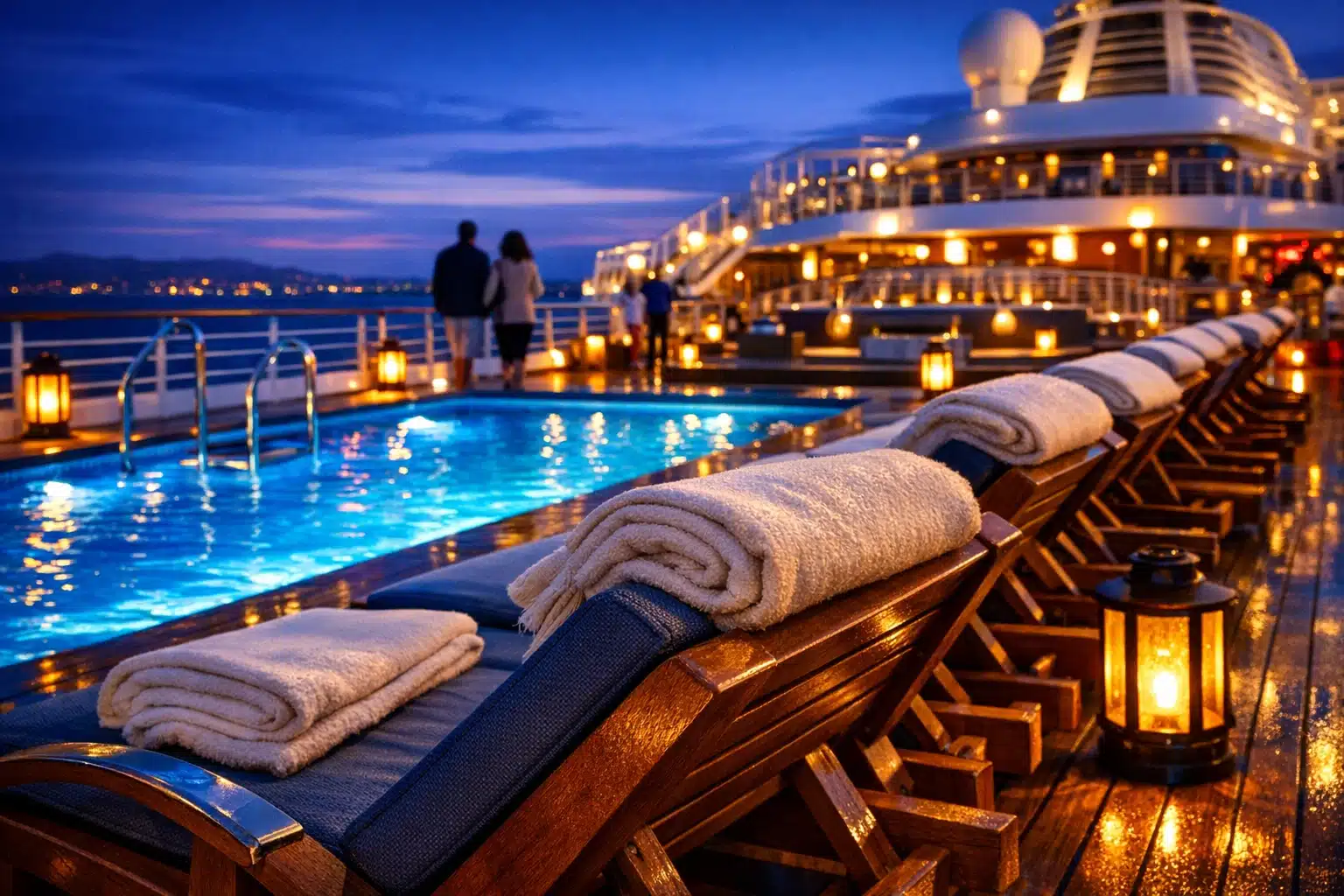
Entertainment is usually low pressure rather than elaborate, which suits a short crossing. Expect spaces to sit with a drink, watch live music on some departures, browse shops, or simply go outside for fresh air if weather allows. The deck is often the most memorable part. Standing there at dusk, wrapped in a coat while the sea air cuts through the day’s noise, can be oddly restorative. It is not flashy travel, but it has texture.
Compared with flying, the ferry offers several practical advantages:
- More generous luggage arrangements on many tickets
- No long security theater in the same style as airports
- Freedom to walk around instead of staying strapped into a seat
- An overnight journey that can replace one hotel night in some trip structures
That said, ferry travel is slower, and it is not ideal for everyone. If your top priority is arriving as fast as possible, a flight will usually win. Weather can also affect sea conditions, which matters if you are sensitive to motion. In environmental terms, it is wise to research current data rather than assume any one mode is automatically better in every scenario. Ship type, occupancy, route, and what you would otherwise do all matter. Overall, the ferry suits travelers who value space, atmosphere, and an unhurried transition from home to holiday.
What to Do in Rotterdam and Nearby: City Highlights, Day Trips, and Smart Sightseeing Choices
Rotterdam is one of the most interesting short break destinations in the Netherlands because it offers something distinctly different from the canal postcard image many travelers already know. After heavy wartime destruction, much of the city was rebuilt with bold modern architecture, giving it a skyline and urban character unlike Amsterdam, Utrecht, or Leiden. That makes Rotterdam especially rewarding for travelers who like contrast. One minute you are looking at experimental buildings and broad riverside views, and the next you are in an old harbor area with terraces, boats, and brick facades that soften the city’s sharper lines.
If this is your first visit, begin with the central highlights. The Markthal combines food stalls, restaurants, and dramatic interior artwork under a sweeping arch. Nearby, the Cube Houses remain one of the city’s most photographed landmarks, not because they are quaint, but because they are delightfully unconventional. The Erasmus Bridge is another essential stop, especially if you enjoy urban photography or evening walks. For a broader view, the Euromast observation tower gives you perspective on the city’s scale, the river, and the enormous port infrastructure that shaped Rotterdam’s identity. Historically, the Port of Rotterdam has ranked among the busiest in Europe, and that maritime significance still informs the city’s atmosphere.
Rotterdam also rewards travelers who wander beyond the checklist. The Witte de With area and surrounding streets are good for cafés, contemporary culture, and a more lived in urban rhythm. If weather turns wet, museums and indoor markets become especially valuable. Public transport is efficient, and many visitors find the city easy to navigate with a combination of walking, metro, and tram. Contactless payment options and local transport tickets can make moving around straightforward, though it is still wise to check the latest system before you go.
For day trips, you have several strong choices:
-
Delft: Ideal for travelers who want canals, church towers, and a slower historic mood.
-
The Hague: Excellent for art lovers, especially if the Mauritshuis is on your list.
-
Kinderdijk: Perfect if you want windmills, open landscapes, and classic Dutch scenery.
The trick with a 4 night mini cruise is restraint. Do not overstuff the days. Pick one major excursion at most and leave room for unplanned moments, whether that is a canal side coffee, an hour on a museum bench, or a sunset view across the Maas. Rotterdam is a city that often reveals itself gradually. It may not charm in the same immediate way as older Dutch towns, but give it time and it becomes compelling, confident, and memorable.
Booking, Budgeting, Packing, and Final Advice for the Travelers Most Likely to Love This Trip
If you want your mini cruise to feel easy rather than improvised, planning details matter. Start with timing. Shoulder season, especially spring and early autumn, often gives a good balance of manageable crowds and pleasant weather, though conditions on the North Sea can still be brisk. Weekday departures may offer better value than peak weekend sailings, and booking early can open up more cabin and hotel choices. When comparing packages, do not focus only on the headline fare. Look at the total trip cost: cabin upgrades, hotel location, transfers, breakfast, evening meals, parking in Portsmouth, public transport in the Netherlands, and any local city tax charged by hotels. A seemingly cheaper deal can become less attractive once add ons are included.
Packing well is another small decision that pays off. Because you move between ship and city, versatility wins over volume. You do not need formal cruise wardrobes, but you do need layers. Even in warmer months, sea crossings can feel cool on deck, and Dutch weather can change quickly. Comfortable shoes are essential because Rotterdam is easy to explore on foot, and day trips often involve station platforms, cobbled streets, and museum floors.
- Passport and travel documents, checked well before departure
- Travel insurance and any medical essentials
- A light waterproof jacket and layers for variable weather
- Comfortable walking shoes and a small day bag
- UK to EU charging considerations, since the Netherlands uses different plug types
- A bank card suitable for contactless payments abroad
It is also wise to think about rhythm rather than just logistics. This trip suits people who enjoy the feeling of transition. If you want a break where the journey itself has character, you are likely to appreciate it. Couples often like the built in evenings on board, friends can treat it as a sociable city escape, and solo travelers may find the structure reassuring because transport and accommodation are neatly linked. Families with older children may enjoy it too, especially if everyone likes ships, viewpoints, and simple sightseeing. Travelers seeking nonstop nightlife or a hyper packed checklist, on the other hand, may feel happier with a longer stay or a direct flight to a larger circuit of cities.
For the target audience, the real appeal is clear. This mini cruise is for people who want a manageable European break with a little ceremony built into it. You leave Portsmouth, sleep at sea, spend time in one of the Netherlands’ most distinctive cities, and return with more than photographs. You come back with the satisfying feeling of having crossed a stretch of water, changed pace, and seen a different slice of Europe without turning the trip into a logistical puzzle. For a short holiday that feels calm, varied, and memorable, it is a very persuasive option.