4-Night Mini Cruise from Liverpool to Dublin: Itinerary and Travel Tips
A 4-night mini cruise from Liverpool to Dublin is one of those short breaks that feels easy, scenic, and genuinely worthwhile. In only a few days, you can swap routine for sea views, arrive in Ireland without airport stress, and enjoy a holiday with a clear rhythm. For first-time cruisers, it offers a low-commitment taste of life on board while still leaving room for real sightseeing. For seasoned travelers, it is a compact escape that blends convenience, comfort, and a change of pace.
Article Outline
This guide begins with a clear look at why the Liverpool to Dublin route works so well for a short break. It then moves into a practical sample itinerary for a 4-night trip, followed by booking and budgeting advice to help travelers avoid common mistakes. After that, it explores how to spend your time in Dublin, including comparisons between popular sightseeing styles. The final section focuses on packing, documents, timing, and a conclusion aimed at helping couples, solo travelers, friends, and first-time cruisers decide whether this mini cruise suits them.
Why Choose a 4-Night Mini Cruise from Liverpool to Dublin?
A short cruise between Liverpool and Dublin occupies a sweet spot in travel: it is long enough to feel like a proper break, but short enough to fit around work, family obligations, or a limited holiday budget. For many travelers in the UK, Liverpool is a practical departure point, especially if they live in the North West, North Wales, the Midlands, or parts of Scotland. You avoid the familiar airport ritual of baggage restrictions, long security queues, and early check-in alarms, and instead begin your trip with the gentler rhythm of port travel.
That convenience matters. A crossing between Liverpool and Dublin is not an ocean voyage; it is a regional sea journey across the Irish Sea, generally taking roughly 7 to 9 hours depending on vessel type, route, weather, and timetable. The distance is manageable, which makes the trip appealing to people who want the atmosphere of travel by sea without committing to a week-long cruise. Think of it less as a floating resort holiday and more as a compact travel experience that combines transport, accommodation, and leisure in one neat package.
The route also has emotional appeal. Liverpool has long maritime links, and leaving the Mersey by ship adds a sense of occasion that air travel rarely captures. There is something quietly cinematic about watching the waterfront recede, finding your cabin, and settling into the strange pleasure of being in motion while doing very little. Even before Dublin appears on the horizon, the holiday has already begun.
Compared with flying, a mini cruise can offer a different kind of value:
• You may carry more luggage with less stress, depending on the operator and fare.
• Overnight sailings can replace a hotel night on land.
• Families often find the journey itself more entertaining than a flight.
• Travelers who enjoy slow travel get scenery, sea air, and time to unwind.
Compared with a longer cruise, the 4-night version is easier to test. If you are unsure whether you enjoy sleeping on a ship, being at sea, or using onboard facilities, this is a sensible trial run. It also works well for people who want a city break with a story attached. Dublin gives you culture, walkable neighborhoods, live music, museums, food, and history, while the sailing adds texture and anticipation. In short, this type of trip is relevant because modern travelers often want breaks that are manageable, memorable, and efficient. Liverpool to Dublin delivers all three without trying too hard.
Sample 4-Night Itinerary: A Realistic Day-by-Day Plan
Exact schedules vary by operator and season, so the smartest way to think about a 4-night mini cruise is as a framework rather than a fixed script. Many packages combine two overnight sailings with one or two nights in Dublin, often in a hotel rather than on the vessel. That setup gives you the pleasure of sea travel and enough time on land to feel that you have truly visited the city instead of merely passing through.
Day 1: Liverpool embarkation
Plan to arrive at the port well before departure, as operators often ask passengers to check in 60 to 90 minutes in advance, sometimes more during busy periods. After boarding, the first priority is simple: settle in. Drop bags in your cabin, explore the public areas, and note where the restaurant, bar, shop, and information desk are located. Many experienced travelers resist the urge to over-plan this first evening. A short walk on deck, a casual dinner, and an early night often make more sense than trying to squeeze too much into departure day.
Day 2: Arrival in Dublin and first impressions
When the ship arrives, the tempo changes. Dublin Port is not the same as stepping directly into the historic center, so you should factor in transfer time by taxi, shuttle, or public transport where available. Once in the city, keep the first day light and walkable. Good options include a stroll along the River Liffey, a visit to Trinity College, or an easy wander through Georgian streets and cafés. If your package includes hotel accommodation, check in, drop your bags, and treat the rest of the day as an introduction rather than a marathon.
Day 3: Full day in Dublin
This is usually your main sightseeing day, so choose a theme instead of trying to conquer the whole city. History lovers might combine Dublin Castle, Kilmainham Gaol, and the EPIC museum. Literary travelers may prefer Trinity College, the Book of Kells experience, and a pub with live traditional music in the evening. Food-focused visitors can mix markets, bakeries, and a modern Irish dinner. A compact city rewards selectivity more than speed.
Day 4: Final explorations and return sailing
Use the morning for whatever you missed: a park, museum, shopping street, or quiet neighborhood brunch. Later, return to the port in good time and board for the overnight journey back. The second sailing often feels calmer because the practical questions have already been answered.
Day 5: Arrival back in Liverpool
You disembark with the unusual feeling that you have been away longer than four nights. That is one of the route’s small triumphs: the trip is short on paper, but full in experience.
Booking and Budgeting: Cabins, Costs, and Smart Planning
A successful mini cruise is rarely about finding the cheapest fare at any cost. It is about choosing the right balance between price, comfort, timing, and location. Because Liverpool to Dublin trips are short, small booking decisions can have an outsized effect on how rested and satisfied you feel. A bargain fare loses its shine if it leaves you with an uncomfortable night crossing, awkward transfer times, or expensive add-ons you did not initially factor in.
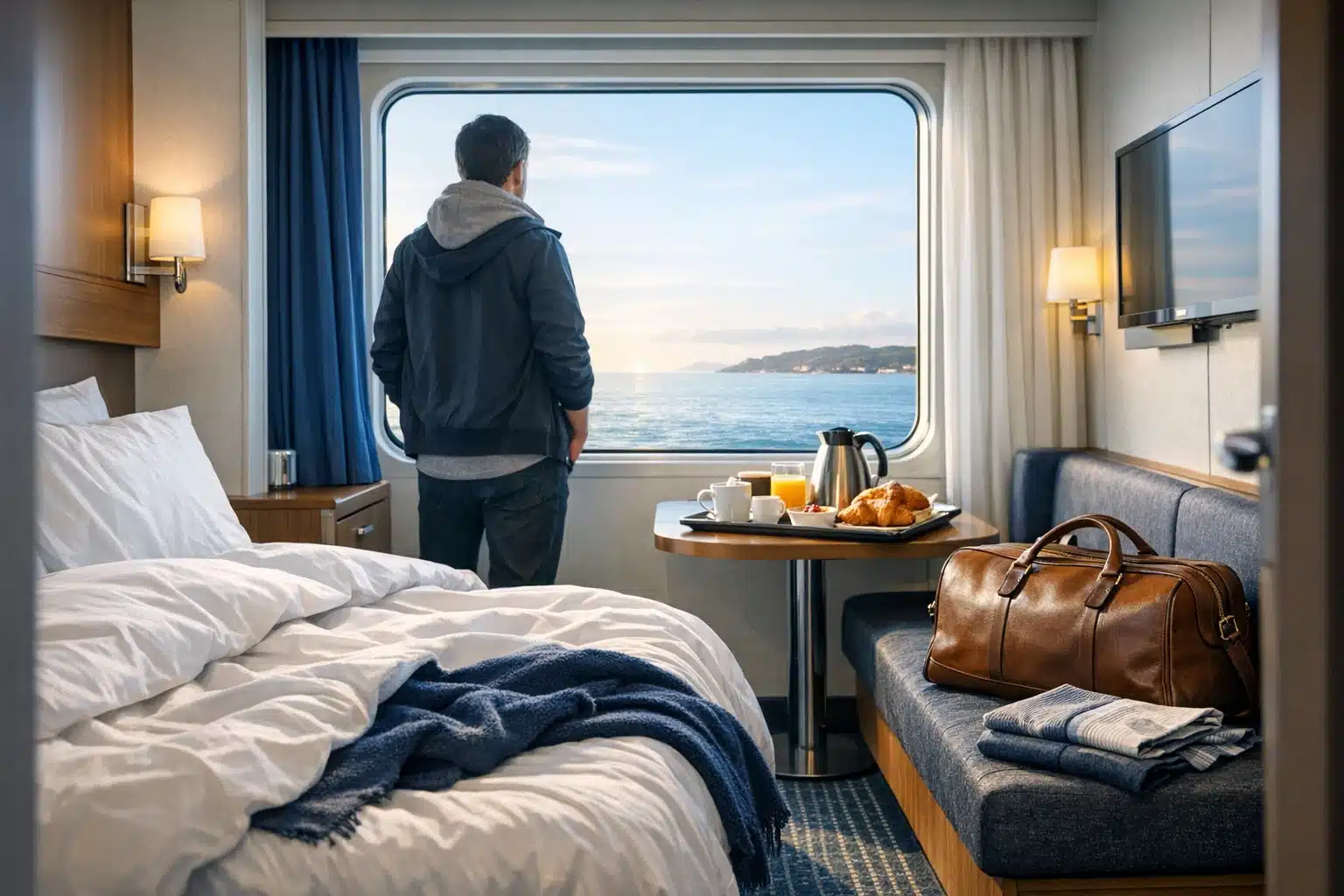
The first major choice is usually cabin type. On a short sailing, some passengers consider a seat or lounge option to save money, but a private cabin is often worth serious consideration, especially on overnight journeys. A cabin gives you a bed, privacy, storage space, and a place to reset. For couples, it adds comfort; for solo travelers, it can make the whole trip feel more organized; for families, it creates a base rather than a waiting area. Inside cabins are usually cheaper, while outside cabins with a window or porthole provide natural light and a stronger feeling of travel.
Costs can vary widely by season, day of the week, school holidays, and cabin grade. Weekend sailings and peak summer dates tend to cost more, while shoulder-season departures in spring or early autumn may offer better value and fewer crowds. When comparing prices, do not stop at the headline fare. Look at the total cost, including:
• cabin upgrades
• meals or dining packages
• port transfers in Dublin
• hotel nights if included or needed
• attraction tickets
• parking in Liverpool or train fares to the port
• travel insurance
Budgeting also benefits from understanding your travel style. If you enjoy a relaxed pace, spending a little more on a convenient hotel and central location in Dublin may save time and energy. If you are mostly using the city as a base for walking and sightseeing, a clean mid-range option is often enough. Likewise, prepaid extras can be useful if they genuinely match your habits, but not every bundle is good value. Breakfast included in a hotel often helps; premium dining on a short crossing may be optional rather than essential.
Booking early can increase your choice of cabins, especially if you want a specific setup such as twin beds, accessible facilities, or family occupancy. However, flexible travelers sometimes find attractive last-minute offers. The key is not to rely on luck if dates are important.
Finally, build a small contingency fund. Sea travel is dependable but still affected by weather, port operations, and timetable changes. Having extra room in your budget for a taxi, a meal, or an unexpected overnight adjustment can turn a stressful moment into a manageable one. Good planning does not remove all surprises; it simply makes them easier to absorb.
How to Spend Your Time in Dublin: Sightseeing, Food, and Pace
Dublin works especially well for a mini cruise because it is compact, characterful, and easy to enjoy in layers. You do not need a week to feel its atmosphere. In a day or two, you can get a convincing sense of the city’s rhythm: busy streets opening into quiet squares, elegant Georgian terraces, bookish corners, riverside walks, and pubs where conversation seems to rise with the music. The trick is to match your itinerary to the limited time you actually have, rather than the fantasy list you built before departure.
For first-time visitors, central Dublin is a good starting point. Trinity College is often high on the list because it combines architecture, history, and one of the city’s most famous cultural attractions. Nearby, Grafton Street offers buskers, shops, and a natural route into the surrounding lanes. If you want a broad overview with minimal planning, a hop-on hop-off bus can be useful. It is not the most intimate way to see a city, but it is efficient when time is tight, especially if mobility or weather is a concern. By contrast, walking gives you stronger local texture and is often the better choice for travelers who enjoy finding cafés, bookstores, and side streets on instinct.
Another useful comparison is between iconic attractions and thematic exploration. Dublin’s headline sites are famous for a reason, but they are not the only way to spend your day.
• For history: Dublin Castle, Kilmainham Gaol, and EPIC each tell different parts of the Irish story.
• For literature: Trinity College, independent bookshops, and literary walking routes bring the city’s intellectual life into focus.
• For food and drink: markets, bakeries, gastropubs, and distillery or brewery tours can turn the city into a culinary break.
• For atmosphere: St Stephen’s Green, Merrion Square, and the streets around the Liffey offer space to slow down.
Temple Bar deserves a measured approach. It is lively, photogenic, and easy to reach, but it can also be crowded and more expensive than quieter nearby areas. For some travelers, it is worth visiting once for the energy alone. For others, a less obvious pub with traditional music and local conversation will be more memorable. The best Dublin evenings are often found by stepping one street away from where everyone else has stopped.
If your time is limited, do not overbook museums and tours. Dublin is a city that rewards pauses: coffee by a window, a walk after rain, a half-hour in a park, a late lunch that stretches into early evening. That slower texture pairs beautifully with a sea journey. After all, a mini cruise is not only about seeing places; it is about feeling the shift between them.
Final Advice for Travelers: Packing, Practicalities, and Who This Trip Suits Best
Practical preparation can make the difference between a smooth mini cruise and a rushed one. Because the trip mixes sea travel, port logistics, and city sightseeing, packing should be versatile rather than heavy. Dublin weather is famously changeable, and Irish Sea crossings can feel cool even outside winter, so layers are more useful than bulky single-purpose clothing. A light waterproof jacket, comfortable walking shoes, and a small day bag often matter more than dressing for ideal conditions.
Documents deserve early attention. Requirements vary by nationality, operator, and current border arrangements, so travelers should always check official guidance before departure. Even when some routes may accept alternative identification for certain passengers, carrying a valid passport is often the simplest and safest option. Keep confirmations, booking references, insurance details, and any hotel vouchers easy to access. It also helps to download essential emails or screenshots in case your mobile signal is weak at the wrong moment.
Here are some practical items that regularly prove useful:
• a small overnight bag arrangement so you are not unpacking everything at once
• motion sickness remedies if you are sensitive to sea conditions
• a portable charger for maps, tickets, and photos
• a refillable water bottle
• smart-casual clothing if you plan to dine onboard or go out in Dublin
• earplugs if you are a light sleeper
Timing matters too. Arriving late to the port is one of the easiest mistakes to avoid, and cutting your transfer back to Dublin Port too fine can create unnecessary stress. Build cushions into the schedule. The same principle applies to sightseeing: two or three well-chosen activities are usually better than six rushed ones. Short breaks reward clarity.
So who is this trip best for? It suits couples looking for an easy getaway, friends wanting a social short break, solo travelers who enjoy a structured route, and first-time cruisers curious about life at sea without committing to a long itinerary. It can also work for families, particularly if they like the journey itself to be part of the holiday. Travelers who want constant luxury programming may find a mini cruise simpler than a major ocean liner, but those who value convenience, scenery, and a city break wrapped inside a sea crossing often find it ideal.
Conclusion for the target traveler
If you want a short holiday that feels different from the usual flight-and-hotel formula, a 4-night mini cruise from Liverpool to Dublin is a smart and enjoyable choice. It offers manageable travel times, a memorable departure by sea, and enough time in Dublin to experience the city with purpose rather than haste. Plan the basics well, keep expectations realistic, and leave a little room for wandering. Do that, and this compact route can deliver the rare pleasure of a trip that is both simple to organize and rich in atmosphere.