4-Night Mini Cruise from Liverpool to Bruges: Itinerary and Travel Tips
Introduction and Article Outline: Why a Liverpool to Bruges Mini Cruise Appeals
A 4-night mini cruise from Liverpool to Bruges offers a compact way to sample sea travel and a classic Flemish city without committing to a long holiday. It suits first-time cruisers, couples wanting an easy break, and travellers who prefer a no-fly option from northern England. Because time ashore is limited and schedules can change with tides, weather, and cruise line planning, a little preparation makes the trip smoother, cheaper, and far more rewarding.
That balance of convenience and atmosphere is what makes this route so relevant. For many travellers, a short cruise is less about ticking off many destinations and more about testing a style of travel. You unpack once, settle into your cabin, and let the ship do the moving while you enjoy dining rooms, lounges, sea views, and a day in one of Europe’s most photogenic cities. Compared with flying for a weekend break, a mini cruise can feel calmer and more self-contained. Compared with a longer cruise, it demands less annual leave and a smaller budget, though it also gives you fewer chances to recover lost time if you do not plan well.
Bruges is especially suited to this format. Its compact medieval core allows visitors to experience canals, market squares, churches, museums, and cafés within a single day. The cruise itself usually docks at Zeebrugge, the coastal port that serves as Bruges’ maritime gateway, so understanding the transfer process matters almost as much as choosing what to see once you arrive. A mini cruise can feel wonderfully simple, but the best trips usually come from clear expectations: this is a short, stylish sample, not a deep exploration of Belgium.
The article below begins with an outline and then expands each part in detail:
- How a typical 4-night itinerary is structured from embarkation to return.
- What a day in Bruges realistically looks like and how to use limited hours well.
- How cabin choice, dining, entertainment, and budgeting affect the overall value.
- Which practical travel tips help first-time passengers avoid common mistakes.
- Who this type of cruise suits best, and when another type of city break may be a better fit.
If the idea of stepping aboard in Liverpool as the skyline falls behind and waking up a little closer to Belgium sounds appealing, this guide will help you turn that mood into a practical plan.
Typical 4-Night Itinerary: What the Journey Usually Looks Like
A 4-night mini cruise is short, but it still follows a recognisable rhythm. Exact timings vary by cruise line, season, and port conditions, yet most sailings work on a five-day pattern: embark on day one, spend time at sea, visit the Belgian coast for Bruges, enjoy another stretch onboard, and disembark back in Liverpool on the final morning. That structure is important because it shapes how you pack, how much you book in advance, and how ambitious you should be with shore plans.
Day one is usually about embarkation and settling in. Liverpool’s cruise departures are attractive because they avoid the complexity of long airport transfers for many travellers in northern England, North Wales, and parts of the Midlands. After check-in, security, and boarding, the first few hours are best used for practical tasks rather than sightseeing around the ship. Find your cabin, explore the main decks, confirm dining times, and note where the theatre, buffet, lifts, and customer service desk are located. If you are new to cruising, the safety drill is not just mandatory; it also helps you get your bearings. By the time the ship pulls away, what began as a transport plan starts feeling like a holiday.
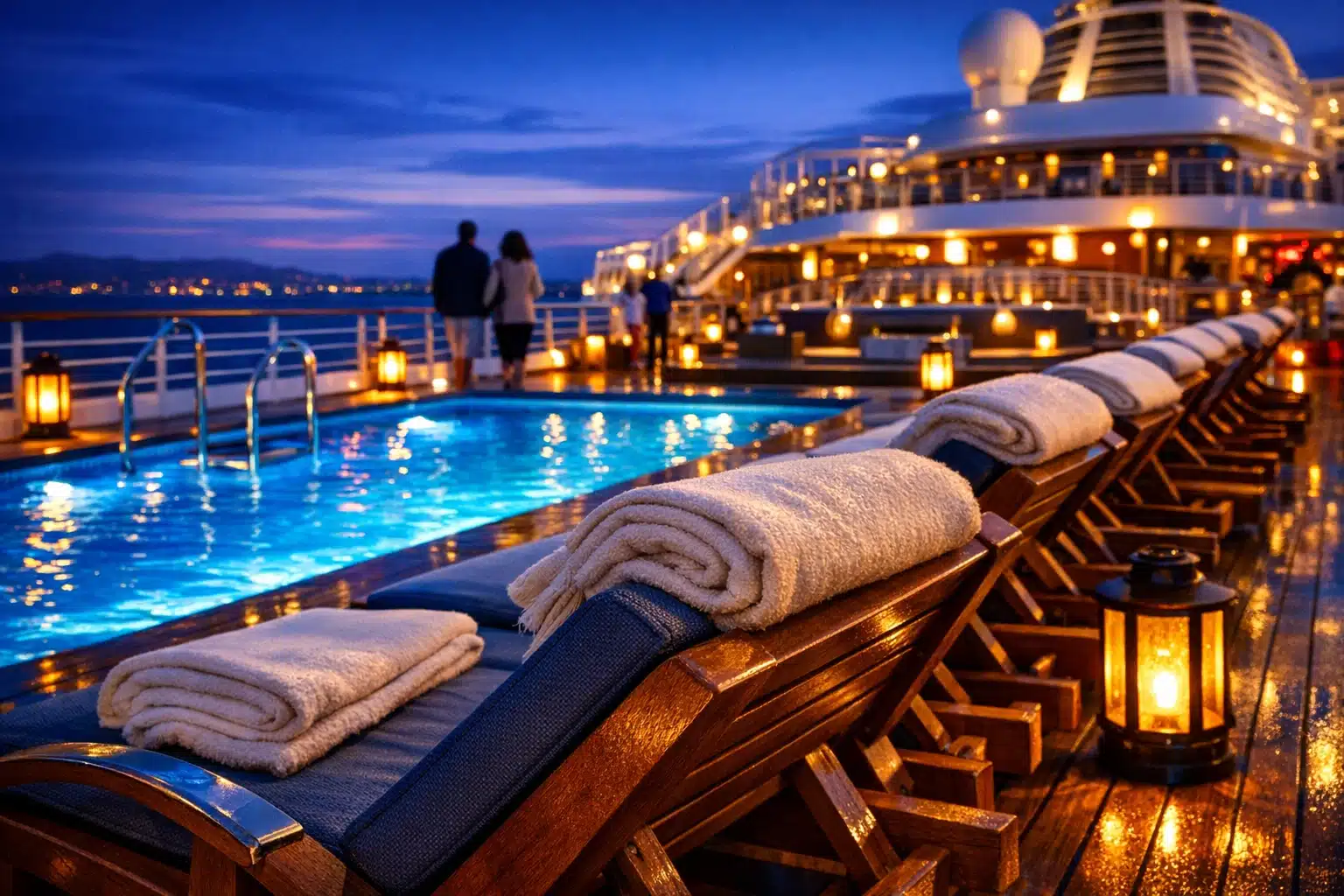
Day two is often a sea day. Some people imagine this as empty time, but on a mini cruise it is part of the value. You are effectively getting a floating hotel, restaurant district, and entertainment venue in one place. Typical onboard options include quizzes, afternoon tea, talks, live music, spa treatments, pool access on suitable ships, and evening shows. This is also the best day to slow down. Watch the horizon, read without interruptions, or simply enjoy the unusual luxury of not having to navigate roads, timetables, or airport gates.
Day three is the destination highlight: arrival at Zeebrugge for Bruges. Port arrival times can be early, and return-to-ship deadlines are strict, so this day rewards discipline. Depending on the cruise line, you may have:
- a cruise-organised transfer directly to Bruges,
- a guided shore excursion,
- or an independent route using local transport where permitted and practical.
Day four is commonly another sea day or a partial sailing day back toward Liverpool. This is when many travellers reflect on whether cruising suits them. Did they enjoy the ship, the cabin, the pace, and the structure? A mini cruise is often a test run for a longer voyage.
Day five is disembarkation. It is usually efficient rather than glamorous, so keep documents, luggage labels, and travel clothes organised the night before. In short, the itinerary is simple, but the simplicity is the point: brief, manageable, and easy to fit into a working week or long weekend.
Bruges in a Day: How to Use Limited Shore Time Wisely
Bruges is one of those cities that seems to have been designed for short visits, at least on the surface. The centre is walkable, the architecture is memorable almost at once, and many of its best-known sights sit within a relatively compact area. But a cruise stop is still a timed stop, which means you need a realistic plan. The key is to think in layers: transport first, priorities second, extras third. If you get that order right, the city feels enchanting. If you do not, the clock suddenly becomes loud.
Because ships generally dock at Zeebrugge rather than in Bruges itself, your first decision is how to reach the city. Cruise-organised transfers are usually the simplest option, especially for first-time visitors or anyone who values predictability. They tend to cost more than independent transport, but they reduce uncertainty and are designed around the ship’s schedule. Independent travel can be cheaper and more flexible, yet it may involve local transfers, station connections, and extra attention to timing. Some port areas also have access restrictions, so it is worth checking current arrangements before assuming you can simply walk out and improvise.
Once in Bruges, most visitors focus on the historic centre. A smart first-time route often includes the Markt, the Belfry area, Burg Square, and a canal-side walk. If you enjoy churches, the Basilica of the Holy Blood and the Church of Our Lady are common stops. If you prefer atmosphere over checklists, Bruges rewards wandering: cobbled lanes, gabled buildings, and quiet water reflections do much of the work. In a city like this, the joy is often found between landmarks rather than inside them.
To make the most of the day, choose one of these approaches:
- Landmarks first: ideal for first-time visitors who want the classic Bruges photographs and key sights.
- Museum and culture focus: better for travellers interested in Flemish art, religious heritage, or local history.
- Food-led wandering: suitable for those who want cafés, chocolate shops, beer bars, waffles, and relaxed browsing.
Time management matters. A canal boat trip can be charming, but queues may eat into your afternoon. A sit-down lunch in a scenic square is enjoyable, though service may be slower in busy periods. The best compromise for many cruise passengers is one major attraction, one scenic walk, and one leisurely meal or café stop. That formula keeps the day memorable without turning it into a race.
Budget-wise, Bruges can be moderately expensive in the tourist centre, especially for meals, sweets, and souvenirs. Buying every chocolate box you admire is an excellent way to test your luggage space. Still, compared with many large European capitals, a day here can feel manageable if you prioritise carefully. Think quality over quantity. On a short cruise, Bruges is not a place to conquer; it is a place to taste.
Cabins, Dining, Onboard Life, and the Real Value of a Mini Cruise
One reason mini cruises remain popular is that they bundle several experiences into a short break. You are not just paying for transport to Belgium; you are also paying for accommodation, meals, entertainment, and the novelty of travelling by sea. Whether that feels like good value depends heavily on the choices you make before and during the trip. A low headline fare can rise quickly once you add cabin upgrades, drinks, Wi-Fi, excursions, and impulse purchases onboard.
Cabin selection is the first major decision. An inside cabin is usually the most budget-friendly option and can make sense on a short sailing if you plan to spend little time in the room. For many travellers, especially those treating the trip as a practical getaway rather than a luxury retreat, that is enough. An ocean-view cabin adds natural light and a stronger sense of place, which can make the voyage feel more special. Balcony cabins, where available, offer private outdoor space, but on a short northern European sailing the premium is not always justified unless you know you value solitude and sea views. In simple terms:
- Inside cabin: best for budget-conscious travellers.
- Ocean-view cabin: good balance between comfort and cost.
- Balcony cabin: attractive, but often more of an indulgence than a necessity on this route.
Dining is another part of the equation. Most mini cruises include standard meals in the fare, but speciality restaurants, premium drinks, and some snacks may cost extra. On a 4-night sailing, a drinks package is not automatically good value. It can work for passengers who genuinely expect to make frequent use of it, yet many travellers spend less by paying as they go. The same logic applies to spa treatments and paid dining upgrades: nice to have, not always necessary.
Onboard entertainment often surprises first-time passengers. Even on shorter itineraries, ships may offer live music, production shows, cinema screenings, quizzes, talks, and dance floors. The atmosphere usually shifts through the day. Morning is unhurried, afternoon is social, and evening can feel a little theatrical, as if everyone has agreed to dress the ordinary world in softer light for a while. That theatrical edge is part of the appeal. A mini cruise turns transit into an experience rather than a gap between two places.
Compared with a quick city break by air, cruising can offer advantages:
- no airport security routine for every stage of the trip,
- one cabin instead of changing location,
- built-in food and entertainment,
- generous luggage allowances on many sailings.
Still, it is not automatically cheaper. The best way to judge value is to compare total trip cost, not the advertised fare alone. A smart traveller looks at the full basket: fare, cabin type, transport to Liverpool, drinks, excursions, and spending money in Bruges. That is where the true bargain, or the hidden expense, reveals itself.
Travel Tips, Booking Strategy, and a Final Verdict for the Right Traveller
The best travel tips for a 4-night mini cruise are rarely glamorous, but they make a noticeable difference. Start with timing. Short cruises leave less room for mistakes, so arriving in Liverpool with plenty of margin is wise, especially if you are coming by rail or driving in from another region. An overnight stay before departure can reduce stress for early embarkation days. If you are driving, compare official port parking with third-party options and confirm walking distance or shuttle arrangements in advance.
Packing should be disciplined rather than ambitious. You are travelling for a few nights, not relocating across the North Sea. Bring comfortable walking shoes for Bruges, a light waterproof layer, any formal or smart-casual clothing required by your cruise line, medications in your hand luggage, and a small day bag for shore time. Weather can shift quickly on the Belgian coast and at sea, so layers work better than a suitcase full of single-purpose outfits. If you are at all prone to motion sensitivity, it is sensible to prepare before you feel unwell rather than after. Midship cabins on lower decks are often considered steadier, though no location removes motion completely.
Booking strategy matters too. Prices are influenced by demand, school holidays, cabin category, and whether the sailing falls over a weekend or a popular seasonal period. Shoulder-season departures can offer decent value, but conditions may be cooler and daylight shorter. If your main priority is Bruges itself, look closely at the actual port hours before booking. A cruise with a longer day ashore may suit you better than one with a lower fare but tighter timings.
Useful habits for the trip include:
- checking passport validity and any current travel requirements well before departure,
- printing or downloading booking documents in case mobile signal is patchy,
- booking transfers or excursions early if Bruges is your main reason for travelling,
- keeping an eye on onboard spending through the cruise app or account summary,
- returning to the ship well before the all-aboard time rather than cutting it fine.
So who is this cruise really for? It is a strong fit for first-time cruisers, couples seeking an uncomplicated break, friends wanting a social few days away, and travellers who like the romance of departure without the hassle of flying. It is less ideal for people who want deep cultural immersion, long museum days, or total schedule freedom. The format is compact by design.
Conclusion for travellers considering this route: a 4-night mini cruise from Liverpool to Bruges works best when you treat it as a sampler of two pleasures at once, shipboard life and a short visit to a beautiful city. If that sounds appealing, plan the Bruges day carefully, keep onboard extras in perspective, and choose comfort over overpacking your schedule. Done well, this kind of voyage can feel like opening a small travel box and finding far more inside than its size first suggests.