4-Night Mini Cruise from Hull to Amsterdam: Itinerary and Travel Tips
Short breaks have become more valuable, not less, and a 4-night mini cruise from Hull to Amsterdam answers that need with unusual efficiency. You leave northern England in the evening, wake to the rhythm of the ship, and reach the Netherlands without the usual airport shuffle. For travellers who want scenery, structure, and just enough freedom, this format offers a smart middle ground between a city break and a longer cruise. Understanding the timetable, costs, and onboard routine turns a good trip into a smooth one.
Understanding the 4-Night Format and Article Outline
A 4-night mini cruise from Hull to Amsterdam is usually better described as a short ferry-based European break than a conventional ocean cruise. That distinction matters, because expectations shape the trip. You are not sailing from port to port across several countries with multiple sea days. Instead, you are taking an overnight crossing from Hull to the Dutch coast, transferring onward to Amsterdam, spending meaningful time in the city, and then returning by sea. In many cases, the route uses the ferry link between Hull and Europoort near Rotterdam, with coach or independent rail travel onward to Amsterdam. Travel companies often market the holiday around Amsterdam because it is the destination most passengers want to explore.
This style of travel remains relevant for three practical reasons. First, it reduces airport friction. There is no liquid bag ritual, no scramble for overhead locker space, and often a more generous luggage allowance. Second, it suits regional travellers, especially those based in Yorkshire, the Humber, the North East, or the Midlands, who can reach Hull more easily than a major airport. Third, it turns transit into part of the holiday. The crossing itself becomes an experience, complete with restaurants, lounges, sea views, and that odd but pleasant sensation of waking up in another country.
Before getting into the detail, it helps to see the trip at a glance. A typical outline looks like this:
- Night 1: Check in at Hull, board the ship, have dinner, and sail overnight.
- Day and Night 2: Arrive in the Netherlands, transfer to Amsterdam, check in to your accommodation or begin your sightseeing, depending on package type.
- Day and Night 3: Enjoy a fuller day in Amsterdam, with time for museums, canal districts, food markets, or a short excursion.
- Night 4: Travel back to the ferry terminal, board in the evening, and sail overnight to Hull.
- Day 5: Disembark in Hull in the morning, usually after breakfast or a short wait for the ship to clear.
This structure makes the mini cruise appealing to several kinds of traveller. Couples often like the built-in sense of occasion. Friends appreciate the social side of the ship. Families find the journey easier than a tightly timed flight connection. Even solo travellers can benefit, because the route is straightforward once the moving pieces are understood. In the sections that follow, the itinerary, onboard experience, budgeting, and city-planning side of the trip will be broken down in practical detail.
A Typical Itinerary: From Hull Departure to Amsterdam Streets
The first day usually begins at the ferry terminal in Hull, where passengers check in several hours before departure. If you are arriving by car, parking options are often available nearby or through pre-booked arrangements. If you are coming by rail or taxi, it is wise to build in extra time. Ports operate on ship schedules, not city-break flexibility, and late arrivals can quickly become missed departures. Once check-in is complete, the mood shifts. Bags are dropped, boarding begins, and the practical act of leaving England starts to feel like a holiday.
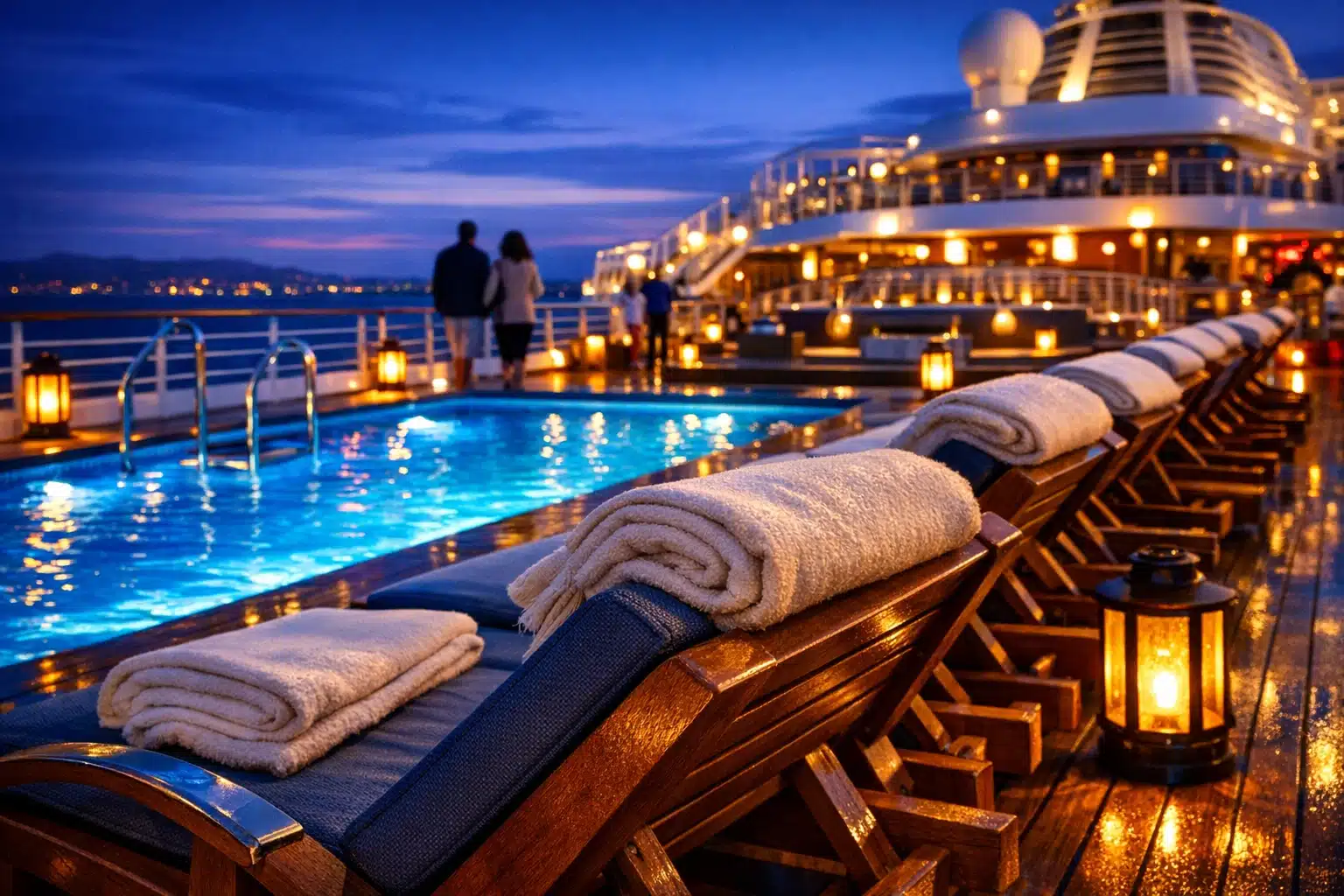
After boarding, most travellers head straight to their cabin to settle in. Cabins on this kind of crossing are usually compact but functional, with en suite bathrooms, storage, and beds designed more for comfort than glamour. Then comes the pleasant part: exploring the ship. Restaurants open, bars fill, and duty-free or onboard shops draw early browsers. Some passengers book a set dinner, while others choose a more flexible buffet. By the time the vessel leaves Hull, the skyline recedes, the deck grows breezy, and the trip acquires that cinematic quality sea departures tend to have. It is not grand ocean-liner theatre, but it does not need to be. The appeal is in the change of pace.
The next morning, the ship arrives on the Dutch coast, commonly at Europoort. From there, passengers either join an arranged coach transfer or continue independently by rail and local transport. Depending on traffic and the chosen route, Amsterdam is often reached in around 1.5 to 2.5 hours. This is the point where the mini cruise becomes a city break. If your package includes hotel accommodation, you may drop bags before sightseeing. If it is a shorter package without hotel inclusion, timing is tighter and planning becomes even more important.
During your time in Amsterdam, the itinerary opens up. Some travellers head first for the canal belt and simply walk, which is often the best way to get a feel for the city. Others prioritise Museumplein, the Anne Frank House area, the Jordaan, or a canal cruise. A four-night structure usually provides enough breathing room to avoid the rushed feeling common on day trips. You can spend one evening along the water, devote one morning to a museum, and still leave room for spontaneous discoveries such as a bakery stop, a hidden courtyard, or a quiet residential canal that feels almost staged for a painting.
The return leg typically begins late on the final Dutch day, with a transfer back to the port and a second overnight sailing. That last evening often feels different from the outward crossing. People are more relaxed, bags are fuller, and conversations sound like travel stories rather than anticipation. By the time the ship reaches Hull the next morning, the break has delivered something many short holidays fail to provide: both movement and rest.
What Life On Board Is Like and How It Compares with Flying
One reason the Hull to Amsterdam mini cruise remains attractive is that the ship itself is part of the value equation. On a flight, the journey is usually something to endure. On an overnight ferry, the journey can be the warm-up act. After boarding, you have space to move, places to sit, and a slower tempo that makes the trip feel less transactional. That difference is especially noticeable for travellers who dislike airports, feel cramped on short-haul flights, or simply want the holiday to begin before they reach their destination.
Cabin choice shapes the experience more than many first-time passengers expect. An inside cabin is the budget-friendly option and suits travellers who plan to use the room mainly for sleeping and showering. An outside cabin, with a window or porthole, adds natural light and a stronger sense of travel, especially on the morning arrival. Premium cabins or upgraded rooms may offer more space and better positioning, which can matter if you are sensitive to noise or want a more restful night. For a four-night break, a small upgrade can make a noticeable difference without pushing the total cost into luxury-trip territory.
Dining and entertainment vary by operator and sailing, but the broad pattern is familiar. Expect a mix of buffet dining, reserved restaurants, bars, coffee spots, and evening entertainment such as live music, quizzes, or casual performances. Some ships are lively, particularly on weekend sailings, while others feel calmer midweek. This makes timing important. A Friday departure may suit a group of friends looking for energy. A Sunday or midweek sailing might better fit couples who prefer a quieter atmosphere.
Compared with flying, the cruise format offers several advantages:
- More relaxed boarding and generally fewer restrictions on luggage.
- A built-in overnight stay, which can reduce the need for one hotel night.
- A more scenic and social travel experience.
- Less dependence on airport transfers and strict cabin baggage rules.
Still, it is not the right choice for everyone. Flying is faster if your only goal is to maximise time in Amsterdam. A ferry crossing takes longer, and sea conditions can affect comfort for passengers prone to motion sickness. The port arrival point is also not Amsterdam itself, so onward travel is part of the package whether arranged independently or through the operator. In simple terms, the mini cruise suits people who enjoy the journey as much as the destination. If your idea of a good break includes a drink on deck, a sunset over the water, and the pleasing hush of a cabin corridor at night, this mode of travel has a charm that air travel rarely matches.
Travel Tips: Budgeting, Packing, Documents, and Timing Your Trip Well
Good planning has an outsized effect on a short break, because a mini cruise leaves less room for correction once the schedule begins. The first practical step is understanding what your fare actually includes. Some packages cover cabin accommodation, port taxes, transfers, and a hotel stay in Amsterdam. Others include only the sea crossing and basic cabin, leaving city transport, meals, and accommodation to you. Two offers can look similar in price but differ sharply in value. Reading the details matters more than chasing the cheapest headline number.
Budgeting should cover more than the ticket itself. Travellers often underestimate the cost of onboard meals, drinks, local transport, museum entry, and optional upgrades. Amsterdam is a rewarding city, but it is not the cheapest urban break in Europe. Coffee, casual dining, and attraction entry fees can add up quickly. A realistic budget normally includes:
- Cabin and fare cost.
- Transfers between port and Amsterdam if not included.
- One or two paid attractions.
- Food and drink on board and in the city.
- Travel insurance and contingency spending.
Documents are equally important. Entry requirements depend on your nationality, passport status, and current border rules, so it is wise to check official government guidance before booking and again before departure. A passport with sufficient validity is essential for many travellers. Travel insurance is strongly recommended, and if you take regular medication, carry it in its original packaging with enough supply for the entire trip. Keep digital and paper copies of key bookings in case your phone battery disappears at the least helpful moment, which holiday technology has a remarkable talent for doing.
Packing for this trip is best approached with restraint. You do not need a large suitcase for four nights unless you enjoy carrying regret up staircases. Comfortable walking shoes are far more useful than extra outfit changes. Weather in the Netherlands can shift quickly, so layers work better than bulky clothing. A light waterproof jacket, portable charger, refillable water bottle, and a small day bag are all sensible choices. If you are sensitive to motion, sea-sickness tablets or wristbands are worth considering before departure rather than after the North Sea makes the decision for you.
Timing also affects the whole experience. Spring and early autumn often offer a strong balance of daylight, manageable temperatures, and fewer extremes. Summer brings longer days but heavier crowds. Weekend sailings can be lively and fun, though also busier and sometimes pricier. Midweek departures may offer better value and a calmer onboard atmosphere. If museums are a priority, pre-book timed entry where possible. For short breaks, queues are not charming local colour; they are lost sightseeing hours.
Making the Most of Amsterdam and Final Advice for the Right Traveller
Amsterdam rewards focused planning because it offers more than most short itineraries can comfortably hold. The mistake many visitors make is trying to see everything. On a 4-night mini cruise, a better strategy is to choose a style of trip rather than a checklist of landmarks. If you love classic city scenery, give priority to the canal belt, Jordaan, and the Nine Streets area, where narrow houses, bridges, and shopfronts create the postcard version of Amsterdam without feeling artificial. If art and history matter more, plan around Museumplein and book major museums in advance. If you prefer a slower rhythm, build in time for neighbourhood wandering, a canal cruise, and long coffee stops beside the water.
Because your time is finite, grouping sights by area saves energy. A smart first day might centre on the historic core, with Dam Square, the canal ring, and an evening walk once the day crowds thin out. A second day could be themed around culture or a specific district. This is often more satisfying than crossing the city repeatedly in search of efficiency that never quite arrives. Amsterdam is compact by capital-city standards, but it still rewards sensible route planning.
Here are a few approaches that work well for short stays:
- For first-time visitors: canal cruise, Jordaan walk, Dam area, and one major museum.
- For food-focused travellers: local bakeries, food halls, Indonesian-influenced dining, and neighbourhood cafés away from the busiest central lanes.
- For repeat visitors: consider Noord, Haarlem, or a less hurried museum visit rather than only headline attractions.
This kind of mini cruise is especially well suited to travellers who enjoy transitions. If you like the idea of the holiday beginning the moment you board, the route has real appeal. It also fits people who prefer structure without feeling overmanaged. The ship gives your break a frame, while Amsterdam provides freedom within it. Couples looking for a compact escape, friends wanting a sociable trip, and first-time European short-break travellers often get the most from the format. Those who need maximum speed or dislike sea travel may prefer flying, but that is a matter of travel style rather than one option being universally better.
For the target audience, the final takeaway is simple. A 4-night mini cruise from Hull to Amsterdam works best when approached as a two-part experience: an overnight sea journey and a short urban stay. Book with clarity, pack with purpose, and avoid overscheduling the city. Do that, and the trip offers something many modern breaks struggle to provide: a sense of departure, enough time to explore, and the welcome feeling that the journey home is still part of the adventure.