3 Night Mini Cruise From Edinburgh To Bruges: Itinerary and Travel Tips
A 3 night mini cruise from Edinburgh to Bruges packs sea views, medieval streets, and low-hassle travel into one compact getaway, which is why it continues to attract couples, friends, and first-time cruise passengers. Rather than stitching together flights, hotel check-ins, and multiple transfers, you settle into one cabin and let the journey unfold across the North Sea. For travellers with limited annual leave, that convenience can be every bit as valuable as the destination itself.
Outline: this article begins with how an Edinburgh-to-Bruges mini cruise usually works in practice, including route variations and timing. It then moves through a sample 3 night itinerary, a realistic guide to spending limited time in Bruges, essential travel tips for booking and packing, and a final section on who this kind of break suits best. The aim is not to oversell the trip, but to help you decide whether it matches your pace, budget, and travel style.
How a 3 Night Mini Cruise From Edinburgh to Bruges Usually Works
The first thing to understand is that “Edinburgh to Bruges” is often used as a simple travel label rather than a literal city-centre-to-city-centre sailing. Depending on the year, operator, and season, your package may depart from a port within reach of Edinburgh, or it may include a coach or rail connection from Edinburgh to a ferry terminal before the sea crossing begins. That detail matters because it shapes the rhythm of the trip: some breaks feel like a ferry holiday with a city excursion attached, while others feel closer to a short escorted European escape. Before booking, check exactly what is included, where embarkation happens, and whether transfers to Bruges are built into the fare.
In practical terms, most short North Sea cruise packages follow a familiar pattern. You travel to the port, board in the late afternoon or evening, spend the night at sea, and arrive on the Belgian coast the next day. From there, passengers usually transfer to Bruges by coach or train. Zeebrugge, the nearby port, sits roughly 15 to 20 kilometres from central Bruges, so the onward journey is manageable and usually takes around 20 to 30 minutes depending on traffic and the mode of transport. That short transfer is one reason Bruges works so well for mini cruises: you are not burning half the day getting inland.
There is also a psychological advantage to this style of travel. Once you board, the trip feels pleasantly self-contained. Your cabin, restaurant, lounge, and entertainment are all in one place, which reduces decision fatigue. For many travellers, that is part of the appeal. A weekend city break by air can be faster on paper, but it often involves airport queues, baggage rules, and early departures that eat into the joy. A mini cruise slows things down just enough to feel like a holiday from the moment you step onboard.
It is worth going in with the right expectations. This is not the same as a large Mediterranean cruise with several ports and all-day sunshine on deck. A North Sea mini cruise is usually more compact, more weather dependent, and more destination focused. What you gain is atmosphere and efficiency. You get the quiet theatre of departure, the small thrill of waking near another country, and a day or two in one of Europe’s most photogenic cities. For travellers based in Scotland, especially those seeking a manageable first cruise, that balance can be very appealing. • Check whether transfers are included. • Confirm cabin type and meal options. • Verify the actual departure port before final payment.
Sample 3 Night Itinerary: A Realistic Day by Day Plan
Because operators package these breaks in different ways, the most useful approach is to think in terms of a sample itinerary rather than one fixed schedule. A common 3 night structure includes one night travelling out, one night spent in or near Bruges, and one night for the return journey. If your booking is a ferry-led mini cruise, you may have two nights at sea and one long day ashore instead. Either way, the underlying logic is similar: travel while you sleep, spend your best daylight hours in Belgium, and keep logistics simple.
Day 1 usually begins in Edinburgh or the wider Lothian area, where you travel to the departure point by car, rail, coach, or a package transfer. Check-in windows are often earlier than first-time travellers expect, so it is wise to arrive with time to spare. Once onboard, the routine becomes easy. You locate your cabin, explore the public decks, and settle into the gentle ritual of departure. Dinner is often served in a main restaurant or buffet space, and many ships offer bars, live music, cinema screenings, or casual lounges. The evening matters more than people assume. Instead of treating it as dead travel time, use it as the first chapter of the holiday. Watch the coastline fade, have an unhurried meal, and resist the temptation to overpack the schedule.
Day 2 is the heart of the trip. After breakfast, you arrive on the Belgian coast and transfer to Bruges. If your package includes a hotel night, this is the day to combine headline sights with relaxed wandering. Drop bags, orient yourself around the Markt, and use the afternoon for the city’s essentials: the Belfry, Burg Square, canal views, and a café stop. In the evening, Bruges changes character. Day-trippers thin out, shop shutters come down, and the historic centre becomes calmer and more cinematic. The canals reflect amber light, the cobbles sound sharper underfoot, and even a short walk can feel unexpectedly memorable.
Day 3 depends on your return arrangement. If you stayed overnight in Bruges, use the morning for one museum, a bakery stop, or a final canal-side stroll before heading back to the port. If your itinerary is a same-day city excursion, this may instead be your return day at sea, with time to rest, shop, or simply do very little. Day 4, or the final morning of the third night break depending on how the operator counts nights, is typically arrival back in the UK and onward travel to Edinburgh. The key lesson is simple: do not try to “complete” Bruges. This kind of trip works best when you accept its scale and enjoy it for what it is, a concentrated, low-friction escape rather than a box-ticking marathon.
How to Spend Limited Time in Bruges Without Feeling Rushed
Bruges rewards focus. Its historic centre is compact, walkable, and visually rich, which means you can see a great deal in a short time if you avoid zigzagging without a plan. The city centre is a UNESCO World Heritage Site, and much of what draws visitors there is within a relatively small area. The Markt, with its stepped gabled buildings and open square, is the natural starting point. From there, Burg Square, the Basilica of the Holy Blood, and many of the city’s most photographed lanes are only a short walk away. The Belfry is one of the big landmarks, and if you are comfortable with stairs, climbing its 366 steps gives you a strong sense of the city’s layout.
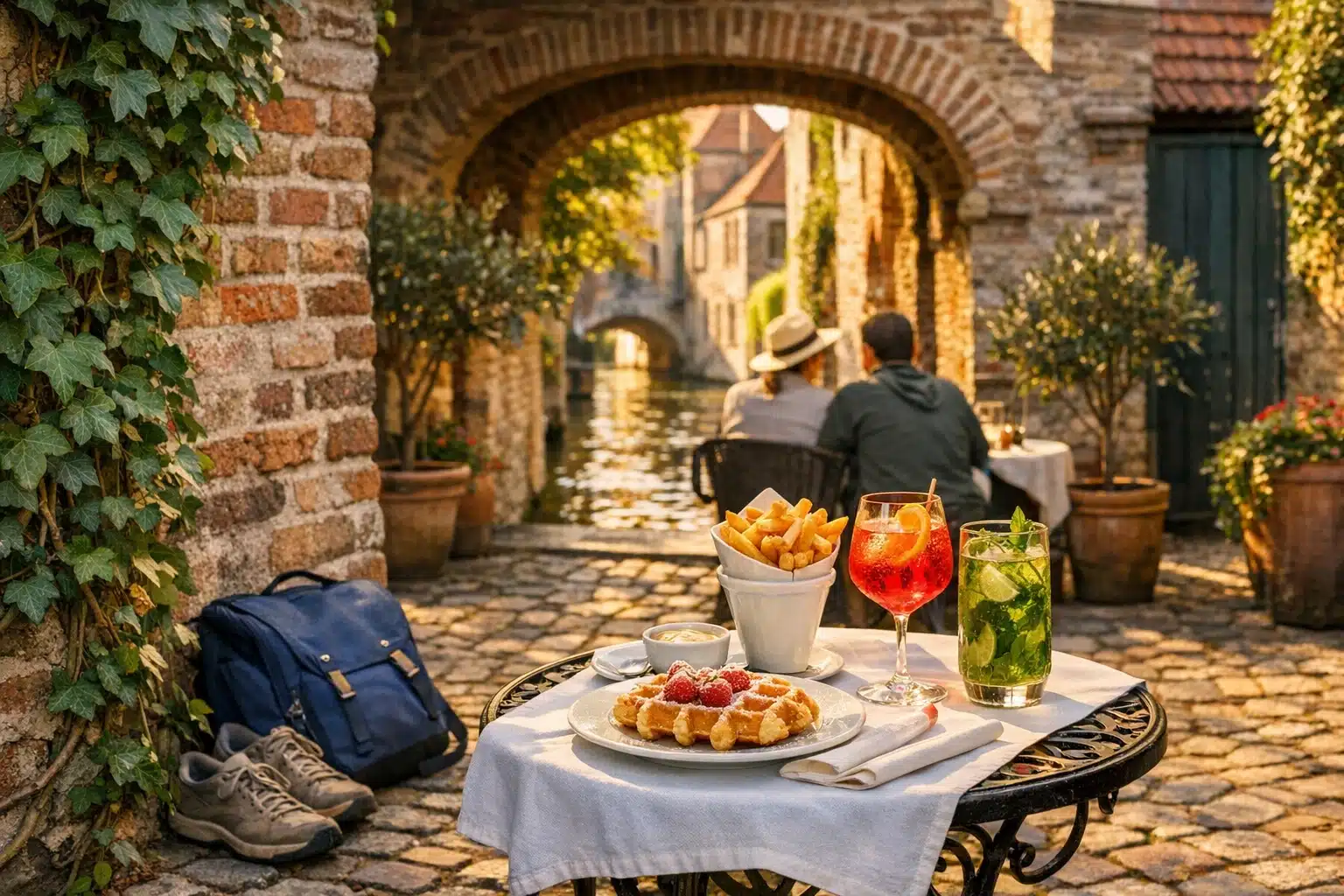
That said, a short visit to Bruges should not become a checklist. The city’s real charm sits in transitions: the turn from a busy square into a quiet lane, the sudden appearance of a canal bridge, the smell of waffles and fresh bread drifting out of a side street bakery. If you only have part of a day, build your route around three layers. First, cover the landmarks that would disappoint you to miss. Second, choose one or two atmospheric pauses, such as a canal cruise, a local café, or a bench near the Begijnhof. Third, leave at least an hour unscripted. Bruges is one of those rare places where getting mildly distracted can be more rewarding than following the map too strictly.
A smart short-stay route might look like this: • Start at Markt and Burg Square. • Walk to the Rozenhoedkaai viewpoint for classic canal photographs. • Visit the Church of Our Lady or Groeningemuseum if art or history interests you. • Pause for Belgian chocolate, fries, or a local beer. • End near the Minnewater or Begijnhof if you want a calmer finish. This sequence works because it balances energy and stillness. You see the famous core, but you also experience the softer side of the city beyond the busiest crowds.
Food deserves a place in the plan, even on a brief stop. Bruges is ideal for grazing rather than staging one heavy meal after another. A bakery breakfast, a simple lunch, and one deliberate treat often work better than reserving too much restaurant time. Belgian chocolate shops are everywhere, but quality varies, so look for specialist chocolatiers rather than only the busiest souvenir spots. Beer lovers will find excellent local options, yet even non-drinkers can enjoy the café culture. In practical terms, the city is small enough that you do not need public transport in the centre. Comfortable shoes matter more than anything else. The cobbles are part of the charm, but after several hours they can become the loudest argument for sensible footwear.
Booking, Budgeting, Packing, and Onboard Travel Tips
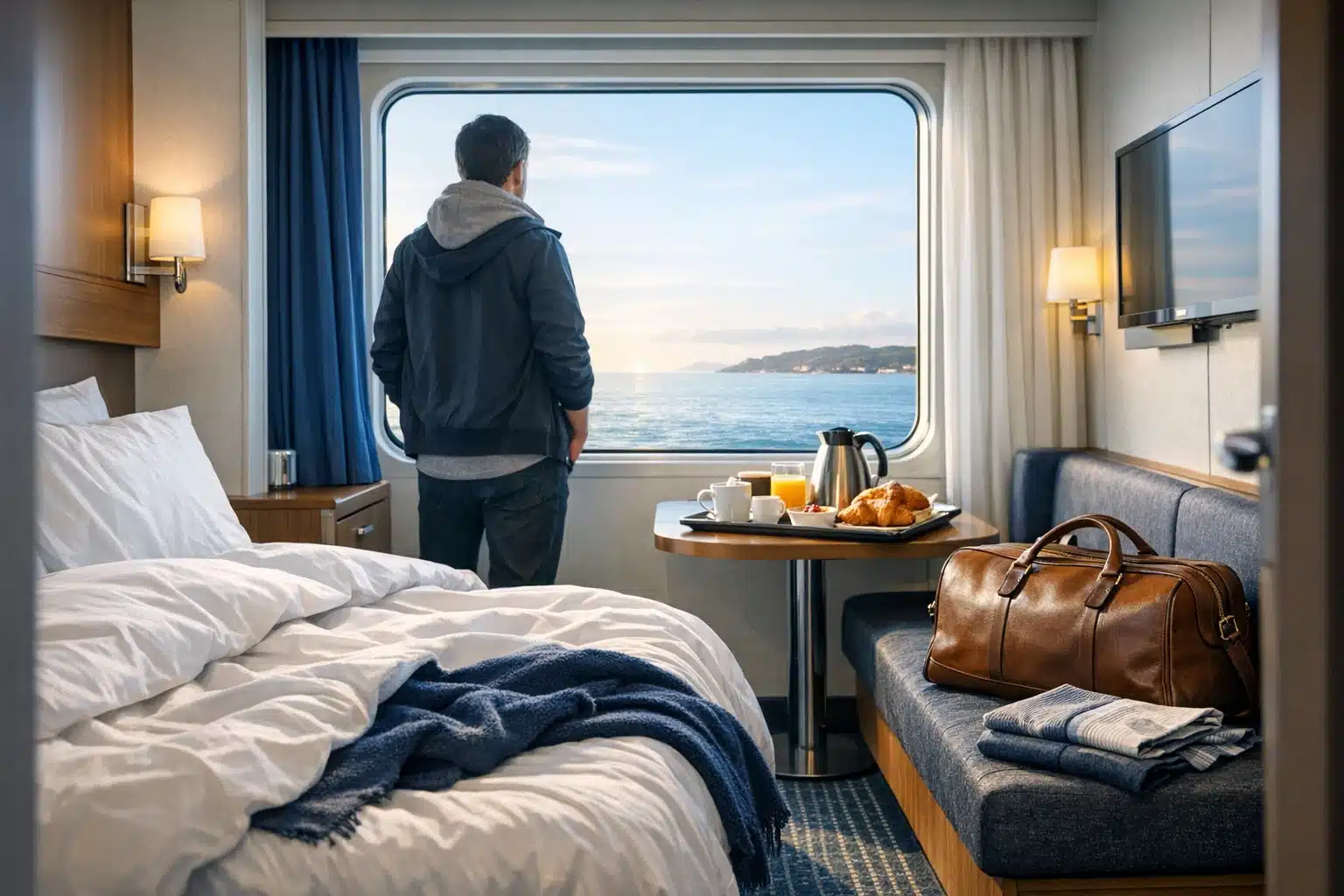
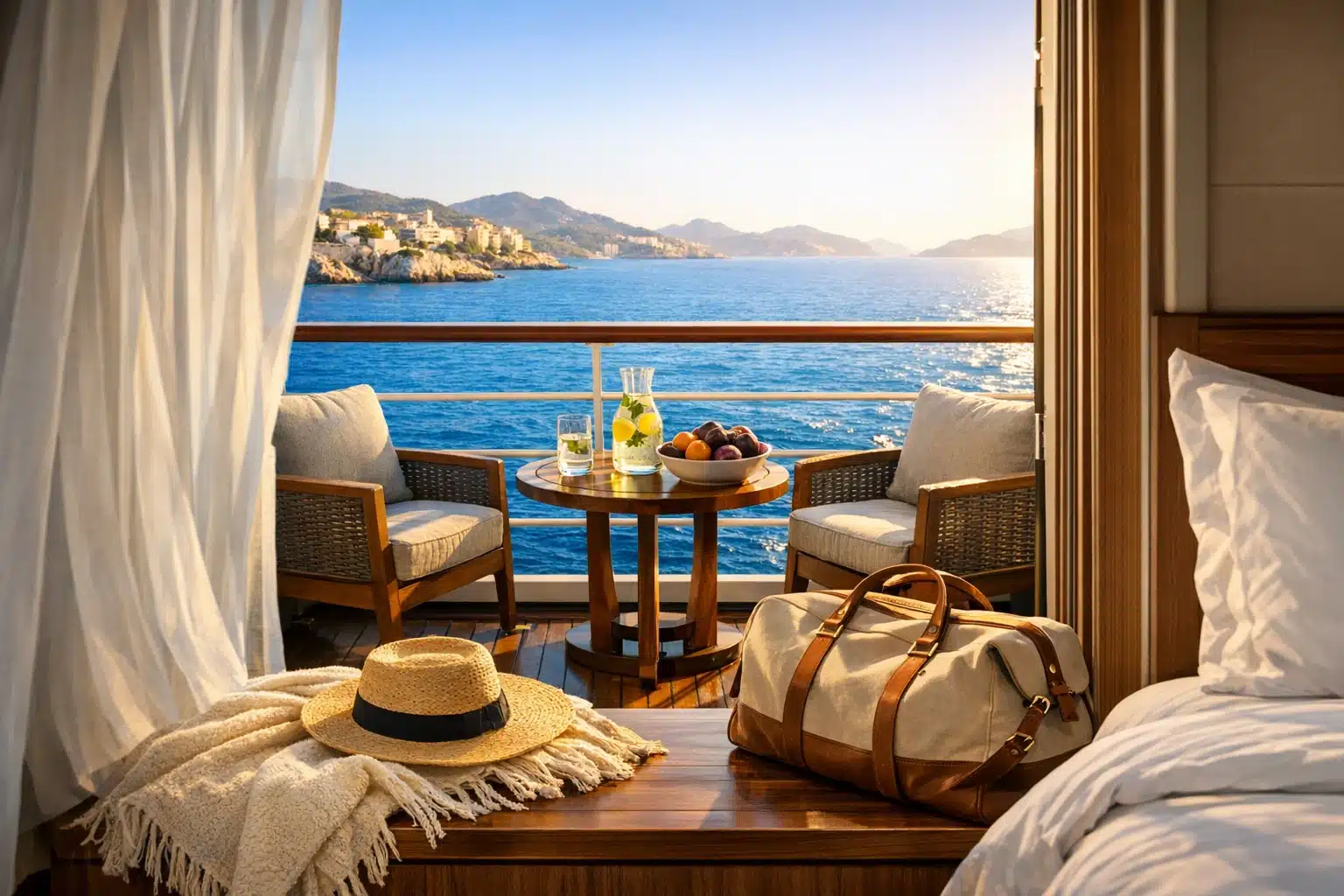
The simplest way to improve a mini cruise is to make a few good decisions early. Start with the cabin. Interior cabins are usually the lowest-cost option and make sense if you mainly want a private place to sleep. Sea-view cabins add natural light and can make the crossing feel more connected to the journey. If you are prone to motion sickness, a mid-ship cabin on a lower deck is often a steadier choice than one high up at the ends of the vessel. It is also worth checking what your fare includes. Some packages bundle meals, transfers, and entertainment, while others headline a low base price and add extras later.
Budgeting for the trip is easier when you split spending into four categories: transport to the port, the cruise fare itself, onboard extras, and your time in Bruges. That structure prevents the classic mistake of focusing only on the advertised fare. Drinks, specialty dining, parking, coach transfers, travel insurance, and souvenirs can change the real cost noticeably. Compared with low-cost flights, a mini cruise sometimes looks more expensive at first glance, but the comparison is only fair when you include hold luggage, airport transfers, and a hotel if a flight-based city break requires one. For some travellers, the price difference narrows once the full picture is visible.
Documents are another area where a little care avoids a lot of stress. If you are a UK passport holder travelling to Belgium, your passport generally needs to meet Schengen validity rules, and official requirements can change, so always check current government advice before departure. Travel insurance is strongly recommended, even for short breaks. If you hold a GHIC, bring it, but do not treat it as a substitute for insurance. On the practical side, keep essentials in a small hand bag rather than packing everything into a case you do not want to open until later. Medication, chargers, toiletries, travel documents, and a change of clothes should be easy to reach.
Packing for Bruges is mostly about layers. North Sea weather can shift quickly, and Belgian city weather is not always dramatically different. Bring a light waterproof, a warmer layer for evenings on deck, and shoes you would genuinely choose to walk several kilometres in. A few quick reminders make a big difference: • Book dinner or premium dining in advance if your operator allows it. • Arrive at the port earlier than the minimum time. • Download offline maps for Bruges. • Carry a small amount of euros or a payment card that works well abroad. • If you are sensitive to motion, consider sea bands or medication and take advice from a pharmacist before travel. Thoughtful preparation will not remove every variable, but it greatly increases the odds that the trip feels easy rather than improvised.
Who This Trip Suits Best and Final Thoughts for Travellers Leaving Edinburgh
A 3 night mini cruise to Bruges suits a very specific kind of traveller, and that is not a weakness. It is especially good for people who value the journey as part of the holiday, enjoy relaxed evenings, and prefer one attractive destination over a frantic multi-stop schedule. Couples often like the built-in atmosphere of a ship at night and a beautiful city by day. Friends can use it as a low-effort social break, particularly if they want shared time without constant planning. It also works well for first-time cruisers because the commitment is short. If you discover that ship travel is not for you, you have learned that lesson in three nights rather than ten.
On the other hand, it may not be ideal for everyone. Travellers who only care about maximum time on land may prefer flying, especially if they are comfortable with airports and can travel light. People who dislike enclosed cabin space, fixed sailing times, or the chance of rougher sea conditions might also find a land-based trip easier. The same applies to visitors who want to explore Belgium more widely. If your dream itinerary includes Ghent, Brussels, Antwerp, and Bruges in one sweep, a rail-based holiday will give you more flexibility. The mini cruise is better understood as a concentrated experience with a clear mood rather than as the most efficient way to cover distance.
Still, for the right traveller, this break has a quiet charm that is hard to reproduce by air. You board with one horizon in view and wake with another. The timetable narrows your choices in a helpful way, and that can be deeply relaxing. Bruges itself is a strong match for the format because it gives back quickly. Even with limited time, you can walk beautiful streets, see major landmarks, eat well, and come home feeling that you were genuinely away rather than merely busy in a different place.
If you are based in or near Edinburgh and want a short European escape that feels manageable, scenic, and a little different from the usual airport dash, this kind of mini cruise deserves serious consideration. Book with clear expectations, confirm the exact port and transfer details, and plan your Bruges hours with a light touch rather than military precision. Do that, and the trip can deliver something many short breaks fail to offer: not just movement, but a real sense of transition. For a few days, sea and city do the storytelling for you, and that is often more than enough.