4-Night Mini Cruise from Belfast to Bruges
A 4-night mini cruise from Belfast to Bruges sits in a sweet spot between a weekend escape and a longer holiday. It gives travellers time to settle into the journey, enjoy the novelty of arriving by sea, and step into a city known for canals, medieval streets, and compact sightseeing. For couples, friends, and first-time cruisers alike, the format can feel refreshingly simple: unpack once, follow the itinerary, and let the trip unfold at an easier pace.
Outline
- The appeal of a short cruise break and how a Belfast to Bruges itinerary is usually structured.
- What life on board is really like, from cabins and dining to entertainment and sea travel routines.
- How to explore Bruges efficiently, including practical transport notes and sightseeing priorities.
- Budgeting, packing, and planning tips, with useful comparisons to flight-based city breaks.
- Who this kind of trip suits best, along with a concluding view for travellers considering booking.
1. Why a 4-Night Mini Cruise from Belfast to Bruges Appeals to So Many Travellers
A mini cruise has a particular charm because it turns the journey into part of the event rather than a hurdle to clear. That matters on a route linked to Bruges, a city that already feels storybook-like before you even set foot on its cobbles. For travellers departing from Belfast, the appeal often begins with convenience. You avoid some of the common irritations of short-haul flying, such as strict cabin bag limits, long security queues, and the compressed feeling of moving from airport to transfer to hotel in a single blur. A cruise-style trip slows that rhythm down.
There is also an important practical point to understand: Bruges itself is inland, so “Belfast to Bruges” packages usually involve arrival via the nearby Belgian coast, often through Zeebrugge, followed by a transfer into the city. Bruges is roughly 15 kilometres from Zeebrugge, which makes it highly accessible for a day visit while still preserving the sense of a sea-linked arrival. In travel marketing, that detail is sometimes tucked into the background, but it is useful to know because it shapes how much time you may actually spend in the city.
Compared with a standard city break, the value of a 4-night mini cruise is not only financial. It is about travel texture. You get evenings on board, a cabin of your own, meals and entertainment in one place, and the novelty of waking up at sea or near port. For many people, that creates a feeling of escape that a one-hour flight cannot match. The format especially suits:
- first-time cruisers who want a low-commitment introduction
- couples looking for a compact but memorable break
- friends planning a social trip with built-in dining and entertainment
- travellers who enjoy scenic arrival and slower pacing
From a timing perspective, four nights is long enough to feel distinct from everyday life, but short enough to fit around work schedules and school terms. It can also be a good compromise for people who like the atmosphere of cruise travel but do not want a week or more at sea. In that sense, the route is relevant because it bridges several travel styles at once: part ferry journey, part cruise experience, and part cultural city break. That hybrid character is exactly what makes it interesting.
2. What to Expect On Board: Cabins, Dining, Entertainment, and the Rhythm of the Voyage
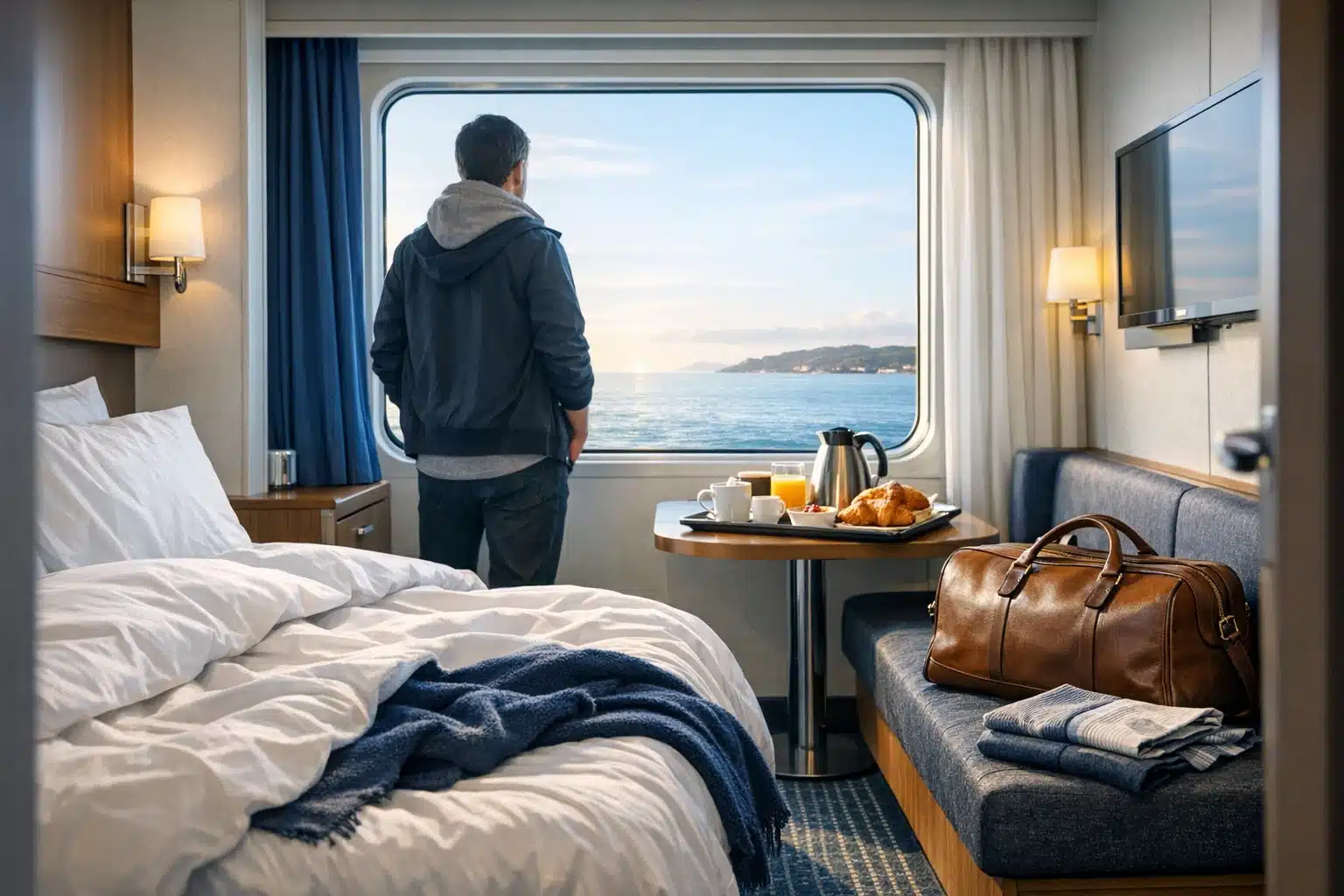
One of the most overlooked strengths of a mini cruise is that it gives structure without demanding much effort from the traveller. Once you have checked in and boarded in Belfast, the logistics become simpler. Your cabin acts as a private base, and the ship itself becomes a small floating neighbourhood with clear routines: meal times, departure views, entertainment in the evening, and a slower morning tempo than many land-based trips allow.
Cabin choice matters more than some first-time bookers expect. Interior cabins are usually the most budget-friendly and work well for travellers who only plan to sleep there. Outside cabins, where available, can feel more spacious because of the natural light. If you are someone who values a calm start to the day, waking to daylight rather than an alarm and a blacked-out room may justify the upgrade. For light packers, the room is simply functional. For travellers who like quiet downtime between meals and activities, it becomes more significant.
Dining is another part of the experience that shapes perceptions of value. Mini cruises often include access to casual and more structured meal options, though exactly what is included varies by operator and package. That is why it is wise to check what your fare covers before booking. A low headline price can look excellent until you add breakfast, dinner upgrades, drinks, or port transfers. Still, even when extras apply, the onboard dining model has advantages. You do not need to hunt for restaurants in an unfamiliar place or calculate every meal in real time. Instead, the practical side of eating is already built into the trip.
Entertainment on a short cruise tends to be light, social, and easy to join without much planning. Common options include:
- live music in bars or lounges
- quiz nights and informal games
- cinema screenings or televised events
- small shops, cafes, and observation areas for relaxed time at sea
Even if you are not especially drawn to organised entertainment, the ship offers its own kind of theatre. Watching Belfast recede into the distance, standing on deck in a coat as the wind snaps around you, or finding a quiet window seat with a hot drink can be more memorable than any scheduled act. Sea conditions, of course, can influence comfort. If you are prone to motion sickness, it is sensible to bring appropriate medication and choose a midship cabin if possible. A little preparation makes a big difference, and once that is sorted, the onboard rhythm can feel wonderfully self-contained.
3. Making the Most of Bruges: How to Use a Short Visit Well
Bruges rewards travellers who arrive with a loose plan. It is compact enough to explore on foot, yet detailed enough to absorb far more time than you expect. That combination makes it ideal for a mini cruise stop. You can cover major sights in a day, but the city still gives the impression that you have stepped into a place with layers rather than a checklist destination. The canal reflections, stepped gables, church towers, and narrow lanes are not just photogenic details; they shape how the city feels at walking pace.
If your trip reaches Belgium via the coast, your actual time in Bruges will depend on transfer arrangements and ship schedules. That is why prioritisation matters. Trying to “do everything” usually leads to a rushed and oddly shallow day. A better approach is to divide the visit into three parts: historic core, one or two specific attractions, and time to simply absorb the atmosphere. In practical terms, a smart route often begins around Markt, the city’s central square, then continues toward Burg Square, the canals, and the quieter areas near the Beguinage or Minnewater.
Some of the most popular experiences include:
- climbing or viewing the Belfry area around Markt
- taking a canal boat trip when weather and season allow
- visiting a brewery or beer museum for local context
- exploring chocolate shops without turning the day into a shopping rush
- seeing churches, courtyards, and side streets beyond the busiest squares
For food lovers, Bruges is easy to enjoy without overcomplicating the day. Belgian waffles, fries, chocolate, and beer all carry obvious appeal, but a sit-down lunch in a quieter street can be just as rewarding as any famous stop. Prices in heavily visited areas are often higher, so walking a few minutes beyond the busiest corners can improve both value and atmosphere. If you prefer culture to snacking, museums focused on Flemish art, lace, or local history can add real depth, though museum-heavy itineraries may reduce the wandering time that many people value most in Bruges.
The key comparison is this: Bruges works better as a carefully chosen experience than as a race. On a mini cruise, you are not relocating your luggage or changing hotels, which means your energy can go directly into the city itself. That is a real advantage. Whether you spend your limited hours photographing canals, lingering over lunch, or tracing medieval architecture from square to square, Bruges tends to leave a strong impression because it is so legible and so visually coherent. Even a short visit can feel complete if it is shaped with intention.
4. Budgeting, Packing, and Planning: Practical Advice Before You Book
The advertised fare for a mini cruise can look temptingly straightforward, but the real cost depends on how the package is structured. Some trips include a cabin and basic travel only, while others bundle meals, coach transfers, or excursion options. That is why planning starts with reading the fare details carefully. A 4-night cruise break can still represent good value, especially when compared with a flight, checked baggage, airport transport, and hotel costs for a European city break, but only if you compare like with like.
When budgeting, consider the full picture rather than the starting price. Typical cost areas include:
- cabin type upgrades
- meal packages or individual onboard dining purchases
- drinks and snacks outside included options
- transport from port into Bruges if not bundled
- travel insurance, parking, and optional shopping
For many travellers, the trade-off is not between “cheap” and “expensive” but between different kinds of spending. A mini cruise often bundles accommodation and transport into one decision, which can make costs easier to predict. A flight-based city break may be faster, yet expenses can fragment quickly once you add transfers, central hotel rates, baggage fees, and meals. If your main goal is simply maximum hours in Bruges, flying may still win on efficiency. If you value the experience of travel itself, the mini cruise often provides broader enjoyment for the money spent.
Packing is relatively easy, but a few items matter more than people expect. Comfortable walking shoes are essential because Bruges is best explored on foot, and cobbled streets can be tiring in poor footwear. Layers are also wise. Sea crossings can feel chilly on deck even when inland weather is mild, and Belgian conditions can shift quickly depending on season. A small day bag, portable charger, refillable water bottle, travel adapter where needed, and weatherproof outer layer all help without making luggage cumbersome.
Administrative planning should not be left until the last minute. Check passport validity, visa or entry requirements relevant to your nationality, travel insurance coverage, and any operator-specific boarding instructions. It is also useful to confirm currency needs, card acceptance, and mobile roaming charges before departure. None of this is glamorous, but it prevents small frictions from intruding on a short trip. Because a four-night itinerary leaves less room for recovery from mistakes, good preparation has an outsized effect. Done well, it turns the journey from “short and busy” into “short and smooth,” which is exactly the point of this kind of break.
5. Final Thoughts: Who This Mini Cruise Suits Best and What Kind of Trip It Really Delivers
A 4-night mini cruise from Belfast to Bruges is not the perfect answer to every travel wish, and that is precisely why it helps to define what it does well. It is best understood as a hybrid break for people who enjoy transition as much as destination. If you want to squeeze every possible hour out of Bruges itself, a direct flight and hotel stay may offer more concentrated city time. If, however, you like the idea of your holiday beginning the moment you board, then the cruise format starts to make strong sense.
This type of trip tends to suit several groups especially well. Couples often like the built-in romance of a sea departure and a walkable historic city. Friends can enjoy the social side of evenings on board without having to coordinate multiple bookings across transport, hotel, and restaurants. First-time cruisers get a manageable introduction to life at sea without committing to a long itinerary. Even solo travellers may find it appealing if they enjoy structured travel with a blend of independence and shared spaces.
There are, of course, trade-offs:
- time in Bruges may be limited compared with a dedicated city stay
- sea conditions can affect comfort for some passengers
- extras can lift the total cost above the headline fare
- the experience depends partly on whether you enjoy ships, not just cities
Yet these limitations are often balanced by distinct strengths. You unpack once. You avoid the airport treadmill. You gain evenings with sea views, meals that require little planning, and a style of travel that feels self-contained. Bruges then arrives not as a rushed transfer point but as the centrepiece of a wider experience. There is something satisfying about that sequence: departure, crossing, anticipation, arrival, then the slow reveal of a city built from stone, water, and centuries of trade.
For travellers in and around Belfast who want a short European escape with character, this mini cruise can be a strong option. It is especially worthwhile for those who value atmosphere, ease, and variety over relentless pace. In other words, if your ideal break includes both movement and stillness, both onboard comfort and time ashore, this itinerary deserves a place on your shortlist. It may be brief, but in the right frame of mind, it can feel much larger than four nights.