6-Night Cruise From Edinburgh: Itinerary and Travel Tips
A 6-night cruise from Edinburgh is one of those trips that feels neatly sized yet full of contrast, pairing castle-lined history with sea air, island calls, and the shifting light of Scotland’s coast. It suits travelers who want scenery without constant hotel changes and structure without losing the thrill of discovery. Because departure ports, routes, and shore days can differ more than many first-time cruisers expect, a clear plan makes the journey smoother from the moment you board.
Outline and Route Basics: What a 6-Night Cruise From Edinburgh Usually Includes
Before getting into the details, it helps to see the trip in broad strokes. A 6-night cruise from Edinburgh is not simply a city departure followed by a standard loop; it is often a compact coastal journey shaped by port access, weather, and ship size. That is why the smartest way to plan is to begin with an outline and then build the finer points around it. In practical terms, most travelers should think about five key parts of the experience:
- Where the ship actually departs, such as Leith, Rosyth, or an anchorage near South Queensferry
- What type of itinerary is being offered, whether Scottish islands, North Sea ports, or a scenic round trip
- How much time is spent in port versus at sea
- What kind of ship and cabin fit the route and the season
- How to manage packing, transfers, excursions, and total trip cost
That outline matters because “from Edinburgh” can mean several different embarkation arrangements. Leith is the easiest to understand because it sits within Edinburgh itself and connects naturally to the city. Rosyth, by contrast, is across the Firth of Forth in Fife and usually requires a transfer by taxi, coach, or private car. Some itineraries may also use South Queensferry for tender operations, especially when the ship anchors rather than docks. In other words, your cruise may start near Edinburgh without starting in a spot where you can simply roll your suitcase out of the Royal Mile and onto the gangway.
The six-night format is popular because it offers enough time to reach more remote places without turning the cruise into a major commitment. For many travelers, that is the sweet spot. You get the sense of stepping away from daily routine, but the trip still fits easily into a one-week holiday. It is long enough for a sea day, two or three substantial port calls, and a few memorable scenic passages, yet short enough to appeal to first-time cruisers who are testing whether they enjoy life on board.
Another reason this outline matters is that Scottish sailings are especially sensitive to conditions. Wind, swell, and tender safety can reshape port calls. A wise traveler reads the itinerary as a strong plan rather than an unbreakable contract. The reward for that flexibility is considerable: dramatic coastlines, historic island towns, seabird colonies, and the feeling that each morning opens on a different chapter of the map. Once you understand the framework, the details become much easier to judge.
Sample 6-Night Itinerary: A Realistic Day-by-Day View
Because cruise lines vary, there is no single fixed 6-night route from Edinburgh. Still, a realistic sample itinerary helps you picture the rhythm of the trip and compare options when you book. One common pattern is a northern Scotland sailing that blends embarkation near Edinburgh with a mix of island ports, mainland Highland access, and scenic time at sea. Think of the following as a practical model rather than a promise of exact calls.
- Day 1: Embark near Edinburgh and sail down the Firth of Forth
- Day 2: Sea day or a shorter mainland stop, depending on the line
- Day 3: Kirkwall, Orkney
- Day 4: Lerwick, Shetland
- Day 5: Invergordon for the Highlands
- Day 6: Scenic sailing or an east-coast port call
- Day 7: Return and disembark in the Edinburgh area
Embarkation day is often more scenic than first-time cruisers expect. As the ship moves away from the Edinburgh area, the Forth bridges provide a dramatic send-off, and the surrounding coastline immediately establishes the tone: industrial history on one side, open water and low islands on the other. It is a gentle beginning, but it feels cinematic. If your ship leaves in the evening, it is worth finding a deck space early rather than disappearing straight to your cabin.
On itineraries that include a sea day near the beginning, that quieter stretch serves a purpose. It allows time for onboard orientation, restaurant reservations, unpacking, and a first sense of how the ship moves. On a short cruise, even one day at sea can be useful rather than idle. If the sailing skips a full sea day, the line may substitute a closer mainland stop, but that usually means less time to settle in.
Kirkwall in Orkney is one of the most rewarding calls on a northern route. The town itself is compact and walkable, with St Magnus Cathedral as a standout landmark, while the wider island offers Neolithic sites that give the landscape an almost time-layered quality. Lerwick, further north in Shetland, has a different mood: sturdy stone buildings, maritime heritage, and a frontier feeling that makes the edges of Britain feel visibly close. Invergordon then shifts the focus again, acting as a gateway for Highland touring. Excursions from there can include castle visits, loch scenery, or drives through broad, quiet countryside.
What makes this format appealing is the contrast between port personalities. Orkney feels deeply historical, Shetland feels windswept and distinct, and Highland access from the mainland adds scale. Some six-night routes replace one of these stops with another east-coast call, while others favor more time at sea. If your priority is immersion ashore, choose the version with longer port stays. If your priority is atmosphere and restful sailing, a route with one or two scenic sea periods may be the better fit. The right itinerary is not the one with the most names on a list; it is the one whose pacing suits how you like to travel.
Choosing the Right Ship, Cabin, and Departure Port
Not all Edinburgh departures feel the same, even when the itinerary looks similar on paper. Ship size, embarkation point, and cabin location shape the experience almost as much as the route itself. This is where many travelers can improve a booking simply by reading beyond the headline and checking practical details before they pay a deposit.
Start with the departure port. Leith is usually the simplest option for travelers staying in Edinburgh before the cruise. It gives you easy access to hotels, restaurants, and the city’s major sights, which makes a pre-cruise night especially convenient. Rosyth can still work well, but it is more of a transport exercise than a scenic urban departure, so you should factor in transfer time and cost. South Queensferry, when used as a tender point or anchorage area, offers lovely views but can introduce extra steps to the boarding process. That does not make it a poor choice; it just means you should know what “Edinburgh departure” actually means in the booking documents.
Ship style matters too. Smaller ships often reach ports more easily, feel less crowded in narrow harbors, and can create a more intimate atmosphere for a Scotland-focused itinerary. Larger ships may offer more dining choices, more entertainment, and steadier onboard variety, but they can also mean more passengers competing for excursion space and longer waits during embarkation or disembarkation. If the cruise is heavy on remote ports, a smaller vessel can be especially appealing. If your priority is onboard amenities after dinner, a larger ship may win.
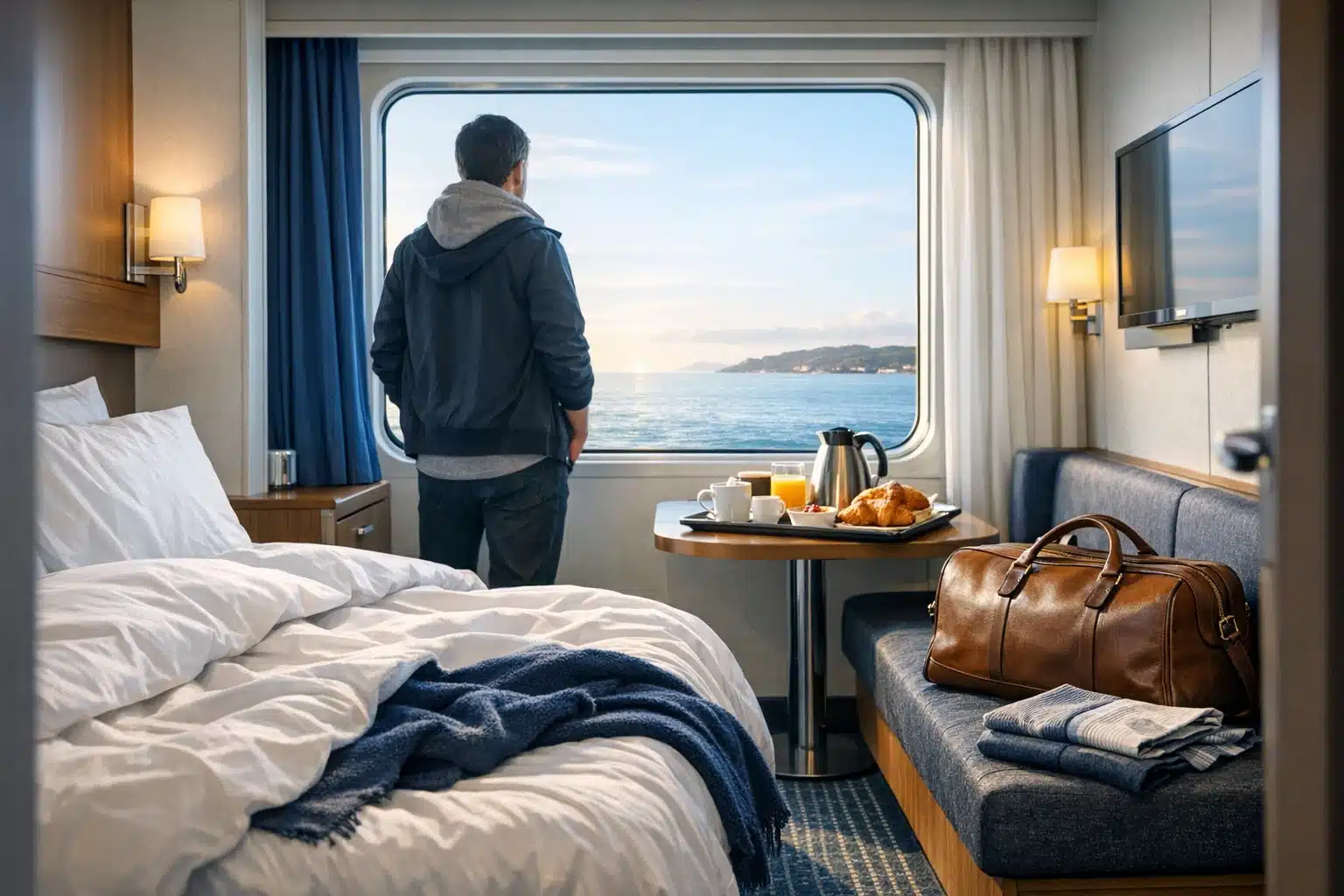
Cabin choice deserves more attention on this route than many people assume. A balcony can be wonderful for cool-weather scenic sailing, but it is not always the best value if you plan to spend most daylight hours on deck or ashore. Ocean-view cabins often strike a useful middle ground because they keep you visually connected to the landscape without the cost jump of a private veranda. Inside cabins can make sense for budget-conscious travelers, particularly in summer when the days are long and you may spend little waking time in the room.
- Choose midship if you are sensitive to motion
- Check whether tender ports are common on your itinerary
- Review what is included in the fare before comparing prices
- Look at deck plans to avoid cabins below noisy public areas
One final point: accessibility and pacing should be matched to the ship. A short cruise can feel busy, so travelers with mobility concerns should examine gangway setups, tender requirements, and excursion intensity carefully. Booking well is less about luxury buzzwords and more about fit. When the ship, cabin, and port logistics match your travel style, the whole week runs more smoothly.
Weather, Packing, Shore Excursions, and Budget Planning
Scottish cruise planning becomes easier the moment you accept one simple truth: the weather does not care about your outfit photos. Even in late spring and summer, conditions can shift from bright sunshine to cool wind and rain within the same afternoon. Average daytime temperatures in the warmer months are often comfortable rather than hot, commonly sitting in the low to mid teens Celsius, though milder or cooler spells are entirely possible. That makes layering more useful than packing for a single forecast.
A sensible packing strategy can save both money and stress. Instead of overloading your suitcase with “just in case” items, build around versatility. On deck, wind protection often matters more than thickness. Ashore, waterproof footwear can be more valuable than an extra smart outfit. In summer, Edinburgh and northern Scotland also enjoy very long daylight hours, sometimes stretching well past what visitors from lower latitudes expect, so an eye mask can be surprisingly helpful if cabin curtains let in light.
- Waterproof jacket with a hood
- Light knitwear or fleece for layering
- Comfortable walking shoes with grip
- Small day bag for shore visits
- Power adapter for UK plugs if needed
- Any motion-sickness remedy you trust
Shore excursions are another area where smart planning beats last-minute improvisation. In compact ports such as Kirkwall or Lerwick, independent exploration can work very well if you are comfortable walking or using local taxis. In gateway ports like Invergordon, however, organized tours may be more practical because major sights can be spread out and travel times can eat into the day. A useful rule is this: book through the cruise line when the destination is logistically complex or far from the pier, and consider going independently when the town is close, compact, and easy to navigate.
Budgeting should include more than the fare itself. First-time cruisers often forget about the quieter extras that accumulate over a week. Depending on the line, you may need to budget for drinks outside basic offerings, Wi-Fi, gratuities or service charges, specialty dining, shuttle buses, laundry, and shore excursions. Add to that the cost of reaching the embarkation port, and possibly a hotel in Edinburgh the night before, which is usually a wise idea if you are arriving by air or train on the same day. A pre-cruise stay reduces stress and gives you a buffer against delays.
If you want to control costs without stripping the trip of fun, prioritize spending where it improves the experience most. For many travelers, that means paying for one or two meaningful excursions, arriving a day early, and choosing a cabin category that balances comfort with realism. You do not need to buy every add-on to enjoy this cruise. What you do need is a plan that matches your pace, your interests, and your tolerance for surprise expenses.
Conclusion: Who This Cruise Suits Best and How to Make the Most of It
A 6-night cruise from Edinburgh is best suited to travelers who enjoy variety, value atmosphere over nonstop entertainment, and want a trip that feels substantial without becoming complicated. It works especially well for first-time cruisers, couples looking for a scenic week away, solo travelers who appreciate a structured format, and history or landscape lovers drawn to the North Sea and the Scottish islands. Photographers often find these routes rewarding too, because the light, weather, and coastlines are always changing. Beach-focused travelers, on the other hand, may find the climate too cool and the mood too rugged for their tastes.
What makes this kind of cruise memorable is not speed but concentration. In less than a week, you can move from the urban edges of Edinburgh to island harbors, cathedral towns, and Highland gateways, all while unpacking only once. That convenience is a major advantage. So is the ability to sample cruising without committing to a long voyage. If you discover that you love the rhythm of sea mornings and port afternoons, a six-night sailing is long enough to know. If you decide cruising is not your style, you have still had a compact, scenic holiday in one of Europe’s most character-rich regions.
For the target traveler, the winning approach is simple. Choose the itinerary for its pacing rather than its marketing label. Confirm the true embarkation port. Pack layers, not fantasies. Leave room in the budget for at least one excellent day ashore and one relaxed evening on deck. And if your schedule allows, spend time in Edinburgh before boarding, because the city adds meaningful context to the voyage that follows.
In the end, this is a trip for people who like movement with a sense of place. The ship carries you forward, but the route never feels generic. Stone towns, northern light, working harbors, and wide water give the cruise its identity. Book thoughtfully, travel with a little flexibility, and a 6-night sailing from Edinburgh can deliver far more depth than its short duration suggests.