4-Night Mini Cruise from Newcastle to Rotterdam: Itinerary and Travel Tips
Short cruises have become popular because they turn a handful of spare days into something that feels larger than an ordinary weekend away. A Newcastle-to-Rotterdam mini cruise appeals to couples, friends, solo travellers, and first-time cruisers who want sea views, manageable planning, and time in one of the Netherlands’ most dynamic cities. The smart approach is to understand what is direct, what is part of a package, and how to make every hour ashore count.
Article Outline and Why This Mini Cruise Matters
Before looking at ferry decks, Dutch tram lines, and cabin choices, it helps to set out a clear outline for the trip. A 4-night mini cruise from Newcastle to Rotterdam is relevant because it sits neatly between a weekend getaway and a longer holiday. It offers the pace of slow travel without demanding a full week off work, and that balance is a major reason why short sea breaks remain popular. For many travellers in northern England and Scotland, Newcastle is also a practical departure point, saving the time and cost of heading south for a flight.
- The route: how these trips usually work, including the important detail that some “Rotterdam” packages involve a ferry to the Dutch coast plus onward transfer.
- The day-by-day itinerary: what you can expect on departure day, during the crossing, in Rotterdam, and on the return journey.
- Life onboard: cabins, dining, entertainment, and the overall atmosphere on an overnight ferry.
- Travel planning: budgeting, packing, passport checks, transport links, and ways to avoid common mistakes.
- Who should book it: comparisons with flying, rail travel, and longer cruises to help different travellers decide.
This kind of mini cruise matters because it answers a very modern travel question: how do you have a proper break when your calendar is crowded? A four-night format solves that neatly. You leave Newcastle in the evening, wake up on the move, spend useful time in the Netherlands, and return with the satisfying feeling that you travelled somewhere distinct rather than simply commuting to a hotel. There is also a softer appeal that numbers alone do not capture. The North Sea at dusk, the hum of the ship, and the shift from English port city to sleek Dutch skyline create a sense of transition that flights often flatten into pure logistics.
There is another practical reason this topic matters: not every traveller realizes that “to Rotterdam” can mean different things depending on the operator and package. Some itineraries are direct only in marketing language, while the actual journey may involve docking elsewhere in the Netherlands and continuing by coach or rail. That is not a drawback if you expect it, but it can be frustrating if you do not. Understanding the structure of the trip lets you budget your time, choose the right luggage, and decide whether this style of travel suits your priorities. In short, the value of the mini cruise lies in its blend of convenience, atmosphere, and attainable adventure.
Understanding the Route and a Typical 4-Night Itinerary
The first thing to know is that a Newcastle-to-Rotterdam mini cruise is often sold as a city-break package rather than a simple point-to-point sea crossing. In many cases, travellers sail overnight from Newcastle to the Dutch coast and then continue to Rotterdam by coach, transfer service, or rail connection. That detail matters because it affects your expectations, your timing, and the way you plan your day bag. You are not merely stepping off the ship into central Rotterdam; you are combining ferry travel with onward ground transport, which is still straightforward but worth understanding in advance.
A typical four-night structure looks something like this. On Day 1, you travel to the port at North Shields, check in, pass security, and board in the late afternoon or early evening. Check-in deadlines often fall around 60 to 90 minutes before departure, and passengers with cars may need to arrive earlier, so leaving extra margin is wise. Once onboard, the tone changes quickly. You settle into your cabin, explore the public spaces, and perhaps take dinner while the ship moves away from Tyneside. The departure itself can feel unexpectedly cinematic, with the coastline fading behind you as the sky darkens over the water.
Day 2 is usually split between arrival formalities and the transfer into Rotterdam. Overnight crossings on this corridor commonly take roughly 15 to 17 hours, although weather and scheduling can affect exact timings. After disembarkation, you continue inland and arrive in Rotterdam ready for an afternoon or evening of sightseeing. Day 3 is normally your fullest day in the city, making it the best time for museums, architecture, waterfront walks, or a harbour tour. Day 4 begins the return pattern, with enough time for a final coffee, lunch, or market visit before heading back to the port area. On Day 5, you wake up onboard again and arrive back in Newcastle.
- Best for: travellers who enjoy the journey, not only the destination.
- Less ideal for: people who want maximum hours in the city with minimum transit time.
- Strong advantage: luggage rules are often more forgiving than on budget flights, though policies still vary.
Compared with flying, this itinerary trades speed for atmosphere. A flight from northern England to the Netherlands may be much shorter in the air, yet airports add queues, seating limitations, and tight baggage calculations. The mini cruise takes longer, but it also gives you an evening at sea, a private cabin, and a travel rhythm that feels less compressed. If you see transport as dead time, flying may win. If you want the movement itself to be part of the holiday, the cruise often feels richer.
Making the Most of Your Time in Rotterdam
Rotterdam rewards travellers who like modern cities with strong character. Unlike Amsterdam, which is often defined by canals and historic facades, Rotterdam is known for bold architecture, a working port identity, broad river views, and a more contemporary urban mood. That makes it an excellent match for a mini cruise, because the city delivers variety quickly. Even if your time ashore is limited, you can experience striking buildings, excellent food, reliable public transport, and several neighbourhoods with very different personalities.
If you arrive by transfer around midday or early afternoon, start with the city centre and work outward. The Cube Houses are among the most recognizable sights, and they pair naturally with a stop at Markthal, where you can browse food stalls, pick up a casual meal, or simply admire the huge artwork spread across the ceiling. From there, walking toward the Oude Haven area gives you a pleasant contrast between modern design and older harbour scenery. If the weather is kind, the Maas riverfront offers one of Rotterdam’s best qualities: space. The city breathes differently from more compact European destinations, and that openness makes even a short visit feel unhurried.
Travellers with a full day should consider dividing Rotterdam into themes rather than trying to “do everything.” That approach is more realistic and more enjoyable.
- Architecture-focused visit: Cube Houses, Erasmus Bridge, Rotterdam Central Station, De Rotterdam, Depot Boijmans Van Beuningen exterior.
- Food-focused visit: Markthal, local bakeries, Indonesian-influenced restaurants, casual waterfront dining.
- Culture-focused visit: Museumpark area, maritime exhibits, photography spaces, harbour tours.
- Easy scenic route: river walk, bridge views, coffee stop, sunset from a waterside terrace.
Public transport in Rotterdam is generally efficient, with trams, metro services, and buses helping you cover distance without much fuss. If you prefer to stay flexible, walking and using transit for longer stretches is often better than relying only on taxis. Cycling is also popular in the Netherlands, but on a short city break it may not be the easiest option unless you are already comfortable navigating bike-heavy streets.
In comparison with Amsterdam, Rotterdam often feels less crowded and more design-led. In comparison with a smaller Dutch town, it offers more range in dining and architecture. That mix is precisely why it suits a four-night package so well. You do not need a full week to appreciate it. A few thoughtful choices can give you river panoramas, market food, cultural stops, and the slightly thrilling sense of being in a city that keeps rebuilding itself with confidence.
Life On Board: Cabins, Dining, Entertainment, and Comfort
For many passengers, the ship is not just transport but half the appeal. An overnight ferry has a different personality from a large cruise liner. It is more compact, more practical, and usually more casual, yet it still offers enough atmosphere to make the crossing memorable. Knowing what to expect onboard helps you choose the right cabin, manage your budget, and avoid the small annoyances that can disrupt sleep or comfort.
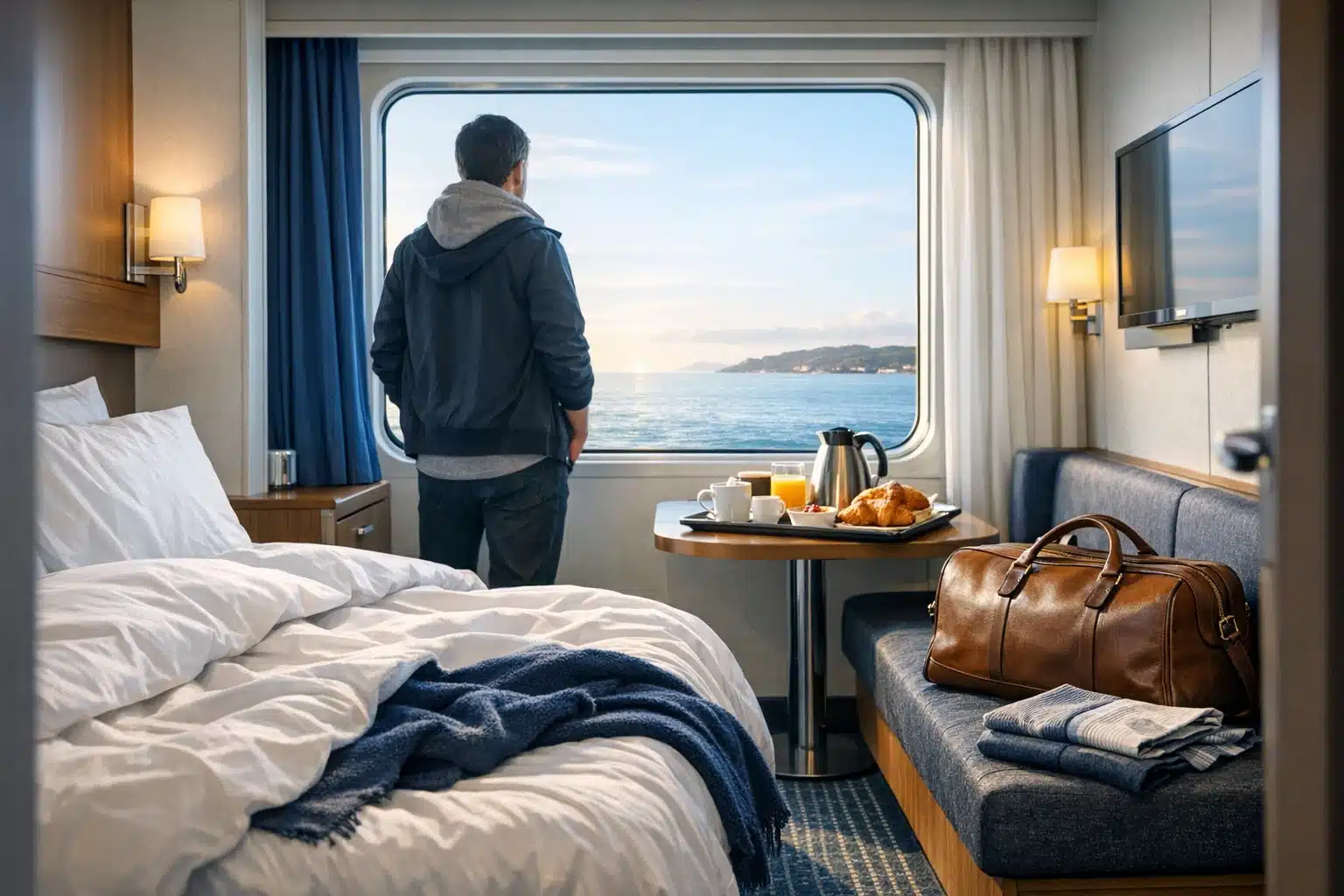
Cabins are the first decision that shapes the journey. Inside cabins are usually the budget-friendly option and work well if you mainly need a clean, private place to sleep. Sea-view cabins cost more, but many travellers find that natural light adds noticeably to the experience, especially on the morning approach to the Dutch coast. If you are sensitive to movement, a lower-deck cabin near the middle of the ship may feel steadier than one at the far ends. If noise bothers you, it is worth requesting a room away from lifts, stairwells, and busy public areas. These details sound minor when booking, yet they can make a meaningful difference after a late dinner and an early arrival.
Dining varies by ship and operator, but overnight ferries commonly offer a mix of buffet dining, casual cafes, bars, and sometimes an à la carte restaurant. Pre-booking meals can make sense if you want predictable costs, especially during school holidays or weekends when sailings are busier. The main comparison here is with air travel: instead of airport sandwiches and gate announcements, you get an evening meal while the sea moves past the windows. It is not luxury in the grand-ocean-liner sense, but it often feels far more relaxed than a flight corridor and a departure lounge.
- Useful onboard strategy: eat at a calm time, take a short deck walk, then return to your cabin before entertainment areas get noisy.
- Family note: check whether there are children’s play areas or family-friendly shows if you are travelling with younger passengers.
- For light sleepers: earplugs, a sleep mask, and a bottle of water by the bed are simple but smart additions.
Entertainment usually includes live music, bars, lounges, shops, and sometimes cinema spaces or seasonal events. The mood is often cheerful rather than formal. Think pub-meets-travel-hub, with bursts of holiday energy. Step outside onto deck, and the tone changes again. The wind is sharper, conversations thin out, and the sea stretches dark and metallic under the night sky. That contrast is part of the charm. The ship offers enough activity to prevent boredom, while the crossing itself adds a sense of distance that makes the city arrival feel earned.
Travel Tips, Budget Planning, and Final Advice for the Right Traveller
Good planning turns a mini cruise from “pleasant but rushed” into “surprisingly smooth.” The most useful tip is to treat this trip as a hybrid holiday. It combines sea travel, a city break, and at least one onward transfer, so pack and budget accordingly. Keep valuables, medication, chargers, travel documents, and a change of clothes in a small bag that stays with you. Even when luggage allowances are more generous than on low-cost airlines, you do not want to be digging through a large suitcase for essentials during boarding or before your cabin is fully settled.
Budgeting is where travellers can gain or lose value quickly. The headline fare may look attractive, but the real total usually includes cabin choice, meals, drinks, local transport, attraction tickets, and any package transfer supplements. A practical spending framework might include the following:
- Base fare and cabin upgrade, if desired.
- Meal package versus paying onboard.
- Transfers between the arrival port and Rotterdam.
- Museum entry, harbour tour, or public transport day tickets.
- Travel insurance, parking at Newcastle, or rail fare to the port.
In many cases, the cruise compares well with a short flight-and-hotel break once baggage, airport transfers, and city-centre transport are added. That said, it is not always the cheapest option. Its strength is value through experience rather than value through raw speed. You pay for atmosphere, private overnight accommodation in transit, and a less hurried start to your break.
Packing should reflect Dutch weather, which can shift quickly. Even in warmer months, wind near the water can make evenings feel cooler than expected. Comfortable walking shoes are essential, and a lightweight waterproof jacket is more useful than a bulky coat for most of the year. Passport validity, visa rules, and any current border systems should be checked close to departure, because travel requirements can change. Arriving early at the terminal is another simple but important habit. Ferry travel is generally less stressful than air travel once you are onboard, but missing check-in is just as costly.
So who is this trip best for? It suits travellers who enjoy gradual transitions, onboard downtime, and a city break with a memorable approach. It is especially appealing for couples, groups of friends, and first-time cruise passengers who want a low-commitment introduction to life at sea. If your priority is maximizing time in Rotterdam with the least transit, flying may be more efficient. If your priority is turning the journey into part of the story, the mini cruise wins by a wide margin. For the right traveller, this is not merely a way to reach the Netherlands. It is a compact travel experience with texture, rhythm, and just enough adventure to brighten an ordinary week.