4-Night Mini Cruise from Newcastle to Amsterdam: Itinerary and Travel Tips
Why a 4-Night Mini Cruise from Newcastle to Amsterdam Works So Well
A 4-night mini cruise from Newcastle to Amsterdam offers an easy way to trade routine for sea air, Dutch canals, and a city break that starts the moment you board. It suits travellers who want the comfort of unpacking once, the novelty of an overnight sailing, and enough time ashore to explore without rushing every hour. Because the journey blends transport, accommodation, and onboard entertainment in one trip, it can be a practical choice for couples, friends, and first-time cruise passengers. This guide breaks down the usual itinerary, onboard experience, city planning, and useful travel tips so you can make the most of a short escape.
This article follows a clear outline so planning feels straightforward rather than scattered. It covers: • how a typical 4-night package is structured • what usually happens on embarkation day and during the North Sea crossing • how to spend your time in Amsterdam wisely • how the experience compares with flying or a shorter break • which packing, booking, and budgeting choices make the trip smoother. That structure matters because the phrase mini cruise can sound simple, yet the details shape the value of the holiday.
For travellers in North East England, and often for people coming down from Scotland or across from Yorkshire, Newcastle is a convenient departure point that avoids the rhythm of airport queues and multiple baggage rules. Instead of racing through security and waiting in a departure lounge, you board a ship, find your cabin, and watch the coast gradually slip away. The North Sea does not rush; it eases you out of work mode one deck at a time. That shift in pace is part of the appeal, especially if the goal is not just to reach Amsterdam but to enjoy the route itself.
A 4-night version of this trip is usually more rewarding than the faster 2-night mini cruise because it gives you proper time in the Netherlands. A shorter option can feel like a sprint, with just a brief day in the city before turning back. By contrast, a 4-night itinerary often includes two nights in Amsterdam or nearby, which means you can combine headline sights with slower moments such as a canal-side lunch, an evening walk in Jordaan, or time in museums without watching the clock all day. When you compare it with flying, the ferry is slower, but it often feels less fragmented. You get transport, a cabin, entertainment, and a sense of occasion in one booking. For many travellers, that mix of practicality and atmosphere is exactly why this route remains popular.
Typical 4-Night Itinerary: From Newcastle Departure to Return Arrival
The exact schedule varies by operator and season, but most 4-night Newcastle to Amsterdam mini cruises follow a similar pattern: one overnight sailing from North Shields near Newcastle, two nights in Amsterdam or the surrounding area, and one overnight return crossing. In practical terms, that usually means five calendar days and four nights away. Day 1 is your embarkation day. Check-in often opens in the afternoon, and passengers are usually advised to arrive well before the final closing time, which may be around 60 to 90 minutes before departure. Once on board, you settle into your cabin, explore the ship, and have dinner before the vessel sails in the early evening. It is worth treating this first night as part of the holiday rather than dead time. If the weather is clear, the sail-away can be one of the most memorable moments of the trip.
Day 2 begins with breakfast on board and arrival in IJmuiden, the ferry port used for Amsterdam services. From there, a transfer coach commonly takes passengers into Amsterdam, often in roughly 30 to 45 minutes depending on traffic and the drop-off point. On many 4-night packages, this is when the hotel portion begins. Some packages include a city-centre hotel, while others use properties slightly outside the core tourist districts with public transport links. That difference matters. A central stay gives you more evening freedom and less commuting, while an out-of-town hotel can be quieter and sometimes more affordable. Either way, your first afternoon is ideal for orientation rather than overloading the schedule. A canal walk, an early dinner, and a gentle first look at the city usually work better than trying to cover every museum in a single burst.
Day 3 is typically your full Amsterdam day and the real heart of the itinerary. This is the best time to visit the Anne Frank House area, Rijksmuseum, Van Gogh Museum, a canal cruise, or neighbourhoods such as De Pijp and Jordaan. If you plan to visit major museums, pre-booking is strongly recommended, especially during school holidays, spring tulip season, and summer weekends. Amsterdam rewards walkers, but distances add up quickly, so tram travel can save time. A full day also lets you split the city into themes. For example: • morning for museums • afternoon for canals and local shopping • evening for dining and a slower stroll through the illuminated streets.
Day 4 often gives you another half day or most of the day ashore before returning to the ferry terminal, depending on your package arrangements. This is the perfect slot for anything you missed, such as a market visit, the A’DAM Lookout area, or simply coffee by the water without an agenda. Later, you transfer back to IJmuiden, board the ship, and begin the return crossing. Day 5 ends with arrival back in North Shields in the morning. The great strength of this itinerary is balance: two nights of transport that feel part of the experience, plus enough city time to enjoy Amsterdam without turning the trip into a blur.
Life On Board: Cabins, Dining, Entertainment, and What the Crossing Feels Like
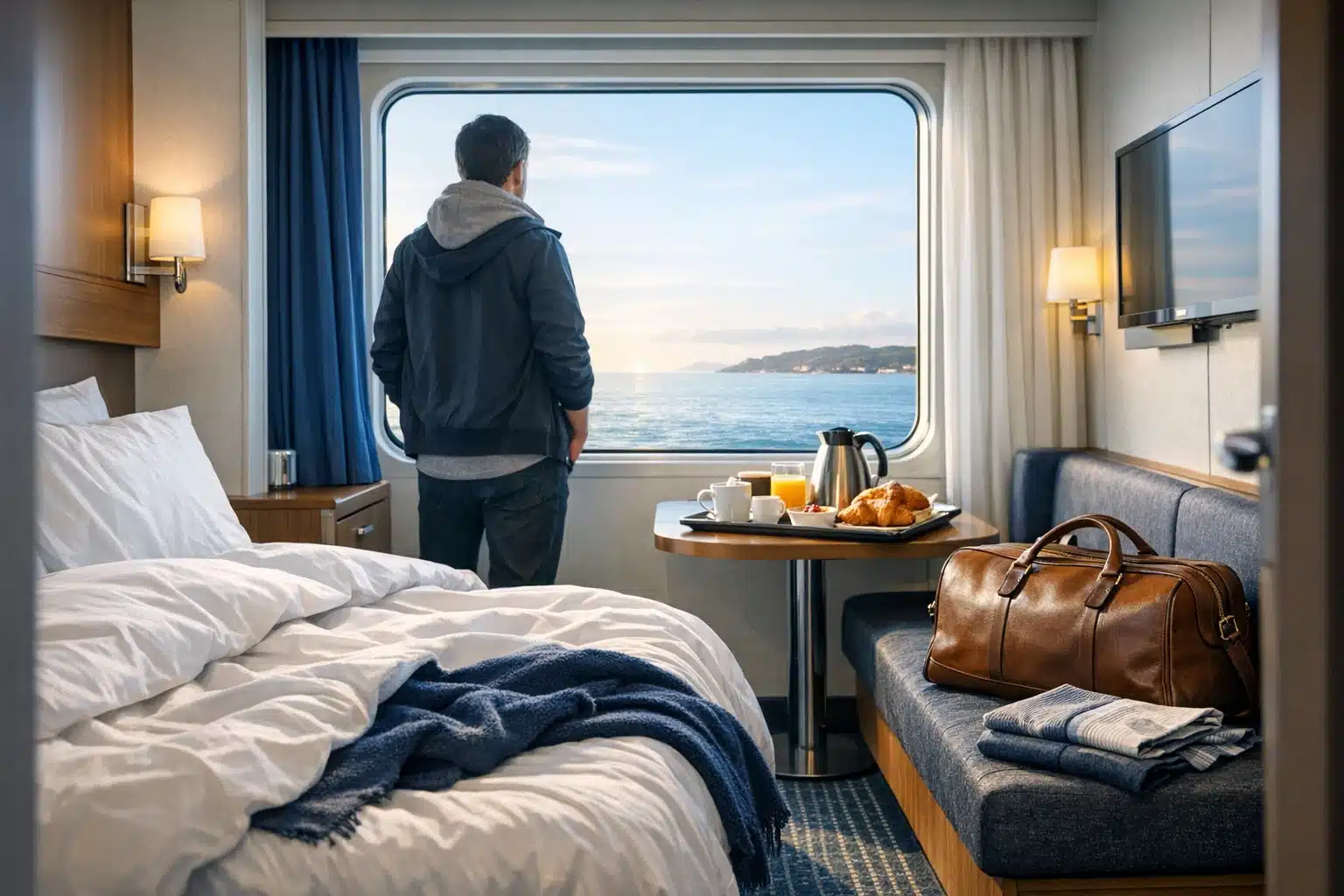
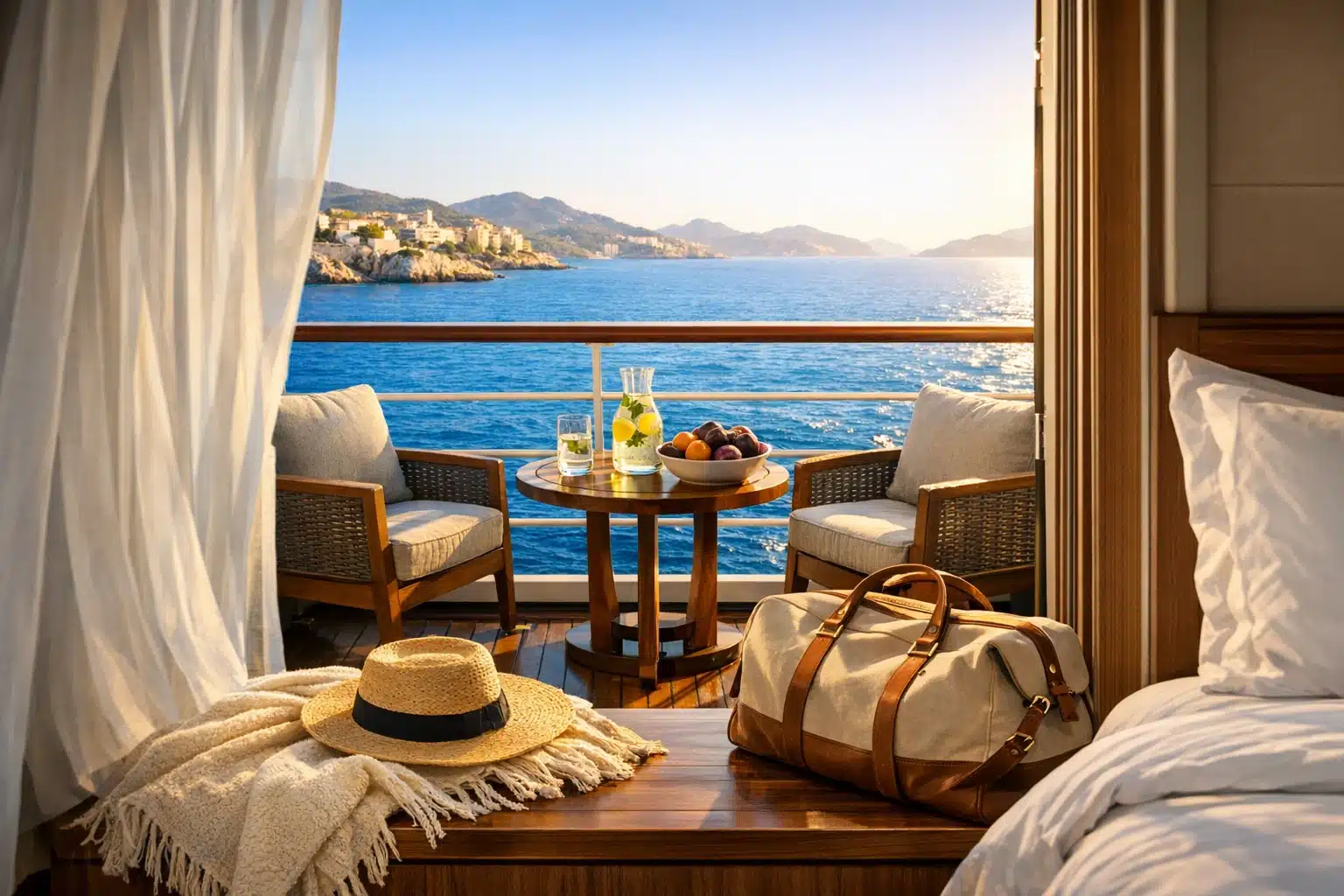
For many travellers, the ship is not just a means of getting to Amsterdam; it is half the holiday. That is why choosing the right cabin and understanding the onboard rhythm can make a noticeable difference. Most ferries on this route offer a mix of inside cabins, sea-view cabins, and upgraded rooms with more space or better amenities. An inside cabin is usually the budget-friendly choice and works perfectly well for passengers who mainly need a private place to sleep and shower. A sea-view cabin adds natural light and a stronger sense of being at sea, which many people find more enjoyable, especially on the outbound journey. Premium options may include extras such as more generous beds, priority boarding, or access to upgraded dining depending on the operator.
Dining is another part of the experience that can shape your evening. Some passengers book dinner and breakfast in advance because pre-booked meal packages can simplify budgeting and save time once on board. Buffet restaurants often appeal to families and groups because they offer variety and speed, while sit-down restaurants feel more like the start of a special break. A practical rule is to think about your energy level after boarding. If you want a quick, easy meal and time to explore the ship, a buffet makes sense. If you see the crossing as a chance to relax properly, a quieter restaurant may be better. It is also smart to bring a small bag with essentials for the cabin, since dragging all luggage around immediately after boarding is rarely enjoyable.
The evening atmosphere on an overnight ferry tends to be more social than on a train and less formal than on a traditional ocean cruise. You may find bars, live music, family entertainment, shops, and open deck areas. Some passengers dress casually, others treat it as a mini event, and both approaches fit comfortably. There is a distinct pleasure in stepping onto the deck after dinner, feeling the wind sharpen, and seeing only darkness and scattered lights on the horizon. It is a reminder that travel can still feel physical and vivid in an age of short-haul flights.
There are also realistic points to consider. The North Sea can be calm, but it can also be rough, particularly in autumn and winter. If you are sensitive to motion, pack sea-sickness medication and choose a mid-ship cabin if possible. Wi-Fi may be available, though signal quality and pricing can vary. Useful onboard priorities include: • keeping travel documents easy to reach • wearing layers because deck areas can be chilly • booking popular dining slots in advance • allowing time for breakfast before disembarkation. Compared with flying, the ferry is slower, yet it offers room to move, a proper bed, and a much stronger sense that the holiday has actually begun before you reach your destination.
Making the Most of Amsterdam: Sightseeing, Transport, and Smart Time Planning
Amsterdam is compact enough to feel manageable on a short break, yet layered enough to reward thoughtful planning. That makes it ideal for a 4-night mini cruise, because you can enjoy both the famous landmarks and the city’s quieter corners without trying to force everything into one overpacked day. The first rule is simple: decide early whether your trip is culture-led, scenery-led, or food-led. If you want classic Amsterdam, start with the Canal Ring, Dam Square, Museumplein, and Jordaan. If you prefer a more local feel, explore De Pijp, the Nine Streets, Oost, or the creative spaces around the NDSM Wharf. A little focus helps because Amsterdam is full of tempting detours, and short-break travellers can lose hours simply wandering, which is delightful but not always efficient.
Public transport is generally reliable and easy to understand. Trams are especially useful if your hotel is outside the centre or if you want to link areas that are walkable in theory but tiring in practice. Day passes can be worthwhile if you plan several journeys, although many visitors find that a mix of walking and occasional tram rides works best. Cycling is part of the city’s identity, but hiring a bike for a first visit is not always the smartest move. Amsterdam cyclists move quickly, local road habits can be unfamiliar, and a nervous rider may spend more time worrying than enjoying the city. Walking by the canals is often the better introduction.
For a classic first-timer’s day, a strong plan could look like this: • early museum visit with timed entry • late morning canal-side coffee • afternoon canal cruise or Jordaan walk • evening Indonesian rijsttafel, Dutch pancakes, or modern European dining. For a second-time visitor, you might skip the busiest landmarks and focus on smaller pleasures: a market, a bookshop, a ferry across the IJ, or an unhurried afternoon in Vondelpark. Both approaches work; the best one depends on whether you want coverage or atmosphere.
A few practical choices can save both money and frustration. Reserve major attractions early, especially the Anne Frank House and headline museums. Keep an eye on opening days and final entry times, as some travellers assume they can simply turn up and discover the opposite. Allow for weather changes too. Amsterdam can move from blue sky to drizzle quite quickly, so a light waterproof jacket is often more useful than a bulky umbrella. Finally, respect the city as a lived-in place rather than a themed backdrop. Stay aware around bike lanes, follow local rules, and balance the famous spots with quieter streets. That is often where the city becomes less like a checklist and more like a memory.
Booking, Budgeting, and Final Advice for the Travellers Most Likely to Love This Trip
A 4-night mini cruise from Newcastle to Amsterdam works best when expectations match the format. This is not a long luxury cruise, and it is not the fastest way to reach the Netherlands. It is a compact travel experience that blends transport, accommodation, and short-break sightseeing into one neat package. That makes it especially attractive for couples wanting an easy escape, friends planning a social city break, and travellers from northern Britain who would rather avoid the stress of airport logistics. It can also suit first-time cruise passengers because the crossing is short enough to feel approachable while still offering the classic ingredients of ship travel: cabins, sea views, dining, and evening entertainment.
Budgeting well starts with understanding what is and is not included. The headline fare may cover the ferry cabin and hotel nights, but extras can add up quickly. Common costs to check before booking include: • meals on board • city taxes at the hotel • transfers between port and accommodation • museum tickets • drinks, Wi-Fi, and upgraded cabin choices. A package can still compare favourably with flying once you include baggage, airport transfers, and hotel pricing, but the value depends on your habits. If you plan to eat simply and explore independently, the trip can feel quite efficient. If you add premium cabins, restaurant dining, and paid attractions every day, the total rises fast. Booking early often gives you the widest cabin choice and better hotel availability, particularly for spring weekends and school holidays.
Packing for this route is straightforward but worth thinking through. Bring layers for the ship, comfortable shoes for Amsterdam’s cobbled stretches, a waterproof outer layer, travel insurance details, chargers, and any medication you may need during the crossing. Keep passports and booking confirmations accessible rather than buried in a suitcase. If you are travelling as a foot passenger, also check baggage handling arrangements and transfer instructions carefully. Small organisational choices make a difference on a short trip because wasted time stands out more sharply when every hour counts.
In the end, this journey suits travellers who enjoy the idea that getting there is part of the story. If you want maximum speed, a flight will win. If you want a short holiday with a gentler pace, a stronger sense of occasion, and enough time to enjoy Amsterdam beyond the postcard version, the 4-night cruise is a very appealing option. For readers considering their first booking, the smartest approach is simple: choose a cabin you will genuinely sleep well in, pre-book the attractions you care about most, leave some room for slow wandering, and treat the ship not as waiting time but as the opening and closing chapter of the break. That is when this itinerary makes the most sense and delivers its real charm.