4-Night Mini Cruise From Edinburgh to Hamburg: Itinerary and Travel Tips
Short cruises work best when they feel like a real escape rather than a rushed transfer, and the Edinburgh-to-Hamburg route usually gets that balance right. You enjoy the changing mood of the North Sea, settle into shipboard routines, and reach a major European city without using a full week of annual leave. For first-time cruisers, it is a manageable introduction; for experienced travelers, it is a compact city-and-sea break with strong variety. The outline below shows how to plan it well and get more from each day.
Outline and Why This Mini Cruise Appeals
Before getting into cabins, ports, and packing lists, it helps to understand why a 4-night mini cruise from Edinburgh to Hamburg has become such an appealing short-break format. It combines three things that are often hard to fit into one trip: easy travel, enough downtime to relax, and a destination that still rewards a proper wander. Unlike a flight-heavy city break, a cruise lets the journey become part of the holiday. You unpack once, settle in, and watch the coast slip away while the ship carries you south and east across the North Sea toward Germany.
This kind of itinerary is especially attractive for travelers based in the UK who want an international trip without the friction of multiple hotel changes. It can suit couples looking for a quiet short escape, friends wanting a sociable weekend with entertainment built in, and solo travelers who prefer a structured environment. A four-night sailing is also long enough to test whether cruising suits your style. You get a clear sense of ship life, but the commitment remains relatively small compared with a seven- or fourteen-night voyage.
A useful outline for the article looks like this:
- What makes the route practical and enjoyable
- How a typical day-by-day itinerary unfolds
- What to expect on board in terms of dining, cabins, and entertainment
- How to handle arrival in Hamburg and make the most of limited shore time
- Which travel tips matter most for budgeting, packing, and booking
There is also a geographical charm to this route. Edinburgh gives the departure a dramatic opening, with historic architecture, coastal light, and a feeling of setting off from somewhere storied. Hamburg, on the other hand, feels dynamic and distinctly continental, with canals, warehouses, music culture, and one of Europe’s busiest ports. That contrast is part of the appeal. In only a few days, you experience a subtle change in language, food, urban design, and atmosphere.
One practical note matters early: cruises marketed as “from Edinburgh” may actually depart from a nearby embarkation point such as Leith, Rosyth, or South Queensferry, depending on the operator and ship size. In the same way, arrival in Hamburg may be at terminals such as Steinwerder or Altona. That is normal, but it means travelers should read final documents carefully rather than relying only on the broad city names in marketing material. Small details like this can shape how smooth the holiday feels from the very start.
Typical 4-Night Itinerary: From Embarkation to Arrival
Although cruise lines vary, the rhythm of a 4-night mini cruise from Edinburgh to Hamburg is usually easy to understand. Day 1 is embarkation, Day 2 is largely at sea, Day 3 may include more sea time and ship activities, Day 4 often features the scenic approach toward the Elbe or an overnight in port depending on schedule, and Day 5 is disembarkation or a final morning in Hamburg. The exact order changes by operator, tide conditions, and berth availability, but the overall structure remains similar: boarding, settling in, crossing, arrival, then onward travel.
Embarkation day tends to be busier than many first-time cruisers expect. You arrive at the terminal, go through check-in and security, and are given your cruise card or digital boarding credentials. Cabins may not be ready immediately, so it is smart to keep essentials in a carry-on bag. Think medication, travel documents, phone charger, a light jacket, and anything you want for the first few hours on board. Once the ship begins to move, the holiday really starts to feel tangible. There is often a sail-away moment on deck when the shoreline recedes and conversations suddenly get lighter.
Sea days are where the mini cruise proves it is more than transport. A crossing from Scotland toward northern Germany can involve open-water views, changing weather, and a quiet sense of progression. On a good day, the North Sea can look broad and silver, with long bands of light moving over the surface. On a rougher day, you feel the ship more clearly, which is worth considering if you are prone to motion sickness. Modern ships are stabilized, but weather still matters.
A typical schedule might include:
- Day 1: Embark near Edinburgh, settle in, safety drill, evening departure
- Day 2: Full sea day with dining, entertainment, and deck time
- Day 3: Continued crossing, themed events, shopping, lectures, or spa time
- Day 4: Arrival procedures, scenic river approach, or first hours in Hamburg
- Day 5: Breakfast, disembarkation, and onward rail, air, or hotel plans
If your ship sails into Hamburg along the Elbe, that approach can be one of the highlights. Instead of a simple port stop, arrival feels cinematic. Industrial cranes, container yards, waterfront neighborhoods, and church spires all appear in sequence, reminding you that Hamburg is not just a city with a harbor but a city shaped by its harbor. For travelers who enjoy watching landscapes change, this final stretch adds texture that a direct flight can never provide.
Because the trip is short, timing matters more than on longer cruises. Late arrival at embarkation, poor planning for luggage, or unclear post-cruise transport can eat into the experience. The best mini-cruise travelers treat each stage as part of a chain. If one link is weak, the short duration leaves less room to recover. A little planning, in other words, has a bigger payoff here than on a longer, slower holiday.
What Life on Board Is Really Like on a Short Cruise
A mini cruise has its own mood. It is usually more energetic than a long voyage because people know they have only a few nights to enjoy the ship. That can make the atmosphere feel lively, but not necessarily chaotic. Much depends on the line, season, and whether the sailing attracts couples, families, retirees, or groups of friends. In shoulder seasons such as spring and early autumn, the crowd is often mixed and the pace more balanced than during school-holiday peaks.
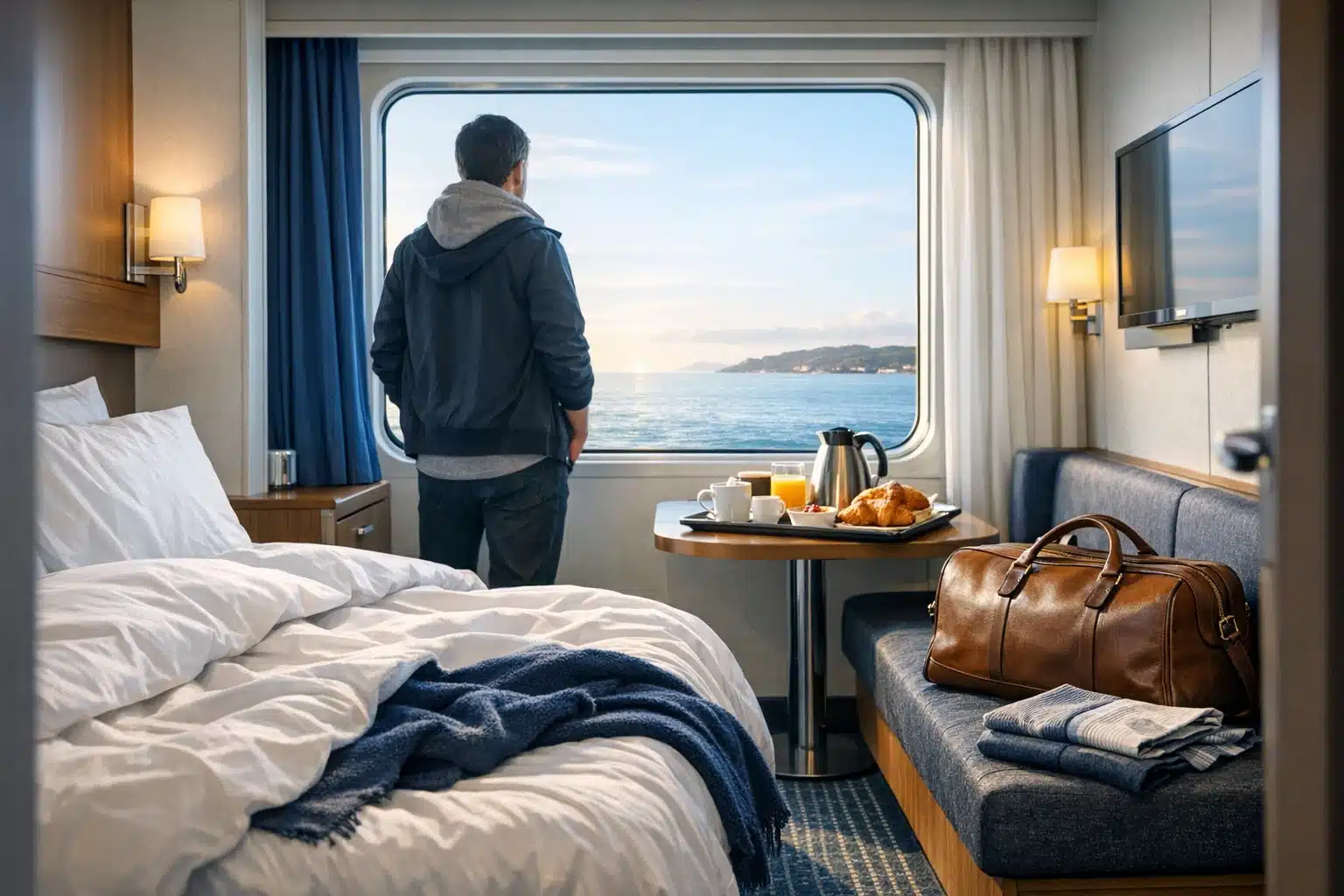
Cabin choice matters more than some travelers assume. On a four-night trip, you may think any room will do, but comfort has an outsized effect because you are using the cabin as both hotel room and retreat from public spaces. Interior cabins are usually the cheapest and work well if you mainly want a base for sleeping and showering. Ocean-view cabins add natural light and a stronger sense of connection to the journey. Balcony cabins can be especially rewarding on scenic arrivals, though on North Sea sailings the weather may be cool enough that you use the space less than expected.
Dining is one of the easiest pleasures on this kind of trip. Most sailings include a main dining room, buffet options, bars, and sometimes specialty venues at extra cost. Because the cruise is short, many travelers choose to skip specialty dining unless there is a restaurant they are genuinely curious about. Included meals already cover a lot, and the better strategy may be to enjoy one upgraded dinner rather than chasing every extra. Breakfast can be particularly useful on port mornings, when a quick and early start saves time.
On board, you can usually expect a mix of:
- Live music in lounges or atriums
- Quiz events, talks, or game shows
- A theater performance or cabaret-style entertainment
- Spa treatments, gym access, and pools depending on ship design
- Duty-free or onboard shops with limited but tempting convenience purchases
Internet access is worth mentioning honestly. Many ships now offer Wi-Fi packages, but speed and reliability can still be inconsistent compared with land-based broadband, especially in open sea areas. If staying connected is essential for work, tell yourself the blunt truth before booking: a mini cruise is a leisure trip first, not the best environment for urgent remote tasks.
Motion comfort is another practical subject. Even travelers who are fine on ferries can notice the movement on a North Sea crossing, particularly if weather turns windy. Bringing medication, acupressure bands, or ginger products can be sensible. Mid-ship cabins on lower or central decks often feel steadier than cabins at the far front or rear.
Perhaps the biggest joy of ship life is the sudden recovery of idle time. You are not navigating train connections, pulling bags across pavements, or checking in and out of hotels. Instead, you might spend an hour with a coffee watching gulls trail behind the wake, and that hour starts to feel like the real luxury of the trip.
Arriving in Hamburg: Port Logistics and How to Use Your Time Well
Hamburg is an excellent mini-cruise destination because it offers both visual impact and practical efficiency. It is one of Europe’s great maritime cities, home to a major port, broad waterfront areas, canal-lined districts, and a city center that feels substantial without being impossible to navigate. For cruise passengers, the key question is usually not whether there is enough to do, but how to spend limited hours wisely.
Your first task is understanding where the ship docks. Hamburg’s cruise traffic uses more than one terminal, and transfer times vary. From terminals such as Steinwerder, reaching the center often takes around 20 to 30 minutes by a mix of shuttle, ferry, public transport, or taxi, depending on traffic and the arrangements provided by the cruise line. Altona can be more convenient for some sightseeing routes, but your actual experience depends on the ship’s berth and the day’s schedule. Checking terminal details before arrival helps you avoid losing time to guesswork.
If you only have a day, focus on areas that deliver a strong sense of place without requiring long commutes. The Speicherstadt, with its red-brick warehouses and canal views, is one of the most rewarding places to start. Nearby HafenCity presents a modern contrast, and the Elbphilharmonie plaza offers memorable views across the river. The Landungsbrücken area gives you a classic harbor atmosphere and easy transport links, while the old town and Rathaus area work well for travelers who want cafés, shopping, and historic architecture in one walkable stretch.
A short but effective Hamburg plan could include:
- Morning transfer from terminal to central waterfront
- Walk through Speicherstadt and HafenCity
- Lunch featuring local seafood or a simple German brasserie meal
- Viewpoint stop at the Elbphilharmonie or harbor promenade
- Late afternoon return with time to spare before all-aboard
Food is another reason Hamburg works well as a cruise stop. Even on a brief visit, you can sample fish sandwiches, pastry, strong coffee, or a sit-down meal that feels different from what you have had on board. If you are staying overnight after disembarkation, the city opens up further. You can add museums, lake walks around the Binnenalster, or an evening in the St. Pauli district, depending on your interests and comfort level.
Travelers arriving from the UK should also remember the border aspect of the journey. Since you are entering Germany, passport validity and any visa requirements depend on your nationality and current travel rules. Cruise operators normally communicate entry requirements clearly, but it is still your responsibility to check official guidance rather than relying on an old forum post or a friend’s memory from a previous trip.
Hamburg rewards curious walkers. It is a city where cranes, concert halls, ferries, churches, and warehouses all seem to belong to the same conversation. After a few sea days, that layered urban energy can feel wonderfully sharp.
Travel Tips, Costs, Packing Advice, and Conclusion for Short-Break Cruisers
The success of a 4-night mini cruise often comes down to preparation rather than complexity. Because the trip is brief, every smart decision has a visible effect. If you pack lightly, check in smoothly, and understand what is included in your fare, the holiday feels effortless. If you arrive late, forget key documents, or overspend on extras you did not really want, the same trip can feel compressed. Planning does not remove spontaneity here; it protects it.
Budgeting is the first place to be realistic. The cruise fare may look attractive, but travelers should examine what sits outside the headline price. Depending on the line, extras can include drinks packages, specialty dining, spa treatments, Wi-Fi, gratuities, shuttle buses, travel insurance, and transport to and from the terminal. A modestly priced cruise can remain good value, but only if you separate essentials from optional add-ons. For many travelers, paying for one or two meaningful upgrades works better than buying every package on offer.
Useful budgeting checkpoints include:
- Port transfer costs at both departure and arrival ends
- Whether gratuities are prepaid, optional, or added daily
- The price of bottled water, coffee, or alcoholic drinks outside included options
- Potential hotel costs if you arrive the night before embarkation or stay in Hamburg after disembarkation
- Data roaming or onboard Wi-Fi charges if you need regular connectivity
Packing for the North Sea means planning for changeable weather. Even in late spring or summer, deck temperatures can feel much cooler than city temperatures because of wind exposure. Layers are better than bulky single items. A waterproof jacket, comfortable walking shoes, a scarf or light hat, and evening clothing that can adapt to different dress codes are usually enough. Some cruise lines keep things casual; others still encourage smarter attire at dinner. Check the line’s current guidance so you do not overpack for a four-night trip that really rewards simplicity.
Another strong tip is to arrive near the departure port the day before, especially if you are traveling from farther afield. A missed embarkation on a mini cruise is far more painful than on a land trip because the ship will not wait. One hotel night near Edinburgh can protect the entire holiday.
For the target audience most likely to consider this itinerary, the verdict is clear. If you want a short international break that feels more distinctive than a standard flight-and-hotel weekend, this route makes sense. It suits travelers who enjoy gentle structure, comfortable transit, and the idea of watching one city fade while another slowly appears. It is less ideal for those who want deep destination immersion or nonstop nightlife, but very good for curious travelers who value atmosphere, convenience, and a little maritime drama. In that sense, a 4-night cruise from Edinburgh to Hamburg is not just a shortcut between two ports; it is a compact travel experience with its own personality.