3-Night Mini Cruise From Edinburgh to Hamburg: Itinerary and Travel Tips
Outline and Introduction: Why This Short Cruise Is Worth Considering
Short trips often feel like a sprint, but a 3-night sailing from the Edinburgh area to Hamburg changes the pace completely. You unpack once, watch the North Sea replace the motorway, and arrive with the satisfying sense that the journey mattered as much as the destination. For travellers who want a compact break without the usual airport routine, this kind of mini cruise combines transport, accommodation, and atmosphere in one neatly planned escape.
Before diving into practical details, it helps to see the shape of the trip at a glance. Exact schedules, departure terminals, and onboard features can vary by operator and season, so the outline below works best as a realistic planning framework rather than a fixed timetable for every sailing.
- What the route offers and who it suits
- A sample 3-night itinerary from embarkation to arrival
- How to book smartly, choose a cabin, and budget well
- What to expect on board, including weather and packing
- How to step into Hamburg efficiently and decide if the trip fits your travel style
The appeal of a mini cruise like this is simple: it turns transfer time into part of the holiday. A flight from Scotland to northern Germany may be faster in pure clock terms, but speed is not the only measure of value. Airports demand strict timing, security queues, baggage rules, and often a transfer on both ends. A cruise, by contrast, creates a slower rhythm. After check-in, you settle into your cabin, walk the decks, find a window seat in a lounge, and let the coastline fade. There is a small but real psychological difference between “being transported” and “travelling,” and a short sea crossing captures that beautifully.
This route is especially relevant for travellers who enjoy city breaks but do not want them to feel compressed. It can suit couples looking for a low-pressure getaway, solo travellers who like a structured environment, and first-time cruise passengers who want to test the experience without committing to a week at sea. It also works well for people who value simplicity. Your room, meals, entertainment, and transport are bundled more neatly than on many do-it-yourself short breaks.
There is also an atmospheric advantage that standard transport rarely delivers. Hamburg is a port city with a strong maritime identity, so arriving by sea feels fitting in a way that landing in an airport does not. As the waterway narrows and industrial docks begin to appear, the city does not simply begin; it reveals itself. That sense of approach gives the trip a narrative arc, and that is why this route continues to attract travellers who want more than a quick dash from departure gate to hotel lobby.
Sample 3-Night Itinerary: From Embarkation Near Edinburgh to Arrival in Hamburg
A 3-night mini cruise from Edinburgh to Hamburg is best understood as a compact sequence of transitions: city to port, land to sea, open water to river approach, and finally ship to city. While exact details vary, the pattern below reflects how many short cruise journeys of this type are structured. Thinking in phases makes planning easier and helps you enjoy the trip rather than merely moving through it.
Day 1: Embarkation and departure. Most travellers begin by heading from Edinburgh to the departure terminal serving the route. Depending on the sailing plan, that may mean a port within easy reach of the city rather than the city centre itself. It is wise to arrive with extra time, because port check-in can involve security screening, passport checks, baggage tagging, and a short wait before boarding opens fully. Once on board, the smartest move is not to rush. Find your cabin, confirm dining arrangements, locate the main public areas, and take a first walk around the ship. As departure time nears, the mood changes. Lines loosen, engines hum, and the harbour slowly gives way to open water. That first evening is ideal for a relaxed dinner, a drink in a lounge, and an early look at the entertainment schedule.
Day 2: Full sea day on the North Sea. This is where the mini cruise proves its value. Rather than losing a day in transit, you gain a floating day of choice. Some travellers treat it as a slow retreat: coffee by a window, a book, a long lunch, and perhaps a nap while the ship moves steadily onward. Others use the time more actively, exploring the deck spaces, joining quizzes or live music sessions, visiting the spa if available, or simply people-watching in the public lounges. Sea conditions can shape the mood. On calm days, the ship feels like a hotel with a horizon. On rougher days, the North Sea reminds you it has character. Either way, it is worth building flexibility into your expectations.
Day 3: Approach toward Hamburg. One of the most memorable parts of the route is the gradual transition from sea passage to the busier waterways leading toward Hamburg. The scenery becomes more layered: working ports, shipping traffic, riverbanks, and the tangible sense of entering a major trade city. If the ship’s schedule allows for daytime approach, keep your camera and binoculars ready. This is not a dramatic Mediterranean cliffside arrival; it is something subtler and, for many travellers, more interesting. You see commerce, engineering, movement, and urban life all converging.
Day 4: Disembarkation and onward plans. Even though the cruise is sold as three nights, practical planning should include the morning of arrival. Disembarkation is usually more efficient when passengers have packed thoughtfully the night before and understand luggage instructions in advance. Once ashore, Hamburg is well connected by public transport, taxis, and ride services, making it easy to continue to a hotel, railway station, or city sightseeing route. In other words, the cruise ends cleanly, and the city break begins without much friction.
Booking Smartly: Cabins, Costs, Documents, and the Best Time to Go
Booking a mini cruise well is less about finding one magical deal and more about making several sensible decisions early. A short sailing can look straightforward on paper, yet the final experience depends heavily on cabin choice, travel timing, port access, and what is included in the fare. Travellers who spend a little time comparing these points usually get far better value than those who focus only on the headline price.
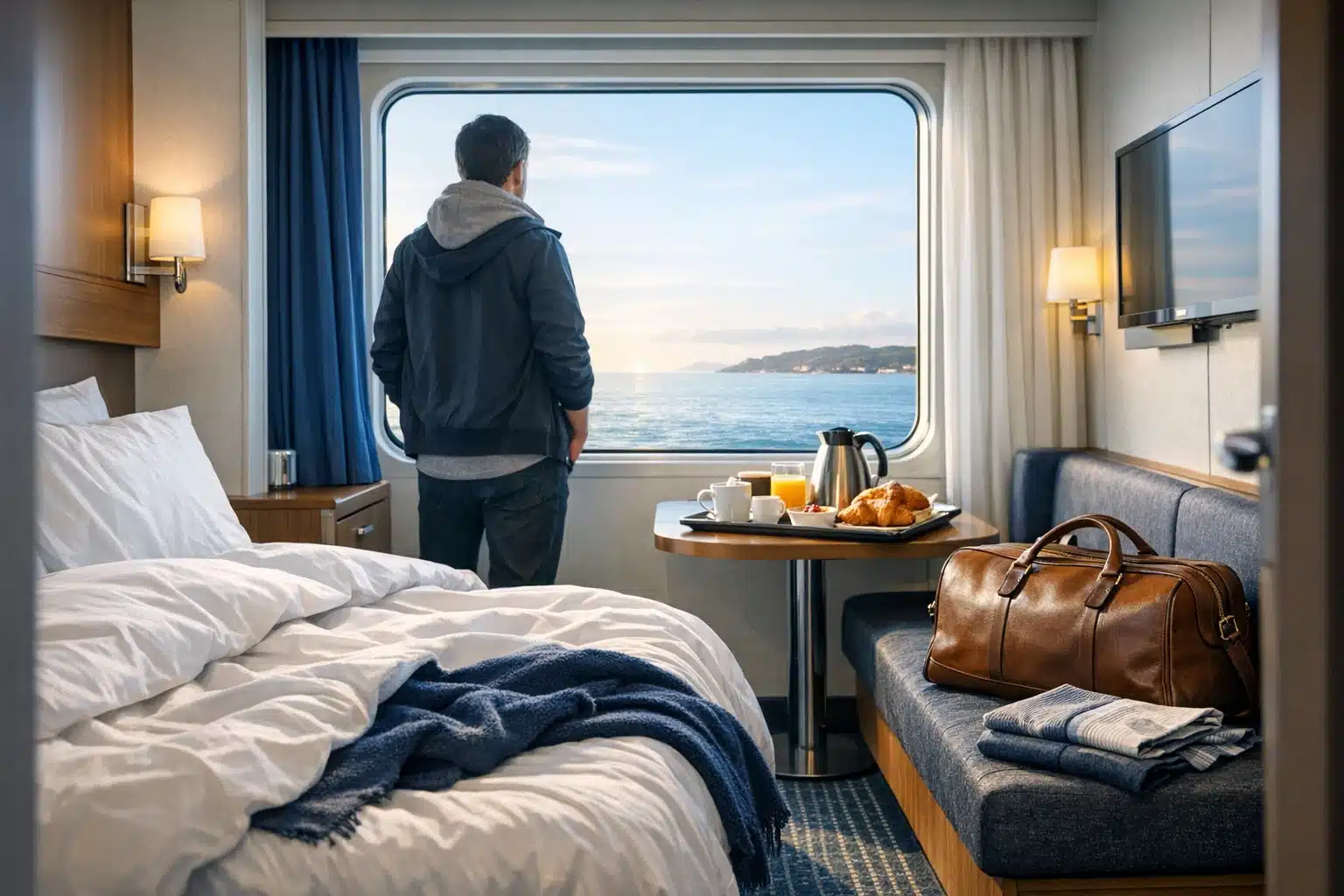
The first major choice is the cabin. On a 3-night cruise, travellers sometimes assume the cheapest cabin is always good enough because they will “hardly be in it.” That is true for some people, but not all. An inside cabin is often the budget-friendly option and can work perfectly for passengers who sleep well in darkness and plan to spend most waking hours in lounges, dining rooms, or on deck. An outside cabin adds natural light and a view, which many people find particularly worthwhile on a short sailing where the sea is a central part of the appeal. If balcony cabins are offered, they can feel luxurious, but on a brief itinerary the price jump is not always the best use of budget unless privacy and personal outdoor space matter greatly to you.
When comparing fares, look carefully at what is included. Different cruise products package value in different ways.
- Some fares include only accommodation and standard meals.
- Others may bundle gratuities, drinks packages, or priority boarding.
- Excursions in Hamburg may be optional rather than automatic.
- Transfers between Edinburgh and the port may or may not be part of the booking.
Timing also matters. Shoulder-season sailings can offer attractive prices and a quieter atmosphere, but weather in the North Sea is less predictable, and daylight hours may be shorter. Peak-season departures tend to feel livelier and may provide more comfortable conditions on deck, though demand can push prices upward. If your priority is scenery and time outdoors, late spring to early autumn is often easier. If your priority is value, flexibility around departure date is usually the stronger advantage.
Documents deserve serious attention, even for a short cruise. Do not assume a mini break means relaxed entry rules. Check passport validity, visa requirements if relevant to your nationality, and any operator-specific identification policies well before departure. Also confirm baggage limits, check-in windows, and travel insurance. Insurance is especially sensible for short cruises because missing the ship due to traffic, transport delay, or last-minute illness can turn a small trip into a costly one quickly.
A practical pre-booking checklist helps:
- Confirm the exact departure port and how long it takes to reach it from Edinburgh.
- Compare total trip cost, not just base fare.
- Check whether breakfast on disembarkation day is included.
- Review cancellation terms and rebooking policies.
- Read recent operator updates rather than relying on old promotional copy.
Smart booking is rarely glamorous, but it is what turns a pleasant idea into a smooth travel experience. On a short itinerary, every hour matters, so the fewer unresolved details you carry with you, the more space there is to enjoy the voyage itself.
Onboard Experience, Weather, and Packing Tips for a Comfortable Crossing
The onboard side of a 3-night mini cruise is where expectations often need the most adjustment. This is not the same as a long resort-style cruise in warmer waters, and that is not a weakness. It is simply a different kind of trip. Think of it as a compact maritime break with enough comfort to feel special, enough structure to feel easy, and enough movement to remind you that you are genuinely at sea.
Most ships operating northern European routes are designed around practicality as much as leisure. You can usually expect a mix of cabins, restaurants or buffet spaces, bars or lounges, outdoor deck areas, and some evening entertainment. On a short sailing, passengers often fall into two broad groups. One group wants to maximise activity by joining quizzes, listening to live music, exploring the ship, and treating the crossing as an event. The other group wants stillness: a seat by the window, a warm drink, and the simple pleasure of watching weather roll across the horizon. The nice thing is that both approaches fit easily on this kind of voyage.
The North Sea, however, should not be underestimated. Even when conditions are manageable, the movement may be more noticeable than on larger ocean itineraries or sheltered coastal routes. If you are prone to motion sickness, prepare before you board rather than waiting to see what happens. Seasickness tablets, wristbands, hydration, and choosing a mid-ship cabin on a lower deck can all help. It is also wise to avoid overly heavy meals if the water looks unsettled. There is no glamour in pretending you are immune to sea motion and spending the evening regretting it.
Packing for this route is about layers, not excess. Hamburg may be your destination, but the crossing itself shapes what you need.
- A windproof jacket is more useful than a bulky fashion coat.
- Comfortable shoes matter for both the ship and city walking later.
- Smart-casual evening wear is usually enough unless the operator specifies otherwise.
- Medication, chargers, travel documents, and one change of clothes should stay in your hand luggage.
- A small day bag is handy for disembarkation and first hours in Hamburg.
It also helps to think about how you want the ship to feel. If you bring a book, downloaded entertainment, a reusable water bottle, and perhaps binoculars for the approach into port, you create your own little floating routine. There is something quietly satisfying about standing on deck in a cool breeze, hands wrapped around a mug, while gulls arc over the wake and the coastline has already slipped out of sight. Short as the crossing is, that mood is often what passengers remember long after they forget what dessert was served in the dining room.
In practical terms, the best onboard strategy is balance. Enjoy the facilities, but do not over-schedule yourself. Take note of announcements, especially about dining times and arrival procedures. Rest well on the first night if you want to enjoy the sea day fully. A mini cruise works best when you let it breathe a little; otherwise, you risk bringing the same hurried rhythm you were trying to escape in the first place.
Hamburg Arrival and Final Thoughts: Who This Mini Cruise Suits Best
Arriving in Hamburg by ship gives the city a different kind of introduction. Instead of emerging from an airport into a transfer line, you enter through a working maritime landscape that reflects what Hamburg has long been: one of Europe’s great port cities, shaped by trade, water, and movement. For travellers who enjoy place as much as sightseeing, that arrival matters. It sets the tone before you ever reach a museum, café, or hotel reception desk.
Once ashore, your first task is simple orientation. Check whether your arrival point is closest to a cruise terminal, a ferry connection, or a transport hub linked by bus, rail, or taxi. Hamburg’s public transport network is generally strong, so many visitors can continue into the city efficiently without needing a private transfer. If you are staying overnight, it is worth dropping bags at your hotel early and then building the first day around nearby highlights rather than trying to cross the whole city immediately.
Good first-stop options often include:
- The Speicherstadt district for warehouse architecture and canals
- The Elbphilharmonie area for harbour views and modern waterfront atmosphere
- Landungsbrücken for a classic sense of Hamburg’s port energy
- A relaxed café break before committing to museums or longer walks
Because the cruise itself is short, the best Hamburg plan is focused rather than overloaded. Pick one area of strong interest, one scenic walk, and one place to eat well. That approach preserves energy and keeps the trip enjoyable. Hamburg rewards this style of travel. It is a city that reveals itself through texture: brick facades, bridges, ferries, river light, and neighbourhood contrasts. Rushing through a checklist can flatten that experience.
So who is this mini cruise really for? It suits travellers who like the idea of a city break but want the transport stage to feel memorable rather than disposable. It works for couples looking for a contained and comfortable short holiday, solo travellers who appreciate an easy framework, and first-time cruise guests who want a low-commitment sample of life at sea. It is also a clever option for people who dislike airport stress, provided they are comfortable with maritime travel and realistic about weather.
It may be less ideal for travellers whose only priority is speed, or for those who want maximum time on land with minimum time in transit. In that case, flying will usually win. But for the right audience, that is missing the point. A 3-night mini cruise from Edinburgh to Hamburg is not merely a slower way to get somewhere. It is a short journey with its own character, one that blends movement, rest, and anticipation in a way few quick breaks manage. If you want a getaway that begins the moment you board, rather than the moment you arrive, this route is an appealing and genuinely memorable choice.