3 Night Cruise From Southampton: Itinerary and Travel Tips
A 3-night cruise from Southampton is an easy way to try cruising without using up a full week of annual leave. It appeals to first-time sailors, couples after a compact break, and travellers who want a simple route to a nearby European port. Because the schedule is short, every decision matters a little more, from boarding time to cabin choice, and smart planning can turn a quick getaway into a smooth, memorable trip.
Short cruises are popular because they combine convenience with variety. You get the buzz of departure day, at least one chance to wake up in a different destination, and enough onboard time to sample restaurants, shows, lounges, and open decks without committing to a longer voyage. The outline below maps the article so you can quickly see what to expect and then dive into the details.
Article Outline
- Why Southampton is such a practical departure point for a 3-night cruise
- How a typical day-by-day itinerary is structured, from embarkation to return
- How to compare ships, cabins, dining styles, and onboard atmosphere
- What to budget, pack, and arrange before arriving at the terminal
- Who benefits most from this kind of short sailing and how to make it worthwhile
1. Why a 3-Night Cruise From Southampton Is a Smart Short Break
Southampton has become one of the most convenient cruise departure points for travellers in the UK, and that matters even more on a 3-night sailing. When a holiday is brief, time lost in complicated airport transfers or long overland connections can eat into the experience. Leaving from a major southern port allows many passengers to drive, take a direct train, or stay nearby the night before and board with minimal stress. That convenience is one of the biggest reasons mini-cruises from Southampton remain popular with first-timers and returning guests alike.
A 3-night cruise sits in an interesting middle ground between a weekend city break and a traditional voyage. It is longer than a quick overnight escape, yet much lighter in cost and commitment than a 7- or 14-night itinerary. For people who are unsure whether they enjoy ship life, this format works like a practical trial run. You can test the motion of the sea, the dining rhythm, the entertainment programme, and the pace of embarkation and disembarkation without feeling locked into a long schedule.
These cruises are also relevant because they suit several travel styles at once. A couple may treat it as a low-effort romantic getaway. Friends may see it as a social weekend with live music, cocktails, and late dinners. Families sometimes use it as a short school-break experiment before booking a bigger trip in the future. Solo travellers can find them useful as well, particularly when a line offers good communal spaces and flexible dining.
Compared with longer itineraries, the value of a 3-night cruise comes less from the number of destinations and more from the blend of convenience and atmosphere. The ship itself becomes part of the holiday rather than just the transport. On a crisp evening departure from Southampton Water, when the shoreline slowly slips away and the decks fill with passengers holding coffee, sparkling wine, or simply a phone camera, the appeal becomes obvious. You are travelling, but you are also pausing.
Typical advantages include:
- Easy access from much of southern England and reasonable rail links from London
- A manageable budget compared with a full-week cruise
- Enough time to explore the ship properly
- A low-risk way to decide whether cruising suits your personality
- A strong option for birthdays, anniversaries, or spontaneous short breaks
The trade-off, of course, is time. There is less room for error, fewer port hours, and not much chance to recover if you overpack the schedule. That is why planning matters more than many people expect on such a short sailing.
2. Typical 3-Night Cruise Itinerary From Southampton: What Each Day Often Looks Like
Although cruise lines vary their routes, many 3-night sailings from Southampton follow a broadly similar pattern: embarkation on day one, a port call or scenic sailing on day two, a sea day or partial sea day on day three, and return to Southampton on the morning of day four. Understanding that rhythm helps you decide how much to plan and how much to leave open.
Day 1: Embarkation in Southampton. Boarding usually begins in staggered time slots around late morning or early afternoon. Most ships depart in the late afternoon or early evening, though exact timings vary by line and tide conditions. This first day often feels busy because several things happen quickly: luggage is dropped, security is cleared, cabins may not be ready immediately, and dining reservations or onboard bookings can fill up fast. Savvy passengers use the first few hours to learn the layout of the ship, confirm dining arrangements, and attend the mandatory safety drill. Once departure begins, the mood shifts. The harbour traffic, the slow turn into open water, and the first dinner onboard mark the real start of the trip.
Day 2: Port call or destination day. Common short-cruise destinations from Southampton include Zeebrugge for Bruges, IJmuiden for Amsterdam, or Le Havre for Normandy. Each offers a different flavour. Bruges tends to attract travellers who want canals, medieval streets, and compact sightseeing. Amsterdam appeals to visitors who want museums, waterside walks, and café culture, though transfer time from the port should always be checked. Le Havre works better for Normandy-focused excursions than for trying to force in Paris on a brief stop. Some itineraries replace a port visit with a scenic day or a cruise-focused onboard experience, especially during seasonal repositioning or themed departures.
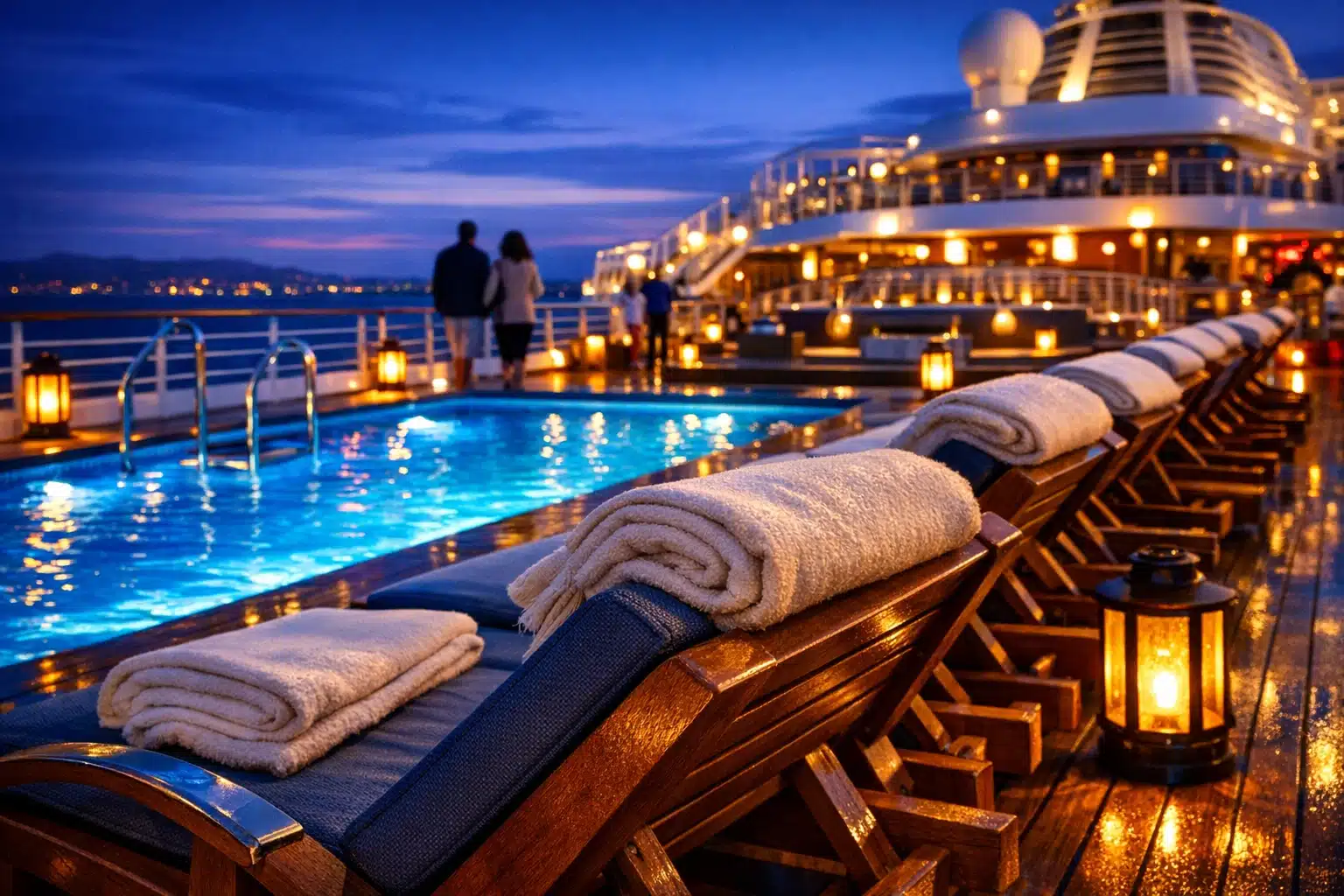
Day 3: Sea day and ship time. This is often when passengers finally relax into the rhythm. Breakfast lasts longer, lounges feel calmer, and people start using the facilities they missed on the first day. You may spend the morning by the pool, join a quiz, book a spa treatment, or simply watch the horizon from a sheltered deck chair while the sea rolls like brushed steel. Evening entertainment is usually stronger on this night, with headline shows, themed menus, or dressier dining options.
Day 4: Return and disembarkation. Ships normally arrive in Southampton early, with passengers leaving in allocated groups after breakfast. Disembarkation can be efficient if documents, luggage labels, and onward transport are sorted in advance.
A simple way to think about the itinerary is this:
- Day 1 gives you logistics and excitement
- Day 2 gives you destination value
- Day 3 gives you the classic cruise atmosphere
- Day 4 requires organisation rather than adventure
That sequence is why short cruises can feel fuller than their length suggests. Every day has a clear purpose.
3. Choosing the Right Ship, Cabin, and Onboard Style for a Short Sailing
On a 3-night cruise, the ship’s personality can matter more than the destination list. With a longer itinerary, a traveller may forgive a few onboard annoyances because there are many ports and sea days to balance the experience. On a mini-cruise, however, the vessel sets the tone almost immediately. Choosing the right ship style is therefore one of the most important decisions you can make.
Broadly speaking, short cruises from Southampton tend to fall into a few familiar categories. Contemporary mainstream ships usually offer lively entertainment, multiple dining venues, and a social atmosphere that works well for groups, younger couples, and passengers who want plenty happening after dark. Premium lines often provide a calmer pace, more traditional service, and a stronger focus on dining and comfort. Family-friendly ships may have pools, clubs, and activity spaces that help children stay engaged, while adults-only or more classic-style ships can feel quieter and more refined.
Cabin choice also deserves more thought than many travellers give it. Because the trip is short, some people book the cheapest inside room on the assumption that they will hardly be there. That can be sensible if you plan to spend most of your time in lounges, theatres, and restaurants. Still, there are trade-offs:
- Inside cabins are usually the lowest-cost option and fine for value-focused travellers.
- Oceanview cabins add natural light and can make mornings feel less closed in.
- Balcony cabins offer private outdoor space, which can feel especially worthwhile when sailing out of Southampton or arriving near a scenic coastline.
- Midship cabins on lower or central decks may feel steadier to passengers concerned about motion.
Dining style matters too. On a short cruise, rigid dinner times can either create pleasant structure or feel restrictive, depending on your habits. Flexible dining works well if you want freedom, especially after a port day. Traditional seating can be enjoyable if you like routine and the chance to meet the same table companions each evening.
Before booking, compare the onboard experience rather than just the headline fare. Ask yourself practical questions. Do you want late-night music or quiet bars? Are you looking for big production shows or a slower, lounge-based atmosphere? Will you use the spa, gym, or specialty restaurants enough to justify a ship that emphasizes them?
In many ways, a 3-night cruise is like checking into a moving hotel with its own social ecosystem. The right ship can make the voyage feel polished and effortless. The wrong one can leave you feeling as though you booked a setting that did not match your mood. On such a short break, that fit matters enormously.
4. Travel Tips: Budgeting, Packing, and Getting to Southampton Without Stress
A short cruise can look inexpensive at first glance, but the full cost depends on what is included and how you travel to the port. The base fare typically covers your cabin, main dining options, and a large share of onboard entertainment. Beyond that, extra charges may appear quickly. Drinks packages, specialty dining, shore excursions, parking, gratuities on some lines, Wi-Fi, spa treatments, and pre-cruise hotel stays can all change the final figure. For that reason, it is better to budget in layers rather than focus only on the advertised fare.
A practical budget checklist might include:
- Base cruise fare and any service charges
- Transport to Southampton by rail, car, or coach
- Port parking or taxi costs
- One-night hotel stay if you want a calmer embarkation morning
- Travel insurance and document costs
- Drinks, premium dining, or internet access
- Excursion or independent transport in the port of call
Getting to Southampton is usually straightforward, which is one of the route’s biggest strengths. From London, rail journeys to Southampton Central often take around 80 to 90 minutes depending on the service, and taxis from the station to cruise terminals are widely available. Drivers benefit from the port’s relative accessibility, though advance parking booking is usually wise. If you live far from the south coast, arriving the day before can reduce the risk of delays and start the trip on a calmer note. A nearby hotel stay also gives you time for a relaxed dinner and proper rest instead of a rushed dawn departure.
Packing for a 3-night cruise should be selective, not minimal to the point of inconvenience. Bring enough to handle changes in weather, especially outside peak summer. Southampton departures can be bright and mild one hour, breezy and cool the next. Essentials usually include:
- Passport and boarding documents
- Any required visas or travel authorisations if your itinerary needs them
- Comfortable walking shoes for the port day
- A light waterproof jacket or layered outerwear
- Evening clothes suited to your ship’s dress code
- Medication in hand luggage
- Portable charger and European payment card or modest local cash if useful ashore
Two small mistakes catch many new cruisers off guard. First, they pack all essentials in checked luggage and then wait hours for the suitcase to reach the cabin. Keep medication, documents, valuables, and one change of basics with you. Second, they treat the port day as if it were a full city break. A short call demands realistic planning. One well-chosen activity is usually more satisfying than trying to cover a museum, market, canal cruise, and shopping district in a few rushed hours.
The smartest travel tip for a 3-night cruise is simple: reduce friction. Book transport early, keep your paperwork easy to reach, and decide in advance where you are willing to spend more for comfort. On a brief holiday, convenience is often worth more than squeezing out the absolute lowest price.
5. Who Should Book a 3-Night Cruise From Southampton? Final Thoughts for Short-Break Travellers
A 3-night cruise from Southampton is best suited to travellers who value ease, variety, and a sense of occasion more than a long destination list. If you want a holiday that begins without airport queues, carries you to at least one different place, and returns you home before the week feels lost, this format makes real sense. It works particularly well for first-time cruisers because it gives you enough exposure to judge the experience honestly. You will learn whether you enjoy dining at sea, whether the ship feels lively or restful to you, and whether you prefer port exploration or onboard leisure.
It can also be an excellent fit for couples who want a compact escape with a built-in rhythm. Breakfast with a sea view, an afternoon ashore, and an evening show create a natural flow that many land-based city breaks struggle to match. Groups of friends often enjoy these sailings too, especially on ships with strong entertainment and casual dining. For busy professionals, the appeal is even simpler: minimal planning burden, limited time off work, and a genuine shift of scene.
That said, this type of trip is not ideal for everyone. Travellers who dislike tightly timed schedules may find embarkation day too structured. People who want deep cultural immersion in a destination may prefer a longer land itinerary or a cruise with extended port stays. Families with very young children should also check whether the ship’s facilities genuinely justify the short duration. When the sailing is only a few nights long, a mismatch between expectations and reality becomes noticeable quickly.
If you are considering booking, keep these closing pointers in mind:
- Choose the ship first and the route second if onboard experience matters to you
- Arrive with realistic expectations about how much sightseeing fits into one port call
- Pay attention to total cost, not just the entry fare
- Use the cruise as a sampler if you are undecided about longer voyages
- Protect the final morning by organising luggage and onward travel the night before
For the right traveller, a 3-night cruise from Southampton can feel surprisingly complete. It offers movement without chaos, comfort without overplanning, and just enough distance from routine to make ordinary days seem far away. In a compact window of time, you get a departure, a destination, a sea day, and the distinct pleasure of waking up somewhere between horizons. If that sounds like your kind of reset, this short sailing is more than a compromise. It is a well-shaped trip in its own right.