3-Night Cruise from Dover: Itinerary and Travel Tips
A 3-night cruise from Dover offers a compact way to sample ocean travel without committing to a full week away. For first-time cruisers, busy professionals, and couples planning a short break, it can combine easy boarding in southeast England with a taste of European ports or a relaxing run at sea. The appeal lies in efficiency: one suitcase, one embarkation point, and several distinct experiences packed into a long weekend. Understanding the itinerary, costs, and practical details helps turn a quick getaway into a smoother and more rewarding trip.
Outline of this article:
- Why short cruises from Dover are popular and what they usually include
- How a typical 3-night itinerary works and which ports commonly appear
- What to know about fares, cabins, and optional spending onboard
- How to handle embarkation, packing, and local transport with less stress
- Who will enjoy this format most, and how to decide whether it suits your style of travel
Why a 3-Night Cruise from Dover Appeals to So Many Travellers
A short cruise from Dover sits in an interesting middle ground between a hotel break and a longer voyage. It is long enough to feel like travel, but short enough to fit around work schedules, school terms, or a simple need to get away without turning planning into a second job. Many passengers choose these sailings as a first test of cruising because three nights let them experience embarkation, dining rooms, entertainment, cabins, and port logistics before they commit to a seven- or fourteen-night itinerary. In that sense, a mini cruise is not just a holiday; it is also a practical trial run.
Dover is a useful departure point for this format. The port is well known, relatively straightforward to reach from London and the southeast of England, and connected to mainland Europe by a stretch of water that is busy but manageable for short routes. While exact schedules vary by cruise line and season, many 3-night departures head toward Belgium, the Netherlands, or northern France. Some include two ports; others pair one port call with a sea day. That flexibility matters because travellers do not all want the same thing. One guest may want to step into Bruges for cobbled lanes and café culture, while another may be happiest with a book, a coffee, and the ship rolling gently onward.
The strongest advantages are practical:
- No flights, which can cut both cost and complexity
- Minimal annual leave needed, often just a Friday or Monday
- A lower overall price than a longer cruise, depending on cabin type and extras
- A chance to celebrate a birthday, anniversary, or reunion in a setting that feels more special than an ordinary weekend hotel stay
There are trade-offs, of course. You will not see a wide range of destinations, and the schedule can feel brisk. Weather in the English Channel and nearby waters may also affect the experience more than newcomers expect, especially outside high summer. Yet that unpredictability is part of the sea’s character. One hour you may be watching gulls wheel around the white cliffs, and by evening the shoreline has slipped behind you, leaving only the wind, the wake, and the pleasant realization that ordinary routines are suddenly very far away.
Typical Itinerary: What the Three Nights Usually Look Like
Although every operator publishes its own schedule, the rhythm of a 3-night cruise from Dover is surprisingly consistent. Day 1 is usually all about embarkation. Guests arrive at the terminal, hand over luggage, pass through security, complete check-in, and board in the afternoon. Cabins may not be ready immediately, so it is common to start with lunch in a buffet restaurant or to explore the upper decks. Before departure there is normally a mandatory safety drill, followed by the first of the trip’s little rituals: sail-away. From the open deck, Dover can be theatrical. The harbour recedes, the sea breeze sharpens, and the famous chalk cliffs often provide a memorable first image.
Day 2 is often the main port day. Common options include Zeebrugge for Bruges, Rotterdam in the Netherlands, or Le Havre in France. Each creates a different style of excursion. Zeebrugge tends to appeal to travellers who want postcard scenery, canals, lace shops, and a compact medieval centre. Bruges is not directly at the dock, so a transfer is usually needed, but the reward is a town that looks as though it was designed by an especially patient painter. Rotterdam offers nearly the opposite mood: bold architecture, broad streets, modern museums, and a city centre that can feel dynamic rather than delicate. Le Havre is a gateway port; it can work well for Normandy-focused outings, but some excursions involve longer travel times than first-time passengers anticipate.
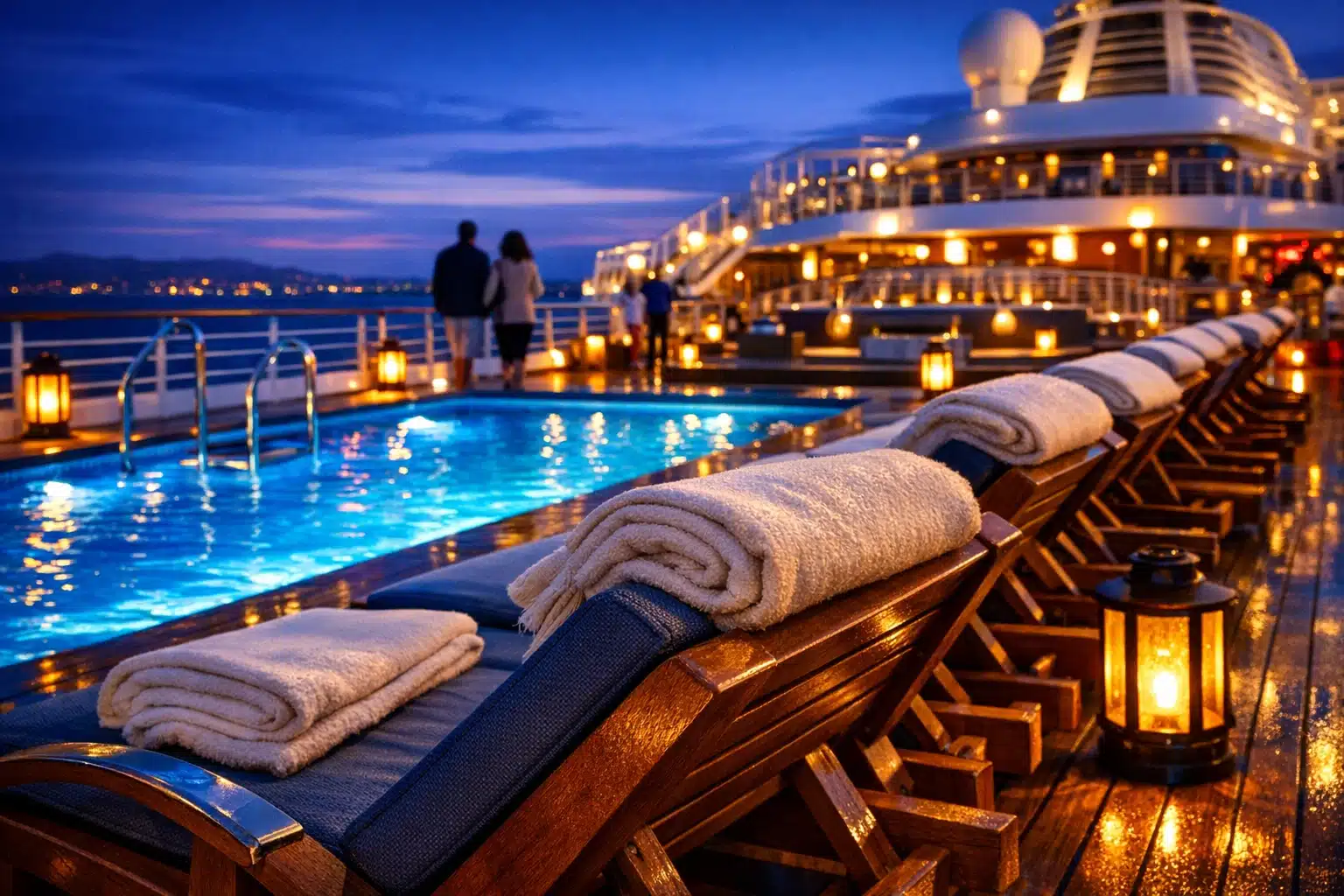
Day 3 varies the most. On some sailings, it is another port call, perhaps Rotterdam after Belgium or vice versa. On others, it becomes a sea day, which many experienced cruisers quietly value just as much as a destination. A sea day gives the ship room to be itself. Pools, lounges, quizzes, afternoon tea, spa appointments, live music, and evening theatre all come into play when nobody is watching the clock for a shore excursion bus.
Day 4 is usually disembarkation in Dover, often early in the morning. That final morning can feel surprisingly quick, so it helps to know the pattern:
- Settle your onboard account the night before if needed
- Follow luggage instructions carefully
- Keep passports, medicines, chargers, and valuables in your hand luggage
- Check transfer or train times in advance rather than improvising at the terminal
The key lesson is simple: a short itinerary is not lesser, just tighter. Every hour counts, which is why understanding the route beforehand makes the whole trip feel far more relaxed.
Cabins, Costs, and the Difference Between a Cheap Fare and Good Value
One of the most common mistakes with short cruises is assuming the headline fare tells the whole story. It rarely does. The base price typically covers your cabin, meals in included venues, standard entertainment, and access to shared facilities such as pools, lounges, or fitness areas. That can already compare well with a land break when you consider that transport between cities, hotel changes, and restaurant bills are effectively replaced by one moving base. Still, optional spending can reshape the final cost quickly, so it is worth pricing the trip realistically rather than optimistically.
Start with the cabin. On a three-night sailing, an inside cabin often makes excellent sense for travellers who expect to be out on deck, in restaurants, or ashore for much of the time. It is usually the cheapest category and can feel perfectly comfortable for a short stay. An ocean-view room gives you natural light, which many people appreciate on a compact itinerary where mornings matter. A balcony costs more, yet it offers a private patch of sea and sky that can transform sail-away and early mornings. For some passengers that is a luxury; for others, especially couples celebrating an occasion, it is the detail that makes the trip memorable.
Then come the extras. Depending on the line, you may need to budget separately for:
- Drinks packages or individual beverages beyond basic tea, coffee, or water options
- Specialty restaurants
- Wi-Fi access
- Gratuities or service charges, where not included
- Shore excursions
- Port parking, rail tickets, taxis, or an overnight stay before departure
Good value means matching spending to the length of the cruise. For example, a costly drinks package may not make sense on a very short itinerary if you plan a full day ashore. A balcony may be more worthwhile if the route includes scenic departures and you know you enjoy quiet private space. Excursions can also be judged this way. In a port such as Rotterdam, independent exploring may be simple enough to save money, while in a gateway port with more distance between ship and sights, an organised tour may be worth the price for convenience alone.
Think of the budget as a menu rather than a trap. A short cruise can be affordable, but it becomes smart spending only when the choices fit how you actually travel.
Travel Planning: Getting to Dover, Packing Well, and Boarding Smoothly
The simplest cruises are often the ones prepared with the least drama. Dover makes that possible, but only if you treat the embarkation day with respect. The port is reachable by road from southeast England and by rail via Dover Priory, with onward taxi connections to the cruise terminal. If you live nearby, same-day travel may be easy. If you are coming from farther north, from the West Country, or from another country entirely, arriving the night before is often the calmer choice. A missed train, motorway delay, or bad weather can turn a cheerful departure into an expensive problem, and ships do not wait for late passengers in the way a hotel check-in might.
Documents deserve early attention. Most sailings require a valid passport, and some itineraries may have country-specific requirements depending on nationality and route. Cruise lines usually ask guests to complete online check-in before arrival and to print or download boarding documents. It sounds routine, yet this is one area where forgotten paperwork can stop a trip before it starts. Travel insurance is also sensible, especially when even a short sailing involves transport, accommodation, and non-refundable elements.
Packing for a 3-night cruise from Dover is less about quantity and more about range. Weather in the Channel and nearby North Sea routes can shift quickly, even in warmer months. Layers are more useful than bulky clothing, and deck conditions can be windier than newcomers expect. A practical packing list often includes:
- A light waterproof or wind-resistant jacket
- Comfortable walking shoes for shore days
- One smarter outfit if the line has a dressier evening atmosphere
- Any required medications in hand luggage
- Adaptors, chargers, and a portable battery pack
- Motion-sickness remedies if you are unsure how you handle sea travel
Once onboard, the smartest move is not to rush. Check where your cabin is, confirm dining times, explore the ship’s key areas, and reserve anything that fills quickly. Many cruise apps now help with schedules, restaurant bookings, and daily programmes. If you want a small trick that makes a real difference, pack a day bag with essentials for the first few hours: passport, wallet, phone, charger, medication, and perhaps a sweater. Luggage delivery can take time, and nobody wants to start a voyage by hunting for a coat while the sea wind is already doing its brisk work across the deck.
Conclusion: Who Should Book This Trip and How to Make the Most of It
A 3-night cruise from Dover suits travellers who value efficiency, variety, and a manageable level of planning. It can work especially well for first-time cruisers who want to learn whether they enjoy life at sea, for couples looking for a short celebratory break, for friends who want an easy social getaway, and for busy workers who cannot spare a full week. It is also a strong option for people who prefer not to fly. Embarkation in England removes airport formalities from the equation and keeps the journey feeling pleasantly contained from start to finish.
That said, the format is not ideal for everyone. Travellers who dislike fixed schedules, want deep immersion in a destination, or prefer several days in one place may find a mini cruise too compressed. Shore time is limited, ports can change due to weather or operational reasons, and the experience is more about sampling than fully exploring. The best mindset is to treat the trip as a concentrated blend of transport, accommodation, entertainment, and one or two snapshots of another place. If you expect a grand tour, you may be underwhelmed. If you expect a polished long weekend with a maritime twist, you are far more likely to come home pleased.
To get the most from the trip, keep the essentials in focus:
- Choose the itinerary for the port style you actually enjoy, not just the lowest fare
- Budget for extras before booking so there are no surprises later
- Arrive in Dover with time to spare, especially if travelling from afar
- Pack for changeable weather rather than ideal weather
- Use the short length to your advantage by planning selectively instead of cramming every hour
There is something quietly satisfying about this kind of journey. In a matter of days, the ordinary pattern of home, commute, and chores is replaced by sea air, changing horizons, and the small pleasure of seeing your cabin waiting for you each evening. For the right traveller, that is exactly the point. A short cruise from Dover will not show you all of Europe, but it can deliver a refreshing change of pace, a practical introduction to cruising, and a reminder that a memorable break does not always need a long calendar to feel worthwhile.