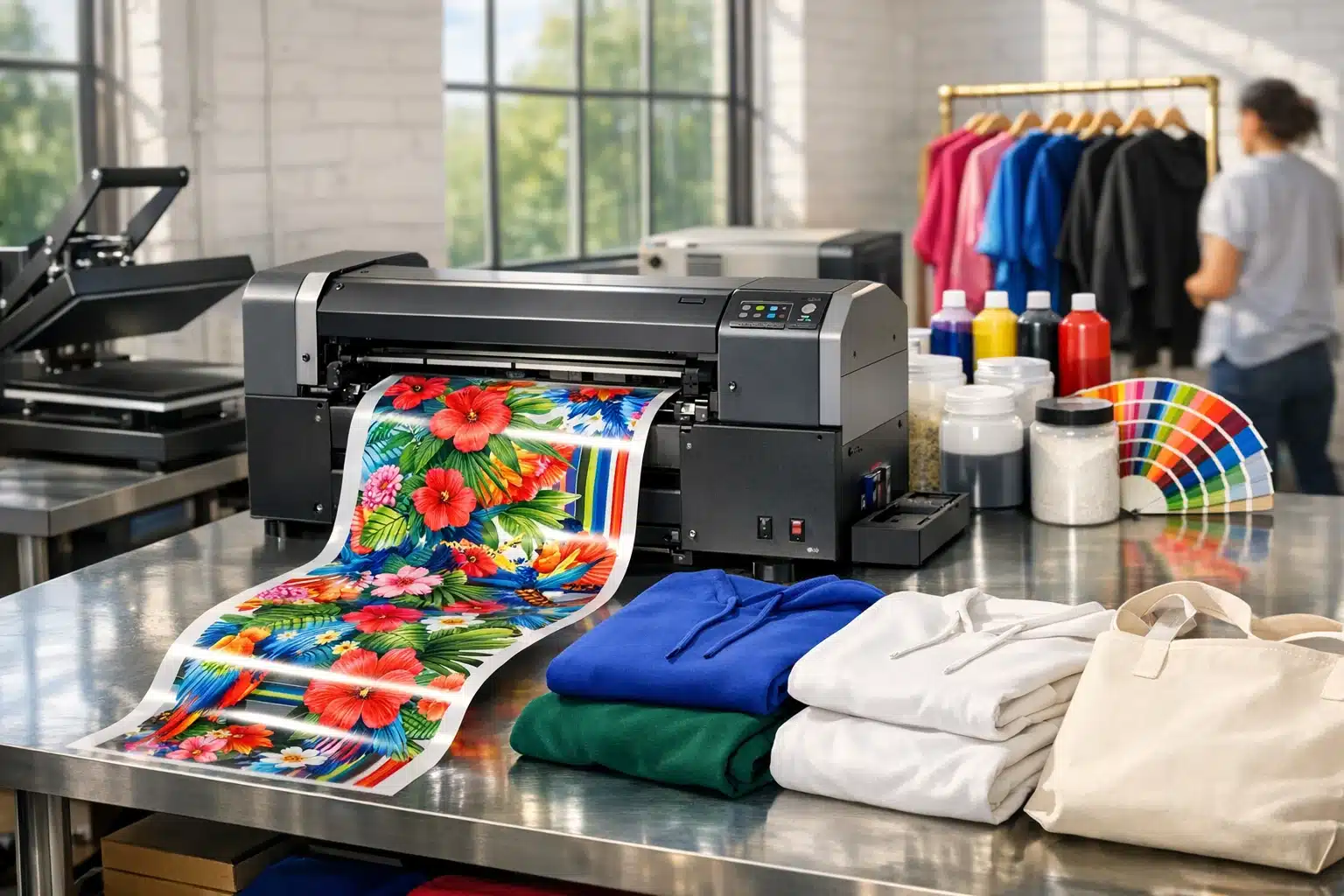
 Artificially generated image
 How DTF Printing Technology is Changing Textile Decoration
Direct-to-film printing is no longer a curiosity tucked away in trade-show demos; it has become a practical production method for startups, print shops, and home-based brands that need flexibility without a giant industrial footprint. It works across cotton, polyester, blends, and many dark garments, while cutting out the weeding that slows heat-transfer vinyl. That broader material range makes it especially relevant for small businesses trying to accept more jobs with fewer machines. The big challenge is sorting flashy marketing from truly useful features, which is exactly where a careful buyer gains an edge.
Outline: this article covers how DTF printing works and why it matters, the features that separate a dependable machine from a risky purchase, the differences between desktop, 13-inch, and 24-inch systems, the real cost of ownership, and practical recommendations for choosing the best DTF printer for a small business.
What DTF Printers Are and Why They Matter in Modern Textile Decoration
DTF printers create transfers by printing a design onto a special PET film, laying down adhesive powder, curing that powder with heat, and then pressing the finished transfer onto a garment. On paper, that sounds simple. In practice, it changes how small shops think about custom apparel because the process can cover many of the jobs that once required different methods, different machines, and different compromises. A logo for a cotton hoodie, a bright name print for a polyester jersey, or a detailed illustration for a tote bag can all come from the same basic workflow.
The real appeal of DTF printing is versatility. Traditional screen printing still makes excellent sense for long runs, especially when cost per piece drops at higher volumes. Sublimation remains a strong choice for white polyester and all-over sportswear applications. Heat-transfer vinyl is great for simple names and numbers. DTG can shine for soft prints and short-run art on cotton. DTF printers, however, sit in an interesting middle ground: they handle many fabric types, preserve vivid color on dark garments, and support fine detail without forcing the operator to weed tiny shapes by hand. For a small business, that matters because every extra production step quietly eats profit.
Several factors explain why DTF technology has moved so quickly from niche curiosity to serious business tool:
• It works on cotton, polyester, blends, canvas, and more.
• It supports vibrant color and an opaque white layer for dark fabrics.
• It reduces setup friction for short runs and one-off designs.
• Transfers can be printed in advance and pressed later, which helps workflow planning.
That last point deserves attention. Preprinted transfers give a shop breathing room. Instead of rushing from artwork to final garment in one continuous sprint, operators can batch print during quiet hours and press items when orders arrive. For busy small businesses, this separation between printing and pressing can feel like finding an extra lane on a crowded road.
Of course, DTF is not magic. Prints can feel heavier than some DTG results, and quality depends heavily on correct powder application, cure temperature, film quality, and press settings. White ink also demands regular circulation and maintenance. Still, when buyers ask why DTF printers are reshaping textile decoration, the answer is straightforward: they give smaller operations a wider service menu without requiring a full industrial setup for every kind of garment. That combination of flexibility and reach is hard to ignore.
What Makes the Best DTF Printer for a Small Business
The phrase best DTF printer sounds simple, but the honest answer is more nuanced. The best machine for a home-based Etsy seller is not automatically the best option for a shop producing event shirts every day. For most small businesses, the winning choice is not the one with the loudest marketing language or the highest quoted speed. It is the printer that stays consistent, manages white ink reliably, fits the available space, and comes with support that does not disappear once payment clears.
Reliability should come first. DTF printing depends on white ink, and white ink is dense by nature. If circulation, agitation, or cleaning routines are weak, clogged channels and inconsistent coverage can quickly turn a promising machine into a stressful habit. Many entry systems use Epson-based print technology, often with heads such as XP600 or i1600-class configurations. Those names matter, but implementation matters more. A modest printer with stable ink delivery, sensible maintenance design, and solid software can outperform a higher-spec machine that is poorly integrated.
When evaluating options, buyers should pay close attention to these practical checkpoints:
• White ink circulation and maintenance features
• Availability of local or responsive remote technical support
• RIP software quality and ease of use
• Consistency of parts, film, powder, and ink supply
• Real-world production speed rather than headline numbers
• Width that matches expected order types
• Ventilation, curing, and workspace requirements
Support is one of the most underrated buying criteria. A printer is not just a piece of hardware; it is a workflow. If a shop loses a day to a software issue, profile mismatch, or printhead cleaning problem, that downtime can cost more than the difference between two machine prices. This is why many experienced decorators advise new buyers to prioritize vendor training and after-sales service over flashy specification sheets. The best DTF printer for a small business is often the one backed by people who answer the phone.
Another key factor is output size. If most jobs are left-chest logos, sleeve graphics, and small runs of children’s apparel, a compact system may be perfectly sensible. If gang sheets, full fronts, and growing wholesale demand are on the horizon, a wider roll-fed machine usually offers better efficiency. Think of printer selection like choosing a vehicle for work: a small hatchback is easy to park, but it becomes frustrating when every week starts to look like a moving day. The right fit is the printer that handles your present workload without blocking your next stage of growth.
Comparing DTF Printer Types: Desktop Units, 13-Inch Systems, and 24-Inch Production Setups
One of the clearest ways to compare DTF printers is by class rather than by a single brand name. This keeps the discussion grounded in actual business needs. Broadly speaking, most small buyers end up considering three categories: compact desktop units, mid-range 13-inch roll-fed systems, and wider 24-inch production machines. Each group can be the best DTF printer choice in the right situation, but each also comes with trade-offs that should be understood before money changes hands.
Desktop DTF printers, often in A4 or A3-style formats, appeal to beginners for an obvious reason: lower entry cost. They take up less space, can fit in smaller work areas, and feel less intimidating to new users. For hobby sellers, early-stage side businesses, and shops testing market demand, that lighter starting point can be valuable. However, these units often require more manual handling, smaller sheet-based output, and tighter attention to maintenance. They can work well for low-volume personalized orders, yet they may become limiting once order counts rise or gang-sheet efficiency becomes important.
13-inch roll-fed systems are often the sweet spot for small businesses. They balance footprint, usable width, and production rhythm in a way that suits many apparel shops. A machine in this class can cover chest graphics, back prints for many garments, and grouped layouts that improve material use. It usually feels more purpose-built than an ultra-compact starter model, while remaining more affordable and manageable than a wider production setup. For many buyers asking for the best DTF printer for small business use, this category is the most realistic place to start the shortlist.
24-inch systems move the conversation toward scale. They allow larger gang sheets, better nesting efficiency, and smoother output for operators handling regular volume. When paired with an automatic powder shaker and curing unit, they can significantly reduce manual bottlenecks. That said, the advantages come with higher cost, larger space requirements, stronger ventilation needs, and greater pressure to keep the machine busy enough to justify its footprint. A 24-inch system is not excessive if demand is real, but it can be premature if the order flow is still inconsistent.
Here is a practical way to frame the choice:
• Desktop unit: best for testing the market, learning the process, and running modest order volume.
• 13-inch roll-fed system: best for most small businesses that want a serious, flexible setup without jumping too far in cost.
• 24-inch production system: best for shops with established demand, frequent gang-sheet use, and a clear plan for higher throughput.
The smartest comparison is not between the cheapest and the biggest machine. It is between the machine you can confidently run now and the one your workflow will outgrow in six months. That distinction often determines whether DTF becomes a profit center or a frustration magnet.
The Real Cost of Ownership: Supplies, Maintenance, Workflow, and Hidden Challenges
A DTF printer should never be judged by purchase price alone. The machine is only the front door to a larger operating system that includes ink, film, adhesive powder, heat curing, software, maintenance, climate control, wasted output, and labor. This is where many first-time buyers get surprised. A printer advertised at an attractive price may still become expensive if it requires constant troubleshooting, uses difficult-to-source consumables, or creates more failed prints than expected.
Startup cost varies widely by machine class and bundle quality. Entry-level desktop kits may land in the lower thousands, while stronger 13-inch or 24-inch packages can move substantially higher once curing equipment, heat press capacity, software, spare parts, and training are included. Beyond hardware, ongoing material costs matter just as much. A standard transfer uses film, color ink, white ink, powder, and electricity for curing and pressing. For many small graphics, the raw material cost often sits in a manageable low single-digit range, but that number grows quickly when test prints, color corrections, spoilage, and reprints enter the picture.
Maintenance is the expense beginners underestimate most. White ink settles. Printheads need attention. Nozzles need monitoring. Humidity levels can affect print behavior, and neglected machines tend to punish their owners without much mercy. That does not mean DTF is unreliable; it means the workflow rewards discipline. Shops that build a routine usually have a far better experience than shops that run the printer hard for two days and ignore it for a week.
Common hidden costs include:
• Extra film and ink used during setup and testing
• Cleaning solution, capping station parts, and replacement dampers
• Time lost to software learning and color adjustments
• Ventilation or air filtration improvements
• Failed transfers caused by poor curing or pressure settings
• Labor spent applying powder manually on smaller systems
There is also a workflow question that deserves honesty: do you want printing to be a daily habit? DTF can be highly productive, but it is not a “click print and forget it” appliance. If your business model is based on steady, repeatable output, that routine can be efficient and profitable. If your order stream is unpredictable and you dislike maintenance tasks, outsourcing transfers may be the smarter path at first.
In other words, the best DTF printer is not merely the one you can afford to buy. It is the one you can afford to run, maintain, and support with consistent habits. Buyers who understand that difference usually make sharper decisions and build healthier margins.
Conclusion for Small Businesses: How to Choose the Best DTF Printer with Confidence
If you are a small-business owner trying to choose the best DTF printer, the clearest conclusion is this: there is no universal winner, but there is a very practical best fit for each stage of growth. For most small shops, the strongest all-around choice is usually a purpose-built 13-inch or entry 24-inch roll-fed system with dependable white ink circulation, solid vendor support, accessible consumables, and a workflow you can realistically manage every week. That combination tends to deliver a better long-term result than either the cheapest starter machine or a production unit bought too early.
Different business profiles point toward different answers. A home seller handling occasional custom orders may do well with a compact system if space and budget are tight, though patience and maintenance discipline are essential. A growing apparel brand, local decorator, or promotional products shop will often gain more from a 13-inch roll-fed setup because it offers better balance between output, flexibility, and footprint. A business already producing regular gang sheets, staff uniforms, event apparel, or recurring B2B orders may justify a 24-inch machine, especially if the shop wants to cut labor time and scale more smoothly.
A practical buying framework looks like this:
• Choose reliability over headline speed.
• Choose support over marketing hype.
• Choose a width that matches actual order patterns.
• Choose a workflow your team can maintain consistently.
• Choose room for growth, but do not pay for capacity you will not use.
It is also wise to think beyond the machine itself. Ask how easy it is to get replacement parts. Ask whether training is included. Ask what the vendor expects you to do for daily maintenance. Ask for real production examples, not only ideal sample photos. A serious supplier should be able to discuss film settings, curing behavior, humidity considerations, and troubleshooting without sounding evasive. That conversation often tells you more than a glossy brochure ever will.
DTF printing is changing textile decoration because it gives smaller operations access to a wider range of garments, colors, and order types without forcing them into a one-method business. That is powerful. For the reader who wants a useful answer rather than a dramatic promise, here it is: the best DTF printer is the one that fits your current workload, protects your time, and leaves enough headroom for growth. Buy with that logic, and DTF can become a strong tool for both creative output and steady commercial progress.