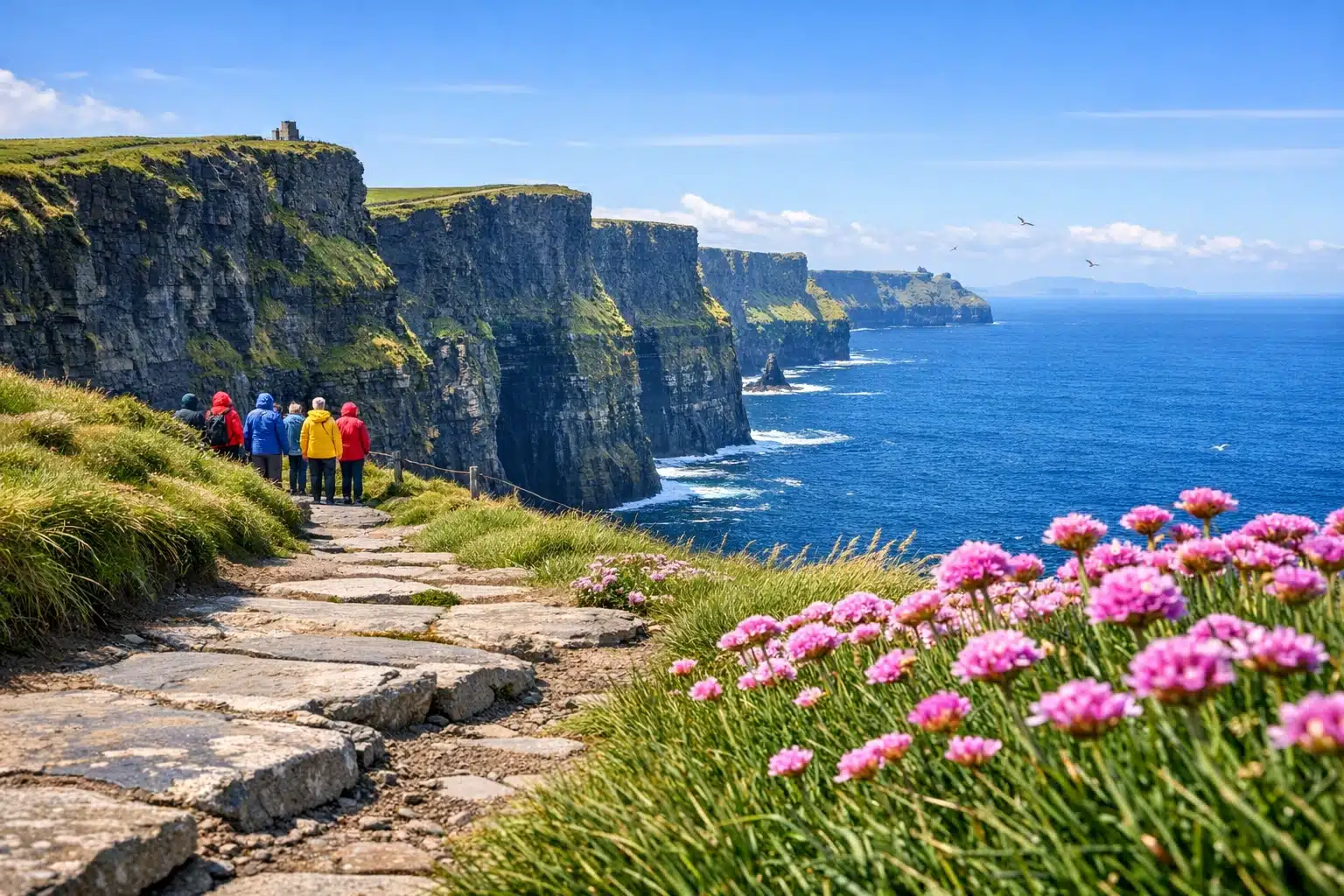
 Artificially generated image
 Ireland 8-Day All-Inclusive Tour Package: Itinerary, Highlights, and Travel Tips
Ireland in Eight Days: Why an All-Inclusive Tour Works and What to Expect
An 8-day all-inclusive tour of Ireland can turn a complicated multi-stop holiday into a smooth journey with hotels, transport, and much of the planning already handled. This guide maps out a realistic route from Dublin to the south and west, where castles, coastal drives, and lively towns sit close enough to enjoy without rushing. It also breaks down what these packages usually include, how they compare with independent travel, and which extras matter most. If you want big scenery with fewer logistics, this overview gives you a practical place to start.
Ireland is a compact country by international standards, but travel times can still surprise first-time visitors. A route that looks short on a map often becomes longer on smaller regional roads, especially once photo stops, hotel check-ins, and weather changes enter the picture. That is one reason all-inclusive tours remain popular. Instead of spending hours matching train schedules, booking separate hotels, and calculating driving routes on the left side of the road, travelers can focus on the experience itself. For many people, especially first-time visitors, couples, retirees, and solo travelers who prefer structure, that simplicity is a real advantage rather than a compromise.
In practical terms, an Ireland all-inclusive package usually covers accommodation, coach transport, breakfast every day, selected dinners, a tour director or local guide, and some sightseeing entries. What it does not always include is just as important. Airfare is often separate, lunches may be extra, optional excursions can carry added cost, and hotel locations may be just outside major centers. Reading the details matters. A package that includes airport transfers, several dinners, and key entries such as the Cliffs of Moher visitor experience or a heritage site visit can offer better value than a cheaper-looking tour with many add-ons.
A helpful outline for a classic 8-day route looks like this:
- Day 1: Arrival in Dublin and introductory city sightseeing
- Day 2: Travel south through Kilkenny or Wicklow toward Cork
- Day 3: Blarney Castle area and onward to Killarney
- Day 4: Ring of Kerry scenic touring
- Day 5: Dingle Peninsula or transfer north via the Cliffs of Moher to Galway
- Day 6: Galway and Connemara or a nearby cultural excursion
- Day 7: Return to Dublin with a heritage stop en route
- Day 8: Departure or free morning in Dublin
Compared with independent travel, the main trade-off is freedom versus efficiency. Self-planned trips allow more spontaneous detours, longer pub evenings, and boutique lodging choices. An all-inclusive coach tour, on the other hand, gives you a tested route, predictable pacing, and the ability to see several signature regions in just over a week. For travelers who want a broad, comfortable introduction to Ireland rather than a deep dive into one county, that balance often makes perfect sense.
Days 1 to 3: Dublin, Kilkenny, Cork, and Killarney
Most 8-day tours begin in Dublin, and that is a smart starting point. As the capital, it offers the easiest flight connections and delivers an immediate sense of Ireland’s layered identity: Viking roots, Georgian architecture, literary history, and a modern urban energy that feels lively without being overwhelming. On arrival day, packages usually keep the schedule light. That often means a panoramic city drive, a walking orientation, or a guided visit to a major landmark such as Trinity College, where the Book of Kells, a beautifully illuminated manuscript dating to around 800 CE, is one of the best-known cultural attractions in the country. Depending on the tour style, free time may follow for Grafton Street, St Stephen’s Green, or a relaxed first dinner. It is the sort of opening day that says, quietly but clearly, you are here now, and the trip has begun.
Day 2 typically shifts southward. Many itineraries choose one of two scenic approaches. The first runs through County Wicklow and Glendalough, where a 6th-century monastic settlement founded by St Kevin sits in a valley of lakes and wooded hills. The second routes through Kilkenny, a smaller city known for its medieval street plan, attractive center, and Kilkenny Castle. If your package includes Kilkenny, expect a pleasant contrast with Dublin: less bustle, more stone, and a slightly slower rhythm. From there, the tour usually continues toward Cork, often Ireland’s second-largest city, or directly into the surrounding county for an overnight stay.
Day 3 often features Blarney Castle and its gardens before moving onward to Killarney. Whether or not you care about kissing the famous Blarney Stone, the site is worth visiting for the grounds alone, which are expansive, atmospheric, and easy to enjoy even when the weather turns soft and gray. Killarney then changes the mood of the trip again. It is one of the classic touring bases in Ireland because it sits close to lakes, mountains, and several of the country’s best-known scenic drives. Compared with Dublin and Cork, Killarney feels more overtly holiday-oriented, with traditional music venues, coach groups, outdoor activities, and postcard-ready streets.
These opening days matter because they establish the range of the journey. In roughly 72 hours, travelers move from an international capital to monastic ruins, castle grounds, and a western gateway town. That variety is exactly what makes a guided package appealing. Instead of spending your first days decoding rail links or rental car paperwork, you are already moving through the story of the country in clear, well-paced chapters.
Days 4 and 5: Ring of Kerry, Atlantic Views, and the Pull of the West
By Day 4, the trip usually reaches one of its visual high points: the Ring of Kerry. This famous circular route is roughly 179 kilometers long, though guided tours only sample it through strategic stops rather than treating it as a race. The appeal is not any single viewpoint but the accumulation of them: mountain passes, lake reflections, stone walls, distant islands, and coastal bends that seem to unfurl one after another. If the east of Ireland introduces history through streets and buildings, the southwest introduces it through land and weather. Here, the road feels like a conversation between rock, rain, and sea.
Common stops include viewpoints near Ladies View, villages such as Sneem, and sections of Killarney National Park, which became Ireland’s first national park in 1932. Depending on the package, travelers may also see Muckross House or enjoy a jaunting car ride, one of those classic horse-drawn experiences that can feel touristy in theory and surprisingly charming in practice. The Ring of Kerry is often compared with the Dingle Peninsula because both offer striking scenery. Kerry tends to feel more iconic and widely featured in brochures, while Dingle often feels a little more intimate and village-centered. If your tour offers one as an optional excursion and the other as the main route, the decision usually comes down to whether you prefer famous panoramas or a slightly more local atmosphere.
Day 5 often carries the group north toward County Clare and Galway, and this is where the trip shifts from green inland beauty to raw Atlantic drama. The Cliffs of Moher are a frequent centerpiece. Rising to about 214 meters at their highest point, they are among the most visited natural attractions in Ireland, and for good reason. On a clear day, the views stretch across Galway Bay toward the Aran Islands; on a misty day, the place feels moody and cinematic rather than diminished. Before or after the cliffs, many tours cross the Burren, a limestone landscape known for its cracked rock formations, unusual flora, and stark, almost lunar appearance.
This part of the itinerary often becomes a favorite because it combines contrast so effectively. In just two days, travelers move from lake country and soft forest edges to open ocean, exposed cliffs, and a geology lesson written across the ground itself. The pacing is active, but it rarely feels random. Every stop adds a new texture, and the west coast begins to reveal why so many visitors come to Ireland expecting scenery and leave remembering atmosphere.
Days 6 to 8: Galway, Connemara, Return to Dublin, and the Tour’s Biggest Highlights
Galway usually serves as the base for Day 6, and it brings a different flavor from the more polished capital and the scenic resort feel of Killarney. Compact, creative, and often full of buskers, café traffic, and colorful shopfronts, Galway is the city where many travelers say Ireland starts to feel delightfully informal. A good tour package leaves at least some unstructured time here, because Galway works best when you can wander. Eyre Square, Shop Street, the Latin Quarter, and the riverfront are close enough to cover on foot, and even a short stroll can include street music, seafood, and the kind of pub conversation that somehow starts as small talk and ends as storytelling.
From Galway, many itineraries include a day trip into Connemara. This region is known for mountains, bogland, lakes, and a sparse beauty that differs from the postcard softness of Kerry. If Kerry feels lush and cinematic, Connemara feels elemental and spacious. Tours may stop at Kylemore Abbey, one of the most photographed sites in the west, or include scenic drives through areas where the Irish language still has a visible cultural presence. Some packages substitute an Aran Islands excursion, but that usually depends on weather and ferry schedules. When comparing options, Connemara is generally better for broad landscapes and comfortable coach touring, while the Aran Islands offer a stronger sense of old-world remoteness if conditions allow.
Day 7 brings the journey back toward Dublin, often with a heritage stop in the Midlands. That could mean Athlone, Birr, or a monastic site such as Clonmacnoise, founded in the 6th century and long associated with early Christian scholarship. This return day has an important purpose beyond logistics. It gives the trip narrative closure. After days of ocean views and western roads, Dublin reappears as a familiar point of arrival and departure, but now it means something different because the country between the two moments has been filled in.
Day 8 is usually departure day, though some tours allow a free morning for last-minute shopping or one final museum visit. Looking back, the biggest highlights tend to fall into three groups:
- Urban culture: Dublin and Galway offer distinct but complementary city experiences
- Historic landmarks: Glendalough, castles, abbeys, and old town centers create continuity across the route
- Natural scenery: the Ring of Kerry, Connemara, the Burren, and the Cliffs of Moher provide the visual peaks
That combination is the real strength of an 8-day package. It does not pretend to cover every county. Instead, it gives travelers a well-edited version of Ireland, balancing famous sights with enough regional variation to make the country feel broader than its size suggests.
Travel Tips and Final Thoughts for First-Time Ireland Tour Buyers
If the itinerary tells you where the coach goes, the practical details determine how comfortable the journey feels. The first rule is to pack for variability rather than for a single forecast. Ireland’s weather changes quickly in all seasons, and even summer can bring wind, light rain, and cool evenings. A waterproof jacket, comfortable walking shoes with grip, and layers are more useful than bulky clothing. Temperatures in shoulder season can sit roughly between 9 and 16 degrees Celsius, while summer often ranges from the mid-teens to about 20 degrees, though it can feel cooler near the coast. That means smart layering beats heavy packing almost every time.
Before booking, study what “all-inclusive” actually means in the brochure or itinerary summary. Useful questions include:
- Are airport transfers included?
- How many dinners are part of the package?
- Which attraction entries are covered and which are optional?
- Are porterage and gratuities included?
- Will there be free time in Dublin and Galway, or is every hour scheduled?
This matters because value is not only about the headline price. A moderately priced tour with central hotels, breakfast daily, several dinners, and key admissions can be a stronger deal than a cheaper package that leaves you paying for transfers, meals, and add-on excursions along the way.
There are also a few on-the-ground tips that make a noticeable difference. Keep some cash for smaller purchases, though cards are widely accepted. Bring a power adapter for Irish sockets, and check mobile roaming rules before arrival. If your route enters Northern Ireland on an alternative itinerary, remember that currency there is pound sterling rather than the euro. Motion sickness tablets can be helpful for travelers sensitive to winding coastal roads. If you have mobility concerns, ask specifically about hotel elevators, walking surfaces at heritage sites, and how much luggage handling is self-managed. The phrase “moderate walking” can mean different things to different operators.
So who is this type of trip best for? It suits first-time visitors who want a broad introduction, travelers with limited vacation days, and anyone who prefers seeing several regions without renting a car. It can also work well for solo travelers who like built-in company and for older travelers who value structured logistics. Independent explorers who want long rural hikes, late-night detours, or several days in one village may find a group tour too fixed. But for the reader who wants a practical, scenic, culturally rich first look at Ireland, an 8-day all-inclusive package is often a strong choice. It gives you enough variety to understand the country’s different moods, enough guidance to reduce stress, and enough memorable moments to make you start planning the return trip before the plane even leaves Dublin.