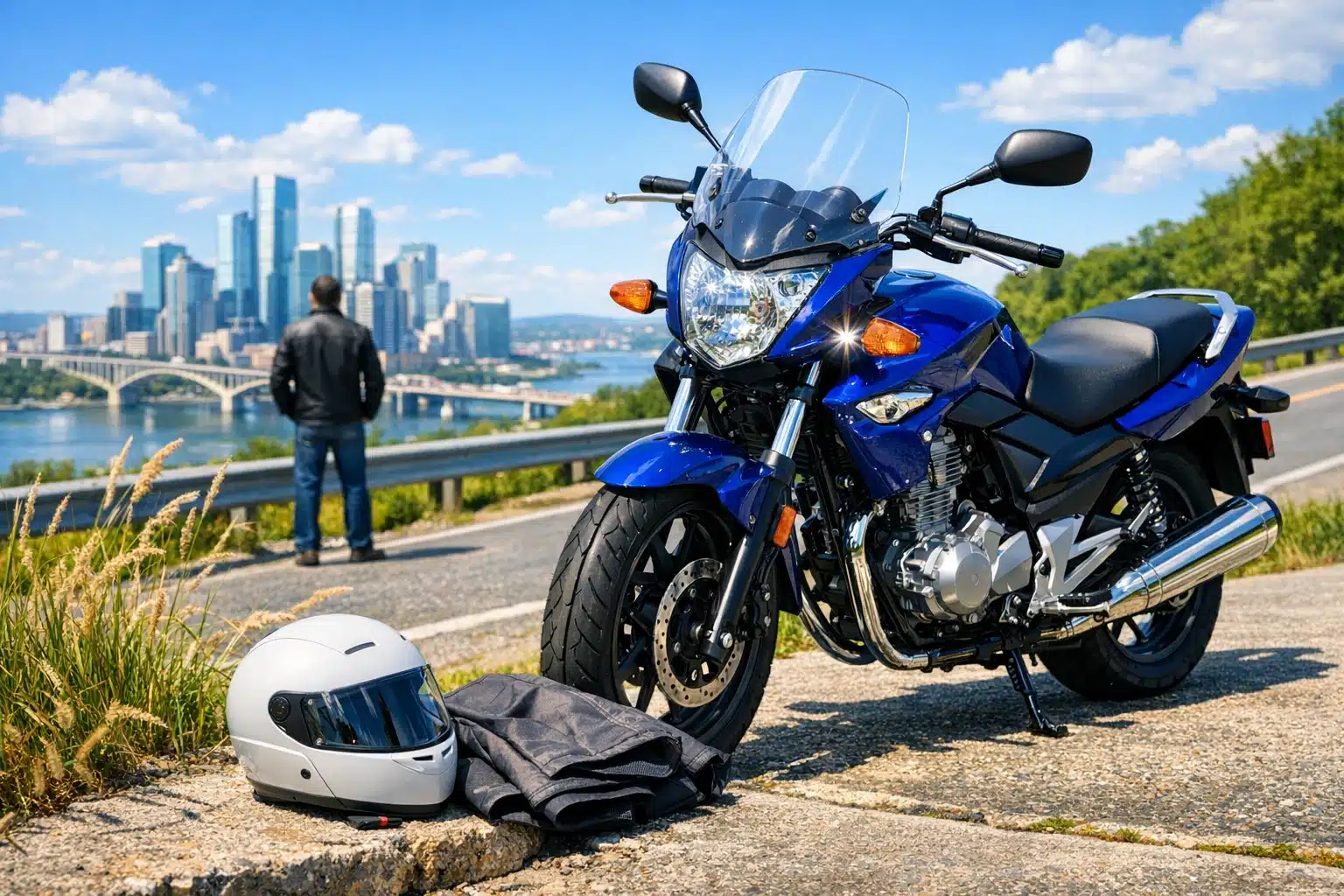
 Artificially generated image
 Exploring Buy Here Pay Here Used Motorcycles: A Comprehensive Guide
For many riders, the biggest obstacle is not choosing a cruiser, a scooter, or a small commuter bike; it is finding financing that does not collapse the moment a lender sees past credit trouble. Buy here pay here motorcycle dealers fill that gap with in-house payment plans and quick decisions. The model can open a door that banks leave shut, but it may also raise costs and shorten your margin for error. A careful look at how these deals work can turn excitement into a smarter purchase.
Outline of the Article and Why This Topic Matters
Before diving into details, it helps to map the road ahead. Buy here pay here motorcycles sit at the intersection of transportation, personal finance, and risk management. That combination makes the topic especially relevant for riders who need a practical machine for commuting, work, or daily mobility but cannot qualify easily for a bank or credit union loan. In many cases, the motorcycle itself is only half the decision. The other half is the financing structure attached to it, and that structure can shape your monthly budget far more than the paint color or engine size.
This guide begins with a simple outline because the subject can look deceptively easy from the outside. A sign that says “Ride today” sounds friendly, fast, and convenient. Yet underneath that promise are several questions: How does in-house financing actually work, why are so many of these bikes used, what changes when the buyer has bad credit, and how can a rider compare one offer against another without getting lost in fees and payment schedules? Those are the core questions this article answers.
- First, we explain the basic mechanics of buy here pay here motorcycle financing.
- Next, we look at why used motorcycles are common in this space and how they compare with other buying options.
- Then, we focus on bad credit buyers and what approval, pricing, and payment expectations often look like.
- Finally, we cover how to read the deal, inspect the bike, and avoid common red flags.
This matters because a motorcycle purchase can either create flexibility or become a financial drag. A well-matched used bike with manageable payments may help someone keep a job, shorten a commute, or reduce fuel costs compared with a larger vehicle. A poorly structured deal can do the opposite, especially if the motorcycle needs repairs soon after purchase or if the payment schedule is tighter than expected. Think of this guide as a helmet for the financing side of the ride: it may not remove every risk, but it can reduce the chance of a painful mistake.
How Buy Here Pay Here Motorcycles Usually Work
Buy here pay here, often shortened to BHPH, means the dealership is involved not only in selling the motorcycle but also in arranging or directly carrying the financing. In a traditional purchase, the buyer often secures a loan from a bank, credit union, or outside finance company. In a BHPH setup, the dealer may approve the buyer using its own criteria and collect payments through the dealership. That is the headline advantage: speed and accessibility. For riders who have been declined elsewhere, the door may stay open here.
The process is usually straightforward. A customer picks a motorcycle, completes an application, shows proof of income, provides identification, and often verifies residence and references. The dealership then decides whether the buyer qualifies, how much down payment is needed, and what the payment schedule will be. Instead of monthly payments, some BHPH dealers prefer weekly or biweekly payments. That can make the installments look smaller at first glance, but the full yearly cash flow still needs careful review.
Compared with conventional financing, BHPH dealerships often place more weight on practical repayment signals than on a perfect credit profile. They may focus on whether the buyer has stable income, a usable bank account, consistent residence history, and enough cash for the upfront payment. This can make approval easier, but easier approval does not automatically mean cheaper financing.
- Interest rates are often higher than those from prime lenders.
- Inventory can be limited compared with broader used motorcycle marketplaces.
- Late fee rules may be strict, and missing payments can trigger fast consequences.
- Some dealers report payments to credit bureaus, while others do not, so rebuilding credit is not guaranteed.
A smart comparison starts with the total cost, not just the ride-away moment. Ask for the out-the-door price, the annual percentage rate if disclosed, the number of payments, the exact payment frequency, late charges, and whether there is a prepayment penalty. Also ask whether the bike is sold as-is or with any limited warranty. The dream starts when the key turns, but the budget decides whether the ride lasts.
Buy Here Pay Here Used Motorcycles: Benefits, Trade-Offs, and Real-World Fit
Used motorcycles dominate the buy here pay here market for a practical reason: they lower the dealership’s exposure and reduce the amount a buyer needs to finance. A used bike usually costs less than a new one, and because the steepest early depreciation has already happened, the price may better reflect the machine’s everyday value. That matters when a dealer is taking on risk by approving customers who may not qualify elsewhere. Smaller balances are easier to place, easier to price, and sometimes easier for buyers to handle.
For shoppers, this can be a genuine advantage. A used commuter bike, mid-size cruiser, or basic standard motorcycle may deliver exactly what many riders need: affordable transportation without the burden of financing a brand-new machine. Insurance can also be lower on older, lower-value bikes, though that varies by model, age, engine size, location, and rider history. In short, used inventory fits the economic logic of BHPH on both sides of the desk.
Still, the lower sticker price does not eliminate trade-offs. Used motorcycles can carry hidden repair needs, incomplete maintenance records, worn tires, tired batteries, chain and sprocket wear, brake issues, or cosmetic damage that hints at a harder life. A bargain can turn expensive when the first month brings a valve adjustment, carburetor cleanup, fork seal replacement, or electrical troubleshooting. That is why vehicle condition matters as much as financing terms.
- Check service records if available.
- Verify the VIN matches the title and the frame.
- Inspect tires, brakes, lights, chain, fluids, and signs of leaks.
- Ask whether an independent mechanic can inspect the bike before purchase.
Different types of used motorcycles also carry different ownership realities. Small-displacement commuter bikes are often cheaper to run and easier on fuel. Large cruisers may be comfortable but heavier and sometimes costlier to insure or repair. Older sport bikes can look tempting on the lot, yet some have been ridden hard, modified, or neglected. The best BHPH used motorcycle is rarely the flashiest one. It is usually the bike that matches the rider’s real use case, parts availability, repair budget, and payment tolerance. When the financial margin is narrow, reliability becomes part of affordability.
Buy Here Pay Here Motorcycles for Bad Credit: What Approval and Pricing Often Look Like
For riders with bad credit, buy here pay here financing can feel like a second chance. Many traditional lenders sort applicants into risk tiers based heavily on credit score, credit history length, debt levels, and prior repayment behavior. While exact standards vary, borrowers with scores below the mid-600s often face tighter terms, and applicants in clearly subprime territory may see outright denials. BHPH dealers exist partly because they are willing to evaluate buyers through a different lens.
That different lens usually includes stable income, time on the job, residency, down payment capacity, and the dealership’s comfort with the specific bike being financed. In other words, the dealer may ask a simple question: does this customer appear able to keep up with the payments on this particular motorcycle? That can be helpful for someone rebuilding after missed payments, medical debt, divorce, thin credit history, or an earlier repossession. However, flexible approval often comes with a price.
Bad credit buyers should expect higher financing costs than prime borrowers. The interest rate may be elevated, the required down payment may be larger, and payment schedules may be less forgiving. Fees can also matter more than buyers realize. Documentation charges, delivery fees, service fees, or add-on products can push the real cost higher even when the advertised payment looks manageable. This is why the full repayment amount matters more than the weekly number written on the windshield.
- Bring proof of income, identification, and proof of address.
- Ask whether payments are reported to major credit bureaus.
- Budget for insurance, registration, fuel, maintenance, and safety gear.
- Avoid stretching for a larger motorcycle just because it is available.
A stronger down payment can improve your position because it reduces the financed balance and may lower the dealer’s risk. Even a modest increase can change the deal meaningfully over time. If possible, check your credit report beforehand and correct obvious errors. Also consider whether a credit union, community bank, or secured personal loan offers a cheaper alternative. BHPH motorcycles for bad credit can be useful, but they work best when approached as a deliberate financial decision rather than a desperate shortcut.
Comparing Offers, Spotting Red Flags, and Final Advice for Budget-Minded Riders
Once you understand the basics, the next step is comparison. Two motorcycles can have similar asking prices and completely different financing outcomes. One may require a manageable down payment, include a short warranty, and offer a sensible term. Another may carry hidden fees, a strict payment calendar, and an as-is condition that shifts nearly every repair risk to the buyer. The trick is to slow the process down long enough to compare the full deal, not just the first impression.
Start with the total amount you will pay from day one to the final installment. That includes down payment, taxes, registration, financing charges, and any dealer-added fees. Then compare the motorcycle itself. A cheaper monthly plan attached to a poorly maintained bike is not automatically the better value. Ask for a written breakdown and read the contract line by line. If a term is unclear, stop and ask. Good dealers explain their paperwork; pressure-heavy dealers usually reveal themselves when questions begin.
- Red flag: the dealer will not clearly disclose the total repayment amount.
- Red flag: the title status, VIN, or ownership history is unclear.
- Red flag: the bike cannot be test-ridden or independently inspected for no solid reason.
- Red flag: the payment schedule seems unrealistic compared with your take-home pay.
- Red flag: the sales pitch focuses only on approval, never on affordability.
For many readers, the best outcome is not simply getting approved. It is finding a payment plan that still leaves room for rent, food, utilities, maintenance, and the unexpected flat tire or dead battery that seems to arrive on the coldest morning of the month. A sensible used motorcycle can be a practical bridge when bad credit limits options, especially if it shortens commute time or reduces operating costs. But if the numbers do not work, waiting can be the wiser move. Saving a larger down payment, improving your credit profile, or expanding your search to credit unions and private sellers may create a stronger result.
In summary, buy here pay here used motorcycles can serve a real need, especially for riders who need transportation now and lack perfect credit. The key is to treat the purchase like a financial contract first and a lifestyle upgrade second. When you inspect the bike carefully, compare total costs, and stay honest about your monthly limits, you give yourself the best chance of getting a motorcycle that helps rather than hurts.