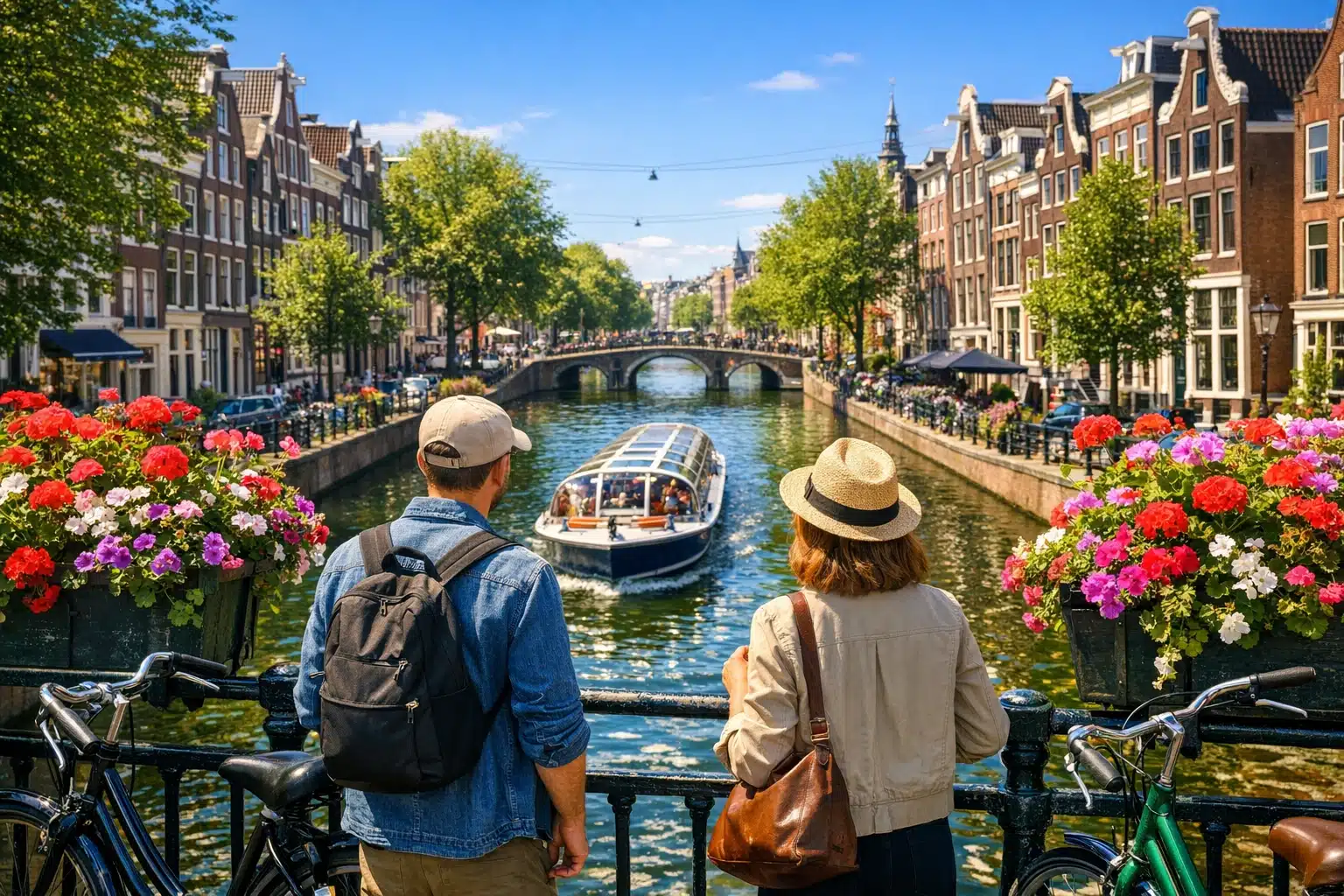
 Artificially generated image
 4-Night Mini Cruise From Edinburgh to Amsterdam
Introduction and Article Outline: Why This Short Cruise Still Feels Like a Real Getaway
A 4-night mini cruise from Edinburgh to Amsterdam sounds simple, yet the appeal lies in the details: the rail journey south to the port, the moment the ship eases away from North Shields, and the reward of waking up with continental Europe ahead. For travellers who want a city break without the choreography of airports, this short voyage offers a pleasing middle ground between a ferry crossing and a traditional cruise. It is practical, atmospheric, and surprisingly flexible.
The phrase “from Edinburgh” is important, because many travellers first imagine stepping directly onto a ship in Scotland. In reality, most mini cruise packages marketed around Edinburgh involve travelling from Edinburgh to the ferry terminal at North Shields, near Newcastle, where the overnight crossing to the Netherlands begins. That detail does not reduce the trip’s charm. If anything, it adds a gradual sense of departure, as the journey unfolds in stages rather than in a single rushed dash through airport security. By the time the ship leaves port, the holiday already feels underway.
This article is structured to help you plan clearly and travel confidently. It covers:
• how the route usually works in practice
• what to expect onboard during the overnight sailing
• how to make the most of limited hours in Amsterdam
• what kind of budget, timing, and packing strategy makes sense
• whether this type of short cruise is the right choice for your travel style
This topic remains relevant because short breaks are increasingly shaped by time pressure, rising transport costs, and a desire for experiences that feel rewarding rather than rushed. A mini cruise answers that demand rather well. It offers movement, scenery, accommodation, and entertainment in one package. You are not only travelling to a destination; you are travelling through an experience. For couples, friends, solo explorers, and even multigenerational families, that blend can be more memorable than a simple return flight.
There is also a psychological advantage that seasoned travellers often notice. A short sea trip creates a stronger sense of escape than a typical city break, even when the calendar remains compact. One evening you are looking back at the North Sea coast; the next day you are walking beside Amsterdam’s canals, hearing bikes rattle over bridges and café doors swing open. That contrast is part of the product. It feels cinematic without being impractical, and it gives ordinary travel days a touch of narrative momentum.
How the Journey Usually Works: Edinburgh to Port, Embarkation, and the Overnight Crossing
Understanding the logistics is the difference between a relaxing mini cruise and a stressful one. Although the trip is often described as an Edinburgh to Amsterdam cruise, the ship itself generally departs from North Shields, close to Newcastle upon Tyne in northeast England. From Edinburgh, the most common approach is to travel by train to Newcastle, which usually takes around an hour and a half, sometimes a little longer depending on the service. From Newcastle station, passengers continue to the ferry terminal by taxi, pre-booked transfer, or a combination of local transport options. Some packages include coach travel, which simplifies things for first-time bookers.
This staging matters because it affects timing. A typical overnight ferry to the Amsterdam area departs in the late afternoon or early evening, and check-in usually opens several hours before sailing. Travellers should never assume they can arrive at the last minute. Ferry operators often require passengers to check in well before departure, and document checks can take longer than expected during busy periods, school holidays, and weekends. Passport validity, ticket confirmation, and baggage arrangements should be reviewed in advance, especially now that European travel formalities receive closer attention than in the past.
Once onboard, the pace changes immediately. Cabins are assigned before departure, so you can settle in, leave your main luggage, and start treating the ship as a moving hotel. Unlike air travel, where the journey is frequently a means to an end, the crossing itself is part of the attraction. As the ship pulls away from the terminal and the coastline begins to fade, there is a distinct mood shift. Screens are replaced by sea views, departure lounges by open decks, and rushed boarding announcements by the low, steady rhythm of the vessel.
The crossing to the Netherlands usually takes roughly 15 to 16 hours, though exact timings vary with schedule and conditions. Most mini cruise itineraries include two overnight sailings: one outbound and one return. That means your four nights are typically divided between travel, time ashore, and a day or evening of transit back toward Edinburgh. It is not a conventional cruise with multiple ports, but it does give travellers a pleasant sense of progression. You sleep while moving, which is one reason the trip can feel efficient despite covering international distance.
It is also worth knowing that ferries serving Amsterdam mini cruise routes often arrive at IJmuiden rather than directly in central Amsterdam. From there, a coach transfer or public transport connection brings passengers into the city. That final leg is usually straightforward, but it should always be factored into your planning. In short, the journey works best when treated as a chain of connected stages: Edinburgh to Newcastle or North Shields, port check-in, overnight sailing, arrival in the Netherlands, transfer into Amsterdam, and then the reverse for the return. Once you understand that rhythm, the whole trip feels far more approachable.
Life Onboard: Cabins, Food, Entertainment, and How It Compares With Flying
The onboard experience is where this mini cruise either wins you over completely or confirms that you prefer faster transport. For many travellers, it is the former. Even a standard inside cabin provides something an economy flight does not: privacy, a proper bed, your own compact space, and the ability to settle in for the evening instead of remaining in transit mode. Upgraded cabins may offer sea views, more floor space, or premium touches, but the basic appeal remains the same across categories. You unpack a little, freshen up, and start the crossing as though the holiday has already begun.
Dining is usually a central part of the evening. Ferries on this route often offer a choice between buffet dining, casual cafés, bars, and simple grab-and-go options. The exact selection varies by ship, but the pattern is familiar: an early meal after boarding, time to explore the decks or lounges, and then a slower late evening as passengers drift toward entertainment venues or return to their cabins. Breakfast on arrival day is equally important, because it sets the tone for the few precious hours you will spend in Amsterdam. Booking meals in advance can sometimes improve value and reduce decision-making onboard.
Entertainment tends to be lighter and more relaxed than on large ocean cruise ships. Think live music, bars, cinema-style screenings on some vessels, children’s play areas, small shops, and social spaces rather than elaborate production shows. That scale suits the format. A mini cruise is not trying to compete with a week-long Mediterranean voyage. Its strength lies in atmosphere. Standing on deck with sea air on your face, watching the horizon darken into evening, can be more memorable than a larger programme of scheduled activities. There is a simple, old-fashioned pleasure in it.
When compared with flying, the trade-offs are clear:
• flying is faster and may be cheaper on the narrowest fare comparison
• the mini cruise usually offers more luggage flexibility and a more leisurely experience
• ferry travel avoids many of the pressures associated with airports, but it takes longer
• those prone to seasickness may need to prepare, particularly in rough weather
Against rail and air, the ferry also offers a different emotional texture. Flying compresses geography; the sea crossing makes you feel it. You notice distance, weather, coastline, and time passing. That will delight some travellers and frustrate others. Couples often appreciate the shared downtime. Friends may enjoy the social side of bars and deck walks. Families can find the contained environment easier than an airport, especially when everyone is travelling with coats, snacks, and small bags. Business travellers on a tight schedule, by contrast, may find the format too slow.
In practical terms, the onboard experience best suits people who value journey quality as well as destination time. If your priority is simply arriving in Amsterdam as quickly as possible, a flight will usually make more sense. If your priority is turning a short break into a fuller travel story, the ship has an advantage that is difficult to replicate. The crossing becomes a transition space, one that gently separates home life from holiday mood. That, more than any single feature, explains why these mini cruises retain a loyal audience.
Making the Most of Amsterdam: Time Ashore, Smart Itineraries, and What to Prioritise
A mini cruise gives you only a limited window in Amsterdam, so realistic planning matters. Because ferries commonly dock at IJmuiden rather than in the city centre, travellers usually continue by coach transfer or public transport into Amsterdam itself. Depending on the package and traffic conditions, the usable time in the city is often enough for a satisfying day, but not enough for a scattered, over-ambitious itinerary. This is not the day to attempt every museum, every market, and every photogenic canal at once. It works better when treated as a focused tasting menu rather than an all-you-can-eat buffet.
Amsterdam rewards compact exploration. The central area is highly walkable, trams are efficient, and many of the city’s classic sights cluster within a manageable radius. A first-time visitor can enjoy a great deal without rushing if they choose a theme for the day. For example:
• a canal-focused day might include Amsterdam Centraal, Dam Square, a canal cruise, and a slow walk through the Jordaan
• an art and history day could centre on Museumplein, with pre-booked entry to the Rijksmuseum or Van Gogh Museum
• a relaxed local-flavour day might combine the Nine Streets, a brown café, flower stalls, and waterside wandering
What makes Amsterdam so effective for short visits is the density of atmosphere. The city does not ask you to travel long distances to feel its character. You can step off a tram, cross a bridge, hear bells and bicycle chains, and feel that you have arrived somewhere unmistakable. The narrow canal houses, the changing light on the water, and the constant choreography of bikes all create a sense of place very quickly. That is useful when your schedule is measured in hours rather than days.
Travellers who prefer structure should reserve at least one anchor activity in advance. Museum tickets, canal cruises, and certain attractions can sell out or involve queues, especially in spring and summer. Booking one fixed event and leaving the rest of the day open is often the best balance. It prevents aimless wandering while still allowing room for serendipity, which Amsterdam does particularly well. A quiet canal lane, a bakery discovered by accident, or a small courtyard tucked behind busy streets can become the day’s standout memory.
Food planning also deserves a mention. With limited time, it makes sense to avoid long waits for meals. Brunch spots near the centre can be busy, so either eat early, book ahead where possible, or keep lunch simple and portable. Stroopwafels, fries, sandwiches, Indonesian-influenced dishes, and Dutch pastries all offer quick options depending on your taste and budget. If you want a sit-down meal, aim for a clear time slot rather than improvising at peak hours.
The biggest mistake on a mini cruise stop is underestimating the return journey. Always leave comfortable time to get back to the meeting point or transfer coach. Missing the departure is not a cinematic adventure; it is a serious logistical problem. Build in a margin, especially if using public transport independently. Done properly, a short day in Amsterdam can feel rich, elegant, and complete. The secret is not seeing everything. It is choosing well, moving calmly, and letting the city come to you in layers.
Conclusion: Costs, Best Travel Times, Packing Advice, and Who This Mini Cruise Suits Best
For the right traveller, a 4-night mini cruise from Edinburgh to Amsterdam offers very good value, though not always in the narrowest bargain-hunting sense. Flights can sometimes appear cheaper at first glance, especially outside peak periods. Yet once baggage charges, airport transfers, meal costs, and accommodation are added, the gap can shrink. A mini cruise bundles transport, cabin accommodation, and a distinct travel experience into one purchase. That makes it especially appealing to people who want a short break that feels more substantial than a simple overnight city hop.
Prices vary according to season, cabin grade, meal package, and whether coach or rail transfers are included. Weekend departures and school holiday dates often command stronger demand, while shoulder seasons can offer better balance between price and comfort. Spring is particularly popular because Amsterdam is associated with tulip season and milder weather, though that popularity can push up rates. Early autumn is another attractive option: the city remains lively, temperatures are often comfortable, and the route can feel less crowded than high summer.
Packing smartly improves the trip more than many people realise. Because this is a short break with several transport stages, mobility matters. A practical list might include:
• passport and printed or digital travel confirmations
• a small overnight bag for cabin essentials
• comfortable walking shoes for Amsterdam’s cobbled areas and long city walks
• a light waterproof jacket, since both decks and canals can be breezy
• any seasickness remedies if you are sensitive to motion
• a compact power bank, day bag, and refillable water bottle
Who benefits most from this itinerary? Couples looking for a different kind of romantic short break are strong candidates. Friends who enjoy social evenings, casual sightseeing, and the novelty of travelling by sea also tend to like it. First-time cruise passengers often find it a low-commitment introduction to life onboard. Families can appreciate the contained, straightforward nature of the ship, although very young children may make the travel stages feel longer. Travellers whose highest priority is speed, or those who need maximum time in Amsterdam, may prefer flying instead.
The real strength of this mini cruise lies in balance. It combines motion and rest, city energy and sea quiet, practical transport and a little ceremony. You board in northern England after leaving Edinburgh, dine while the ship moves through the evening, wake up on the edge of the Netherlands, and spend the day in one of Europe’s most recognisable cities. Then you reverse the sequence, carrying home not only photos of canals and bridges, but also the memory of the crossing itself.
If you are the sort of traveller who enjoys the journey as much as the destination, this route is easy to recommend. It is not the fastest option, and it does not pretend to be. Its value is found in texture, pacing, and mood. For readers planning a short European escape with a bit more personality than a routine flight, the Edinburgh to Amsterdam mini cruise remains a thoughtful, enjoyable, and genuinely memorable choice.