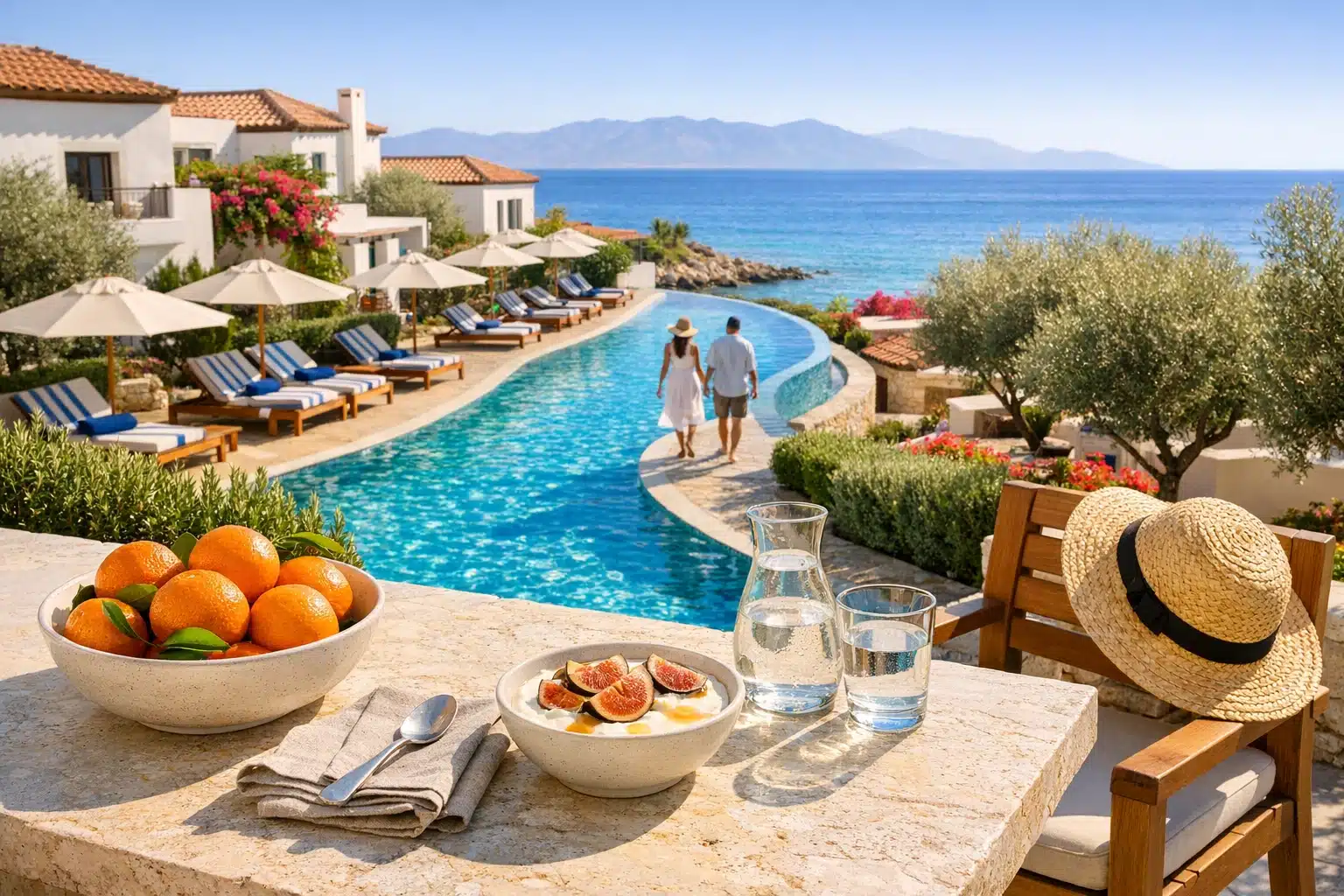
 Artificially generated image
 10-Night All-Inclusive Resort Stay in Crete: A Practical Travel Guide
Crete rewards travelers who want more than a quick beach break, and a 10-night all-inclusive stay gives you enough room to enjoy the island without turning every day into a planning exercise. You can sink into the rhythm of lazy breakfasts, sea swims, and late sunsets, then still make time for old ports, mountain villages, and major historic sites. For couples, families, and mixed-age groups, that blend of convenience and variety is what makes this format genuinely appealing.
Outline: this guide first explains why ten nights is a particularly practical length for Crete, then compares the main resort regions, breaks down what all-inclusive usually covers, suggests smart ways to combine resort time with excursions, and closes with advice on who will get the best value from the trip.
Why 10 Nights in Crete Often Works Better Than a Shorter Resort Break
A 10-night holiday sits in a very useful middle ground. It is long enough to justify flying to Greece, settling into a hotel routine, and exploring beyond the pool, yet short enough to fit into a realistic annual leave plan and a manageable budget. In a destination as large as Crete, that balance matters. The island stretches roughly 260 kilometers from west to east, so even choosing one resort base involves trade-offs. A week can feel rushed, especially once arrival and departure days are counted. Two weeks gives more freedom, but for many travelers it pushes costs, childcare planning, or time away from work beyond a comfortable limit.
With 10 nights, you typically end up with eight full days on the ground, sometimes more depending on flight times. That is enough time to settle in properly. The first two days can be used for what holiday brochures rarely mention: recovering from airport logistics, learning the resort layout, figuring out meal times, testing the beach, and working out whether the family prefers the pool near the activities or the quieter one tucked behind the gardens. By day three, the place starts to feel less like accommodation and more like a temporary rhythm. That matters, because all-inclusive stays are partly about reducing daily friction. Meals are handled, drinks are within reach, children can follow a predictable routine, and adults spend less time making small decisions.
Compared with a 7-night trip, a 10-night stay also gives more room for the island itself. Crete is not just sand and sun loungers. It has Minoan sites, Venetian towns, mountain scenery, olive groves, monasteries, and beaches that change character from one coast to the next. If you try to fit all of that into a shorter holiday, the resort can end up being an expensive place to sleep between excursions. With 10 nights, you can comfortably split your time between rest and discovery.
There is also a seasonal advantage. In the shoulder months, especially May, early June, late September, and October, weather can be excellent for a resort stay while sightseeing becomes easier than in peak summer heat. If one day turns windy or overcast, the trip is long enough that you do not feel cheated. In practical terms, that makes 10 nights a forgiving, flexible format for Crete, which is exactly why it appeals to first-time visitors and repeat travelers alike.
Choosing the Right Area: Chania, Rethymno, Heraklion, or the East
Where you stay in Crete will shape the whole holiday, often more than the star rating of the hotel itself. Most all-inclusive resorts are concentrated along the north coast because that is where the major airports, road connections, and resort infrastructure are strongest. The south coast is dramatic and beautiful, but it is less dominated by large all-inclusive complexes and usually suits travelers who prefer boutique hotels, self-drive trips, or quieter village stays. For a classic all-inclusive holiday, the north is usually the more practical choice.
Western Crete, especially around Chania, is often chosen by travelers who want visual charm alongside beach time. Chania town is one of the island’s most attractive urban centers, with a Venetian harbor, narrow old streets, and plenty of evening atmosphere. Resorts in the wider Chania area can work very well for couples and travelers who want access to famous western excursions such as Balos Lagoon or Elafonissi Beach. The trade-off is geography: if you arrive through Heraklion airport or want to explore the far east of the island, distances start to grow quickly.
Rethymno is a strong compromise choice. It has a handsome old town, a long sandy beachfront, and a fairly central position on the north coast. That makes it useful for travelers who want a resort stay but also like the idea of a couple of manageable day trips in different directions. It may not have the same name recognition as Chania, but from a planning perspective it often works extremely well.
The Heraklion region, including Hersonissos, Anissaras, Gouves, and nearby resort strips, is one of the most practical bases for many package travelers. Transfer times from Heraklion airport are usually shorter, resort choice is broad, and access to Knossos and the Archaeological Museum of Heraklion is straightforward. Some areas here are busier and more built-up, so travelers seeking a romantic, tucked-away atmosphere should read hotel locations carefully.
The east, especially around Elounda and Agios Nikolaos, tends to feel more polished and scenic. Bays are often calmer, views can be beautiful, and the overall tone leans more toward relaxed luxury than mass-market bustle. Prices can rise accordingly, but many travelers find the setting worth it.
- Choose Chania if you value scenery, harbor evenings, and west-coast excursions.
- Choose Rethymno if you want a balanced base with good regional flexibility.
- Choose Heraklion-area resorts if airport convenience and broad resort choice matter most.
- Choose Elounda or Agios Nikolaos if you prefer a quieter, more refined atmosphere.
In short, the best area is not the one with the loudest reputation. It is the one that matches your pace, interests, and tolerance for transfer time.
What All-Inclusive Usually Covers, What It Costs, and What to Check Before Booking
All-inclusive sounds wonderfully simple, but in practice it can mean different things from one resort to another. In most Cretan resorts, the standard version includes buffet breakfast, lunch, and dinner, selected local alcoholic and non-alcoholic drinks, snacks during set hours, and access to core facilities such as pools, loungers, and entertainment programs. That is the baseline. What separates a good-value package from a frustrating one is the fine print: branded spirits may cost extra, à la carte restaurants may require advance booking or a surcharge, room service is often excluded, and spa treatments, premium coffee, water sports, or private beach setups are usually not part of the package.
For budgeting, the key advantage of all-inclusive is cost visibility. If you are traveling with children, teenagers, or anyone who snacks frequently, prepaid meals and drinks can remove a surprising amount of holiday stress. Crete is not the most expensive Mediterranean destination, but food and drink spending still adds up over 10 nights, especially in resort zones. An all-inclusive package can therefore offer very solid value when compared with paying for every meal separately. On the other hand, if you plan to eat off-property often, drive around the island daily, or spend little time at the resort, half board or bed and breakfast may be the smarter financial fit.
Season also affects value dramatically. August is typically the most expensive period because demand is strongest and school holidays are in full swing across Europe. Shoulder-season bookings can be noticeably cheaper, and it is not unusual to see substantial differences for the same hotel when comparing May or October with peak summer departures. Exact savings vary by departure airport, room category, and airline, but the pattern is reliable: flexibility usually helps.
One practical note many first-time visitors miss is Greece’s accommodation-related tax, now commonly presented as a climate resilience charge. It is often paid locally and may not be included in headline package pricing. That does not make the holiday expensive, but it is worth knowing in advance.
- Check whether airport transfers are included.
- Confirm if one or more à la carte meals are part of the stay.
- Look at recent reviews for food variety, cleanliness, and beach quality.
- Compare family room size, not just occupancy limits.
- See whether premium drinks, safes, and late checkout cost extra.
Finally, compare booking styles. Package holidays are often strongest for convenience, flight protection, and transfer simplicity. Direct booking can work well when you already know the area, want a specific room type, or plan to arrange flights independently. The smartest choice is rarely ideological. It is simply the option that gives you the clearest total cost and the fewest unpleasant surprises.
How to Use 10 Nights Well: Resort Time, Day Trips, and a Realistic Pace
The biggest mistake travelers make in Crete is either doing too much or doing almost nothing outside the resort. The island rewards a middle path. Ten nights is enough for a holiday that feels generous, but it is not long enough to crisscross Crete every other day without fatigue setting in. A better approach is to treat the resort as your anchor and choose two or three well-matched outings based on your region.
If you are staying near Heraklion, a visit to Knossos paired with the Archaeological Museum of Heraklion makes excellent sense. This combination gives context to Crete’s Minoan heritage and can be done without turning the day into a marathon. From western resorts, Chania’s old town, boat trips toward Balos, or a scenic day at Elafonissi are common choices. From the east, Spinalonga and Agios Nikolaos fit naturally into the itinerary. Rethymno-based travelers can explore the old town, nearby monasteries, or inland villages without heavy travel time.
Organized excursions and rental cars each have strengths. Coach tours remove the stress of navigation, parking, and route planning, which matters if you are traveling with children or simply want a low-effort day. Renting a car offers far more freedom, especially if you want to stop at a taverna in a small village, visit an olive farm, or detour to a beach that is not on the standard tour circuit. Public buses are also a valid option along parts of the north coast, particularly between larger towns, but they are less flexible for remote beaches or mountain routes.
A good rule is to keep the shape of the trip varied. Think in terms of energy, not just places. One active excursion can be followed by a resort day. One late evening in town can be balanced with a slow morning by the sea. Crete is best enjoyed when it unfolds like a playlist, not a checklist.
- Pick excursions that are geographically sensible from your resort base.
- Limit full-day trips so the holiday still feels restful.
- Book major outings early in the stay in case weather forces a change.
- Leave unplanned time for the simple pleasures of the resort itself.
Also, be honest about fitness. Samaria Gorge is famous, but it is not a casual stroll and does not suit every traveler. A winery visit, cooking experience, or boat trip may create better memories for some groups. The right itinerary is not the busiest one. It is the one that lets you enjoy the island without needing a second holiday to recover from the first.
Who This Holiday Suits Best and Final Conclusion for Different Travelers
A 10-night all-inclusive resort stay in Crete suits travelers who want convenience without surrendering every chance of local discovery. Families are often the clearest match. Children benefit from routine, parents appreciate predictable meal access, and the extra nights make the unpacking effort worthwhile. Teenagers, in particular, tend to enjoy the balance of independence and structure that larger resorts provide. There is usually enough happening on-site to keep them occupied, while nearby towns or excursion days stop the holiday from feeling repetitive.
Couples can also get real value from this format, especially if they choose the area carefully. A quieter resort in western or eastern Crete can deliver the ease of an all-inclusive package without the atmosphere feeling too busy. The key is selecting a hotel that matches the mood you want. Some properties are geared toward activity and entertainment from morning to night, while others are calmer and more suitable for long dinners, sea views, and slow afternoons with a book. The label all-inclusive does not tell you the ambience by itself.
Multigenerational groups often do particularly well in Crete. Grandparents can enjoy the comfort of staying in one place, younger travelers can join excursions or water activities, and shared meals are easy to organize when everyone returns to the same dining space. For first-time visitors to Greece, this setup removes a lot of friction while still offering a taste of the island’s culture through selective outings.
It may be less ideal for travelers who dislike buffet dining, want to move between towns every few days, or measure success by seeing every major site on the map. Those travelers may prefer a road trip or a split-stay itinerary. That said, even they can enjoy Crete if they choose a higher-quality resort and deliberately build in time off-property.
Before you go, pack for variety rather than volume: comfortable sandals, one pair of proper walking shoes, sun protection, a light layer for evenings in shoulder season, and clothes that work for both casual resort dinners and town strolls. Crete has a way of shifting from beach postcard to ancient landscape to mountain-view taverna in a single day.
For the target traveler, the final takeaway is simple. If you want a holiday that feels easy, spacious, and practical, a 10-night all-inclusive stay in Crete is a very sensible choice. It gives you time to rest, enough space to explore, and a structure that works especially well for couples, families, and mixed-age groups. Choose the right region, read the package details carefully, and the island will do the rest with quiet confidence.